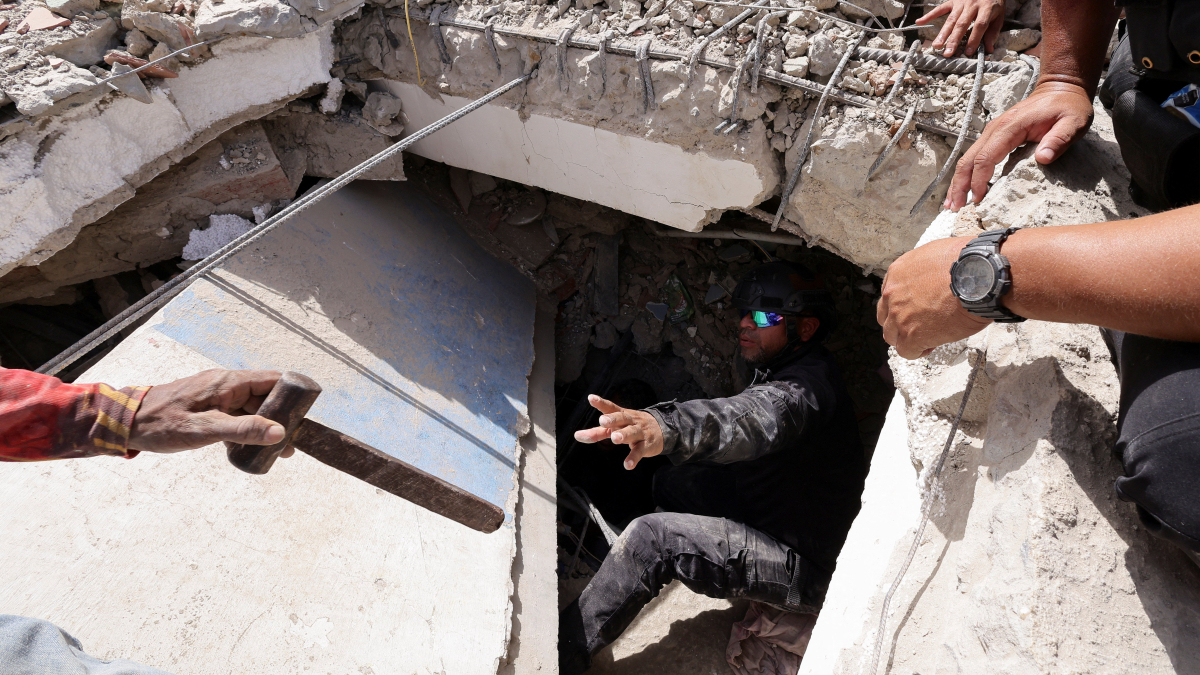
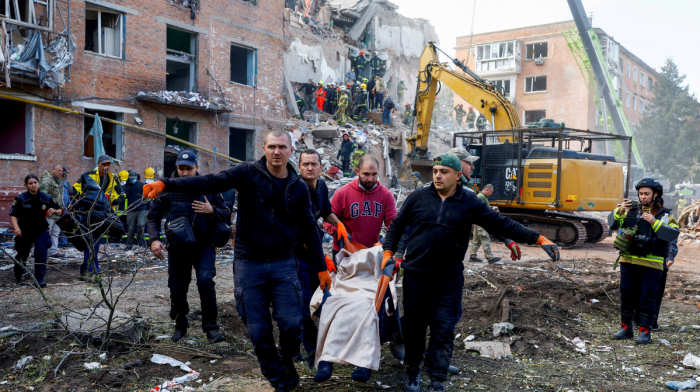
Tens of thousands of people are still unaccounted for after two powerful earthquakes struck Venezuela. At least 589 people have been confirmed dead and hundreds are believed to be trapped under rubble, as emergency crews and international rescue teams race to respond.
A magnitude 7.2 earthquake hit late Wednesday, 24 June, about 160 km west of Caracas, followed less than a minute later by a stronger 7.5 tremor. The second quake is most powerful recorded in the country since 1900, according to the United States Geological Survey.
The latest death toll from the natural disaster, around 589, was reported by the local Health Ministry.
Speaking to state television, Health Minister Carlos Alvarado said many victims were brought to hospitals without vital signs or died while arriving at health centres.
The disaster also caused widespread destruction in Caracas and coastal areas including La Guaira, damaging at least 250 buildings and overwhelming rescue services.
The U.S. Geological Survey has predicted more than 10,000 deaths.
Rescue efforts
The government has estimated hundreds of people still trapped and missing on top of 589 confirmed fatalities and 2,980 injuries.
La Guaira, the coastal state adjoining Caracas, was among the hardest-hit regions, with some 70,000 families affected, according to Interior Minister Diosdado Cabello.
Residents and volunteers searched through debris by hand in some areas as aftershocks continued and electricity remained patchy. Caracas’ main airport was also shut after sustaining structural damage.
Fears grow over the missing
A website shared by opposition leaders listed more than 50,000 people as unaccounted for by Friday afternoon, though the figure could not be independently verified.
USGS predictive modelling suggested the death toll could rise significantly, with a strong possibility of climbing into the thousands.
The disaster struck a country already facing deep economic and infrastructure challenges, complicating rescue and relief operations.
International aid
Governments and humanitarian groups worldwide have begun mobilising cash, rescue teams and medical supplies.
The United Nations said international urban search-and-rescue teams were being coordinated, while aid chief Tom Fletcher warned that a “massive collective effort” would be needed.
The United States announced $150 million in aid and deployed disaster response teams, while easing sanctions to allow earthquake-related transactions.
Other countries including Mexico, Colombia, France, Spain and Italy have also sent rescue teams, equipment and humanitarian support.
Communications and relief support
SpaceX said its Starlink service would be free through 25 July for affected users, while deploying extra terminals to restore communications.
The Vatican said Pope Leo XIV had sent €100,000 (≈$113,600) in emergency aid, while World Central Kitchen began distributing meals in Caracas.
Despite the devastation, foreign energy companies said Venezuela’s key oil infrastructure had so far escaped major damage.
Read more:












What is your opinion on this topic?
Leave the first comment