U.S. President Donald Trump has signed two executive orders aimed at narrowing access to birthright citizenship, reviving one of the central pledges of his immigration agenda despite a recent setback in the Supreme Court.
The measures target what the White House describes as "birth tourism" and expand the categories of people whose children would no longer qualify for automatic U.S. citizenship at birth. The orders are expected to face legal challenges.
The move comes just over a month after the U.S. Supreme Court rejected Trump's previous attempt to restrict birthright citizenship, ruling that it conflicted with the Constitution.
Rather than seeking immediate legislation from Congress, Trump has turned to executive orders, arguing that the latest measures fall outside the scope of the court's decision.
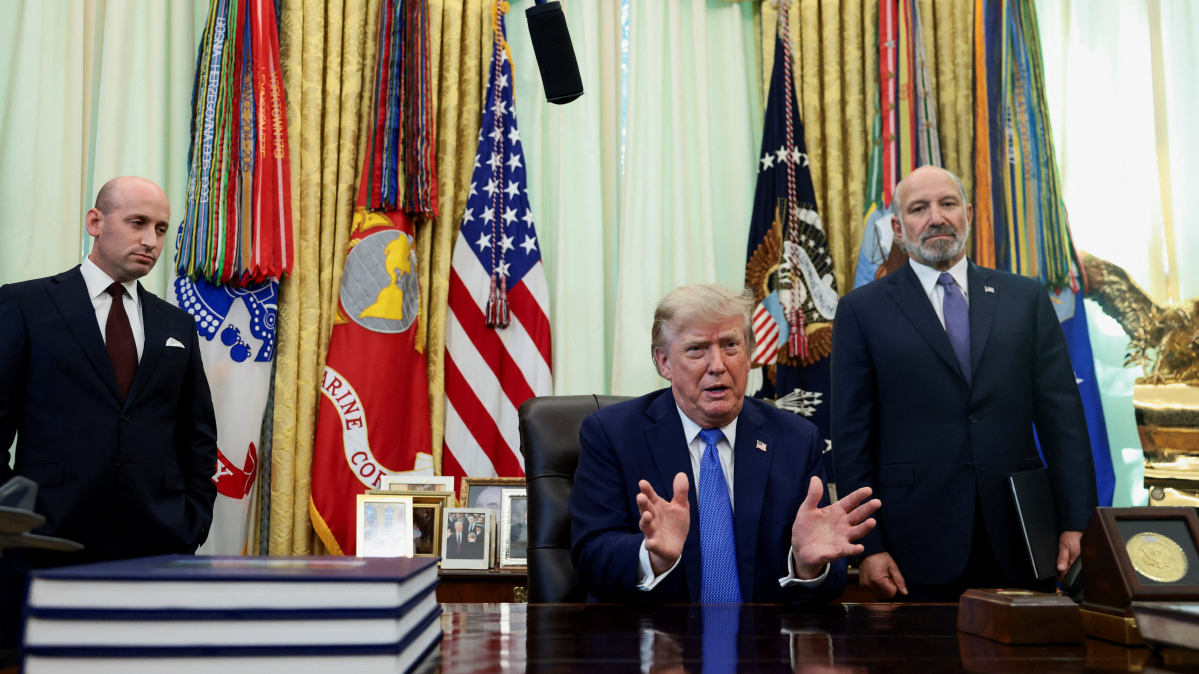
Speaking at the White House, Trump criticised the ruling, calling it "a very unfortunate decision".
"People are building businesses around it," he said. "That's not the way it's supposed to work. It's a disgrace. They're buying their way in, and we're not going to let it happen."
Focus on 'birth tourism'
One of the executive orders formally bans what the administration calls "birth tourism" - the practice of foreign nationals travelling to the United States primarily to give birth so their child acquires American citizenship.
White House deputy chief of staff Stephen Miller said the policy would stop visas being used for that purpose.
"That practice of birth tourism is, as of the signing of this order, hereby banned," Miller said. "No one in the world is anymore allowed to obtain a visa for this fraudulent purpose."
The administration also widened the list of people it believes should not qualify for birthright citizenship. The new rules apply to children born to certain foreign government employees in the United States, people classified as "alien enemies", and could eventually extend to children born in U.S. territories if Congress approves separate legislation.
Birthright citizenship is protected under the Citizenship Clause of the 14th Amendment to the U.S. Constitution, which has long been interpreted as granting citizenship to almost everyone born on American soil, with only limited exceptions such as the children of foreign diplomats.
Trump has repeatedly argued that the amendment was never intended to cover modern immigration. During Thursday's signing ceremony, he said it was introduced after the American Civil War "for the babies of slaves".
However, in its June ruling, the Supreme Court reaffirmed the long-standing interpretation of the Constitution. Chief Justice John Roberts wrote that the authors of the 14th Amendment extended citizenship to "every free-born person" in the United States, adding: "Citizenship, then and now, was the right to have rights."
More legal battles expected
Immigration has remained at the heart of Trump's domestic agenda since returning to office. On his first day back in the White House, he signed an executive order seeking to deny automatic citizenship to children born in the United States unless at least one parent was a U.S. citizen or lawful permanent resident. That order was later struck down by the Supreme Court.
Although there is no federal law banning birth tourism, regulations introduced during Trump's first term already prohibit travellers from obtaining tourist visas primarily to give birth in the United States. Authorities can also prosecute organisers of birth tourism schemes under fraud and related offences.
The White House argues the latest executive orders are legally distinct from the measures rejected by the Supreme Court. Civil rights groups and immigration advocates are nevertheless expected to challenge the new directives in court.
Read more:

















What is your opinion on this topic?
Leave the first comment