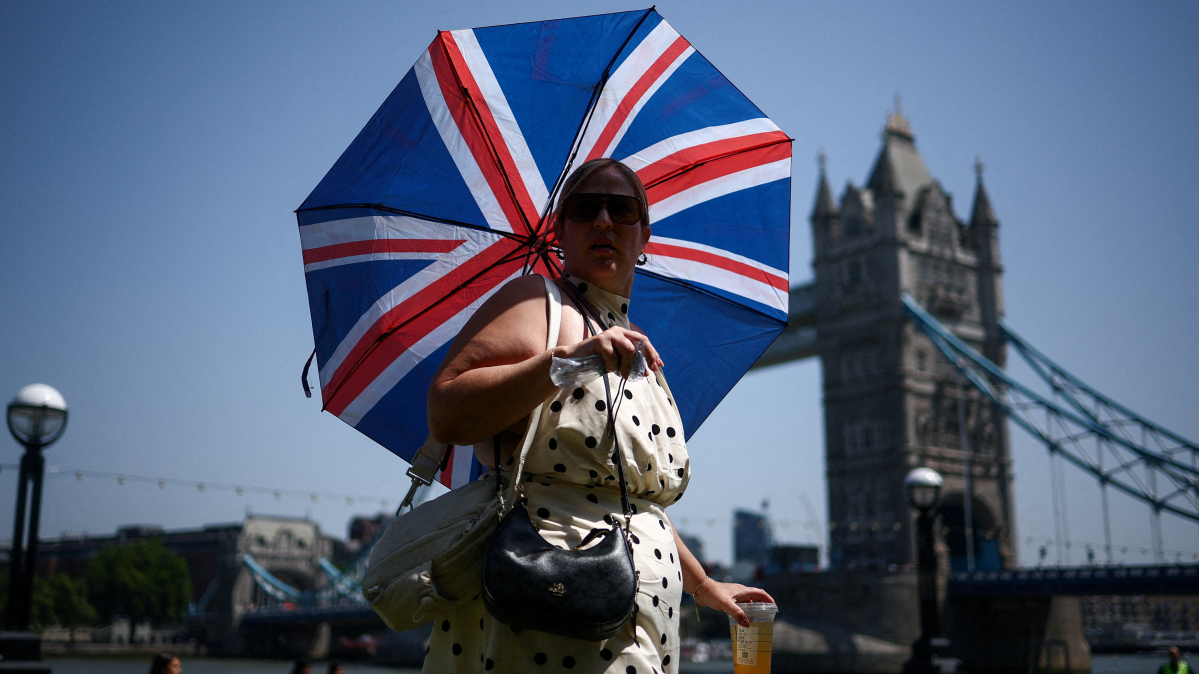
The United Kingdom recorded a provisional high of 36.4°C on Thursday, according to the Met Office, making it the hottest June day on record. The extreme heat is part of a wider heatwave affecting much of Western Europe, with temperatures remaining well above seasonal averages.
Record temperatures across Europe
The heatwave has gripped much of Western Europe, with exceptionally high temperatures recorded in France, Spain, Italy and the Netherlands.
In Paris, temperatures reached 40.9°C earlier this week, setting a new June record for the French capital.
Health alerts and government response
Authorities across Europe have issued widespread health warnings, urging residents to adjust their daily routines and avoid prolonged exposure to the sun.
France has activated its highest level of health system mobilisation, allowing hospitals to postpone non-urgent procedures to prioritise heat-related cases.
In the UK, the Met Office extended a red heat alert across large parts of the country, marking the first time such warnings have remained in place for three consecutive days.
Heat-related deaths and safety concerns
Officials in several countries have reported deaths linked to the extreme temperatures and associated risks.
In France, at least 48 people have died in drowning incidents since the start of the heatwave, with many attempting to cool off in unsafe conditions.
Germany has also reported more than 20 fatalities in swimming-related accidents, according to the German Life Saving Association.
Italy has reported additional heat-related deaths, with growing concern over the impact on vulnerable workers and those employed outdoors.
Schools and public services disrupted
Education systems across Europe have been significantly affected by the extreme heat.
In France, around 13,500 schools have closed or switched to modified timetables because of dangerously high indoor temperatures.
In the UK, more than 1,000 schools have been partially or fully closed, with classroom temperatures in some areas exceeding 40°C.
Authorities warned that disruption could continue as the heatwave is expected to persist for several more days.
What's driving the heatwave?
Meteorologists attribute the extreme conditions to a weather pattern known as an Omega block, which traps hot air over large regions for extended periods.
The phenomenon, named after the Greek letter Ω, disrupts normal atmospheric circulation and can intensify both heatwaves and storms.
Scientists also say climate change is increasing the frequency and severity of extreme weather events.
Work disruption and economic impact
Labour authorities in several countries have warned of heightened risks for outdoor workers, particularly in construction, agriculture and delivery services.
In Italy alone, trade unions estimate that up to 1.5 million workers could be affected during periods of peak heat.
Some regions have introduced bans on outdoor work during the hottest part of the day, alongside emergency financial support for affected businesses.
Demand for cooling surges
Demand for air conditioning has risen sharply across Southern and Western Europe, despite historically lower usage than in many other parts of the world.
Manufacturers including Samsung Electronics, Midea and Mitsubishi Electric have reported increased sales as households and businesses seek relief from the soaring temperatures.
Climate concerns intensify
UN climate officials say the heatwave reflects a broader trend of increasingly severe climate extremes linked to global warming.
The combination of prolonged heat, pressure on infrastructure and growing public health risks has renewed debate across Europe about climate adaptation and preparedness.
Daily life under strain
From school closures to overcrowded hospitals and disrupted transport, the heatwave has significantly affected daily life across much of Western Europe.
Residents and tourists alike have struggled to cope with temperatures rarely seen in the region, while many public spaces have been forced to adapt their operations or close during the hottest hours of the day.
Authorities continue to urge caution as the heatwave is expected to persist before cooler conditions gradually return.


















What is your opinion on this topic?
Leave the first comment