The UN's International Maritime Organization has paused escort operations through the Strait of Hormuz after a cargo ship was reportedly attacked near Oman, with two U.S. officials accusing Iran of the attack.
⦿ 00:21 GMT | UPDATE
IRGC says it targeted U.S. military positions
Reuters
Islamic Revolutionary Guard Corps said it targeted U.S. military positions in the region on Saturday in response to fresh American strikes against Iran.
The Guards did not specify which U.S. positions were targeted or the extent of any damage.
The statement came after Iran’s semi-official ISNA earlier reported that the IRGC had warned its response to the latest U.S. attack would be “swift and decisive,” before later deleting the statement.
⦿ 22:11 GMT | UPDATE
U.S. VP Vance warns Iran, says 'Violence will be met with violence'
Reuters
U.S. Vice President JD Vance said Iran should use direct communication channels if it has disputes over how the memorandum of understanding is being implemented.
Vance warned that if Tehran resorts to force, “violence will be met with violence,” signalling Washington’s readiness to respond to any escalation.
⦿ 22:08 GMT | UPDATE
Iran warns U.S. will face ‘retreat and regret’ over ceasefire breach
Reuters
The head of Iran’s parliamentary national security committee said the “reckless violation of the ceasefire” by the United States would lead to “retreat and regret” on the American side.
The official also said President Donald Trump had shown “no commitment” to the principles of negotiation or the ceasefire, in Tehran’s latest criticism following U.S. strikes on Iranian military sites.
⦿ 20:42 GMT | UPDATE
CENTCOM confirms military strikes on Iran following Strait of Hormuz incident
Reuters
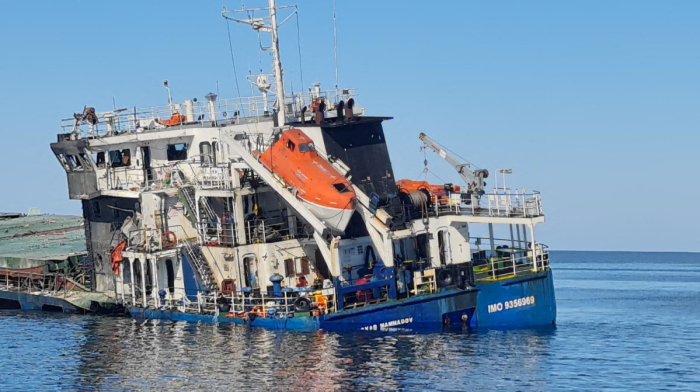
The United States Central Command said U.S. forces carried out strikes against Iran on 26 June in what it described as a “powerful response” to Tehran’s attack on a commercial vessel transiting the Strait of Hormuz.
According to CENTCOM, U.S. aircraft struck Iranian missile and drone storage sites, along with coastal radar positions, after Iran hit the Singapore-flagged cargo ship M/V Ever Lovely with an attack drone on 25 June.
The cargo ship was struck as it was exiting the strait along the Omani coast.
CENTCOM said the attack violated the ceasefire and undermined freedom of navigation through one of the world’s most important trade corridors.
It added that U.S. forces remain deployed in the area to coordinate safe passage for commercial vessels and monitor compliance with the agreement with Iran.
⦿ 18:54 GMT | UPDATE
Hezbollah says Lebanon cannot enforce Israel deal
Reuters
Hezbollah lawmaker Hassan Fadlallah said Lebanese authorities would not be able to enforce a framework agreement signed with Israel in Washington unless, with U.S. backing, they “go to civil war,” according to Al Mayadeen.
Fadlallah said Hezbollah would confront any measures taken by the Lebanese state and would hold on to its weapons more firmly.
He added that the group’s opposition was “serious” and would prevent authorities from implementing commitments on the ground.
⦿ 18:00 GMT | UPDATE
Israel, Lebanon sign agreement after fifth round of talks
Al Jazeera
Negotiators from the United States, Israel and Lebanon have signed a trilateral framework agreement following the fifth round of diplomatic negotiations.
The discussions focused on a U.S.-backed proposal that would see Israeli forces transfer control of parts of the territory they currently occupy to the Lebanese military.
Ahead of the talks, Lebanon called for a complete withdrawal of Israeli forces from its territory. Israel, meanwhile, maintained that any withdrawal must be conditional on the full disarmament of Hezbollah and guarantees that the group would not re-establish its military presence along the border.
Speaking at the signing ceremony, U.S. Secretary of State Marco Rubio described the agreement as an initial breakthrough.
"This is the beginning of the beginning," Rubio said. "There is still a great deal of work ahead. Today marks the first step, and the first step is often the hardest."
⦿ 17:40 GMT | UPDATE
Rubio announces framework agreement between Israel and Lebanon after talks in Washington
Reuters
U.S. Secretary of State Marco Rubio announced a framework agreement on Friday between Israel and Lebanon after talks in Washington.
⦿ 17:00 GMT | UPDATE
Trump threatens 100% tariff on any country that imposes digital services tax
Reuters
U.S. President Donald Trump on Friday threatened to impose a 100% tariff on all goods from any country that imposes a digital services tax on American companies.
Trump said in a social media post that the new tariff would supersede any trade deals with the U.S.
⦿ 16:10 GMT | UPDATE
Trump says Iran attacks on ships 'a foolish violation' of ceasefire
Reuters
Iran has fired at least four one-way attack drones at ships passing through the Strait of Hormuz, U.S. President Donald Trump said on Friday, adding that one of the drones hit the upper deck of a cargo ship.
"Damage was done, but the Ship was able to proceed on its way. We knocked down three other Drones. Obviously, this is a foolish violation of our Ceasefire Agreement," Trump wrote on Truth Social.
⦿ 15:00 GMT | UPDATE
UAE stresses need for free navigation through Hormuz in call with Iran foreign minister
Reuters
UAE Foreign Minister Sheikh Abdullah bin Zayed on Friday stressed the need for adherence to the terms of a U.S.-Iran agreement and protection of maritime corridors, including freedom of navigation through the Strait of Hormuz, in a call with his Iranian counterpart Abbas Araqchi, the UAE state news agency WAM reported.
⦿ 14:40 GMT | UPDATE
GCC welcomes Oman announcement on evacuating sailors stranded in Hormuz
Reuters
Gulf Cooperation Council Secretary-General Jasem Mohamed Albudaiwi on Friday welcomed an announcement by Oman that it will provide a temporary maritime corridor in the Strait of Hormuz, in coordination with the International Maritime Organization, to help evacuate over 11,000 stranded sailors.
He also condemned in a statement what he called Iranian threats to freedom of navigation in the strait.
⦿ 13:50 GMT | UPDATE
UAE issues missile alert, followed immediately by a message giving the all clear
Reuters
The United Arab Emirates issued a statement on Friday telling residents the situation was safe, moments after issuing an alert warning of a possible missile threat.
It was not immediately clear what prompted the initial alert, which was like those issued at the height of the Iran war when Iranian missiles and drones targeted the UAE.
⦿ 12:40 GMT | UPDATE
Israel's Katz warns Iran against attacking Israel
Reuters
Israeli Defence Minister Israel Katz said on Friday that any Iranian attack on Israel would be Tehran's "biggest mistake".
Quds Force commander Esmail Qaani said on Thursday that if Israel did not withdraw voluntarily from south Lebanon, it would eventually be forced to leave in defeat.
⦿ 11:30 GMT | UPDATE
Israel drops leaflets over south Lebanon town ordering residents to leave
Reuters
Israeli forces dropped leaflets over a town in southern Lebanon on Friday ordering residents to leave, Lebanese state media reported, in a first such order issued since the ceasefire between Israel and Hezbollah took effect.
The town lies near the boundary of the area occupied by Israeli troops inside southern Lebanon, as designated by Israel.
⦿ 10:00 GMT | UPDATE
Iran says safe passage through Hormuz cannot be guaranteed without coordination with Tehran
Reuters
Iran's deputy foreign minister Kazem Gharibabadi said safe passage through the Strait of Hormuz could not be guaranteed without coordination with Iran, and that failure to coordinate could result in the suspension of any designated route.
The comments posted on social media platform X on Friday came after Oman, in coordination with the International Maritime Organization, designated temporary routes for passage through the strait.
⦿ 09:00 GMT | UPDATE
EU says oil flows recovering slowly after Iran ceasefire pact
Reuters
The European Union's Oil Coordination Group said oil trade flows are gradually recovering following last week's U.S.-Iran memorandum of understanding, but warned it will take time for supplies to reach Europe.
The group added that crude oil markets remain stable for now, supported by global inventory drawdowns in recent months.
⦿ 07:43 GMT | UPDATE
IAEA says Iran inspections to resume under interim deal
Reuters
The head of the IAEA, Rafael Grossi, said the interim U.S.-Iran agreement requires UN nuclear inspectors to regain access to Iran, despite Tehran's earlier indication that key sites would remain off-limits until a final deal is reached.
Grossi said inspectors aim to verify sealed nuclear materials and assess whether any enriched uranium is missing.
⦿ 05:50 GMT | UPDATE
Iran warns ships to use approved Hormuz routes
Defa Press
Iran's Persian Gulf Strait Authority has warned vessels travelling through the Strait of Hormuz to use only routes approved by Tehran, saying ships outside those routes will not be guaranteed safe passage. It said any risks would fall on the vessel's owner, operator and commander.
“Any movement through routes outside the framework of the PGSA is not subject to the guarantee of safe passage and will not be covered by insurance and related liabilities. The consequences of movement through unauthorised routes will be the responsibility of the owner, operator and commander of the vessel,” the statement reads.
⦿ 05:48 GMT | UPDATE
Iran says Italy and Romania share responsibility for U.S. strikes
X/Gharibabadi
Iran's Deputy Foreign Minister Kazem Gharibabadi said Italy and Romania could bear international responsibility if the U.S. used bases on their territory to launch strikes on Iran, arguing that such action would amount to an "act of aggression" under UN resolutions.
⦿ 05:45 GMT | UPDATE
Italy denies its bases were used in attacks on Iran
MFA
Italy has told Iran that none of its military bases were used in U.S. attacks on Iranian targets and said no such operation would be allowed in the future, according to Iran's foreign ministry following talks between Foreign Ministers Abbas Araghchi and Antonio Tajani.
⦿ 05:42 GMT | UPDATE
Iran and Oman hold maritime talks on Hormuz
MFA
Iranian Foreign Minister Abbas Araghchi and his Omani counterpart, Badr Albusaidi, discussed the Strait of Hormuz in a phone call on Thursday, Iran's foreign ministry said.
The two sides reviewed maritime traffic and temporary 60-day arrangements, stressing the need for continued coordination and technical talks.
⦿ 05:40 GMT | UPDATE
Iran says neighbours will help shape Strait of Hormuz's future
X/@araghchi
Iranian Foreign Minister Abbas Araghchi said Tehran and Oman will work with neighbouring countries to decide the future administration and maritime services in the Strait of Hormuz, following talks with his Omani counterpart.
⦿ 05:36 GMT | UPDATE
Iran rejects U.S. claims over unfrozen assets
X/@mb_ghalibaf
Iran's top negotiator Mohammad Bagher Ghalibaf has rejected U.S. claims that Tehran's unfrozen assets will be used to buy American agricultural products, accusing Washington of making false promises in a sharply worded post on X.
⦿ 03:11 GMT | UPDATE
Saudi Aramco resumes Ras Tanura oil loadings
Reuters
Saudi Aramco has resumed loading crude at its Ras Tanura export terminal for the first time in nearly four months, signalling a further easing of disruption in the Gulf after the U.S. and Iran reached an interim agreement to halt hostilities.
Two Very Large Crude Carriers were loading oil at the terminal on Friday, with another waiting offshore, according to LSEG shipping data.
The terminal had been largely idle since March after exports were diverted to the Red Sea port of Yanbu during the closure of the Strait of Hormuz.
⦿ 03:02 GMT | UPDATE
UN suspends Hormuz operations after attack
Reuters
The UN's International Maritime Organization has suspended its escort operation through the Strait of Hormuz after a Singapore-flagged cargo ship reported being struck near Oman, in a fresh escalation that threatens the fragile ceasefire between Iran and Israel.
Two U.S. officials told Reuters that Iran fired on the vessel, identified by sources as the Ever Lovely, while a security source said it was likely hit by a drone.
The incident came hours after Tehran warned that ships using routes not approved by its newly established Strait Authority would not be guaranteed safe passage















What is your opinion on this topic?
Leave the first comment