live Trump says U.S. could strike Iran ‘hard’ as Tehran warns of economic fallout- Middle East conflict
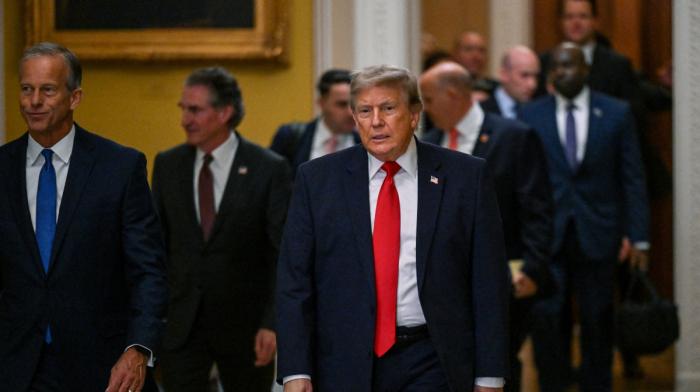
U.S. President Donald Trump said Washington could destroy Iran’s infrastructure “in two days,” while Tehran warned the U.S. would...
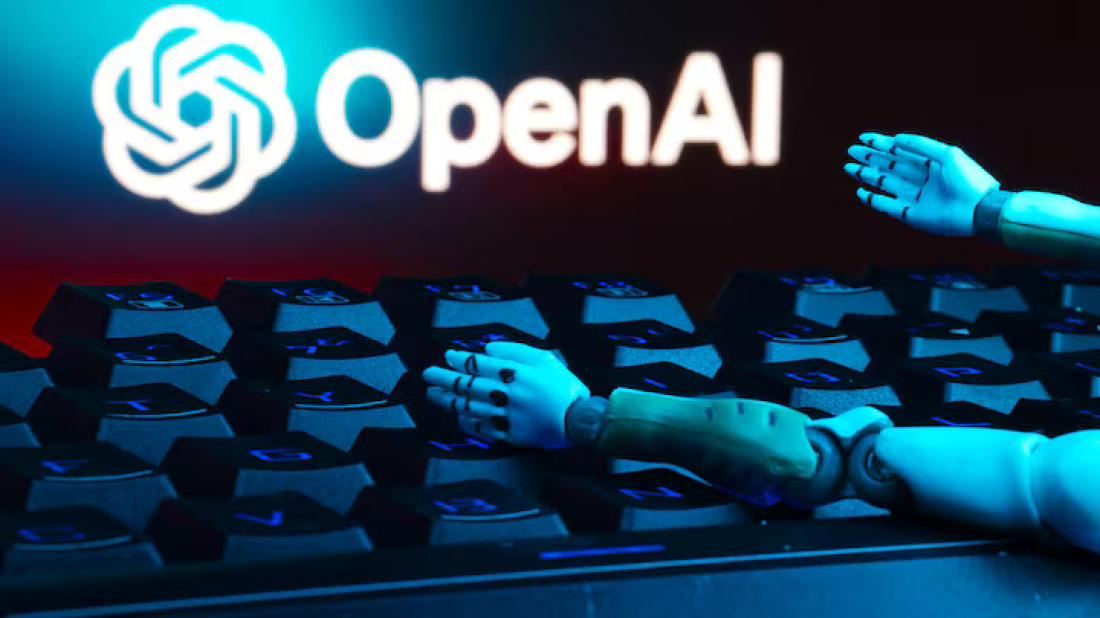
OpenAI is set to launch its first European data centre under the Stargate programme, partnering with developer Nscale Global Holdings and Norwegian investment firm Aker ASA to establish a $1 billion facility in Norway, the companies announced on Thursday.
The initiative, named Stargate Norway, will be located near Narvik in the country’s north and will initially house 100,000 Nvidia processors, with plans for a tenfold expansion in future phases to meet rising demand for artificial intelligence infrastructure.
This marks the first Stargate project in Europe, following the recently unveiled Stargate UAE in the United Arab Emirates. The Norwegian data centre will be fully powered by renewable energy sourced from local hydropower, the companies confirmed.
“This kind of infrastructure is essential and will unlock huge potential for developers, researchers, scientists, and startups throughout Norway and Europe,” said OpenAI CEO Sam Altman in a video message.
Shares in Aker ASA climbed 11% to a two-year high of 729 Norwegian crowns before easing to 717 crowns by early afternoon. Aker and Nscale will each hold a 50% stake in Stargate Norway, with a combined initial investment of $1 billion. The facility is expected to consume around 20 megawatts of electricity in its first phase, with OpenAI as its inaugural client.
Aker noted it is collaborating with local energy provider Nordkraft to ensure sufficient power supply for future expansions, targeting an increase in usage to 230 MW, and potentially an additional 290 MW in later stages.
An Aker spokesperson declined to provide further details on the total investment or a timeline for the future capacity increase.
The data centre will operate using Nvidia’s state-of-the-art GB300 Superchip processors, connected through the company’s high-speed NVLink network, Nvidia CEO Jensen Huang said in the presentation.
Nscale CEO Josh Payne added that the facility would be among Europe’s first AI gigafactories.
The U.S.-Israeli war with Iran loomed over U.S. President Donald Trump's visit to China, as signs emerged that the conflict is causing a shift in alliances across the Middle East.
Iran’s Foreign Minister Abbas Araghchi said Tehran has “no trust” in the United States and will only consider negotiations if Washington shows seriousness. His remarks came as talks on Iran’s nuclear programme continued, with Trump and Xi also opposing Iran acquiring nuclear weapons.
Thousands of fans turned out in Iran's capital Tehran for a massive farewell ceremony on Wednesday night for their national football team, wishing them success before their departure for the World Cup 2026 matches co-hosted by the United States and Mexico.
British Prime Minister Keir Starmer was fighting for his political survival on Thursday (14 May) after Health Secretary Wes Streeting resigned, saying he had “lost confidence” in Starmer’s leadership.
Chinese President Xi Jinping and U.S. President Donald Trump are holding high-level talks in Beijing on Thursday, following a ceremonial welcome, with both leaders highlighting cooperation despite ongoing tensions.
Japanese filmmaker Koji Fukada has said that the use of artificial intelligence (AI) to “jump straight to the result” risks undermining the purpose of art, which he believes should be rooted in self-expression and a deeper understanding of the world.
The Spanish government has issued a defiant message to Silicon Valley, confirming it will push ahead with stringent new legislation designed to make social networks and Artificial Intelligence (AI) demonstrably safer.
A robotics startup says it has built an AI “brain” that can teach humanoid robots new physical skills in days rather than months, as the race to deploy human-shaped machines in factories and warehouses accelerates.
Apple and Meta have publicly opposed a Canadian bill they say could force technology companies to weaken encryption on devices and online services if it becomes law.
European Union countries and European Parliament lawmakers have agreed on a softened version of the bloc’s landmark artificial intelligence rules, including delayed implementation, in a move critics say reflects growing concessions to major technology firms.
You can download the AnewZ application from Play Store and the App Store.
What is your opinion on this topic?
Leave the first comment