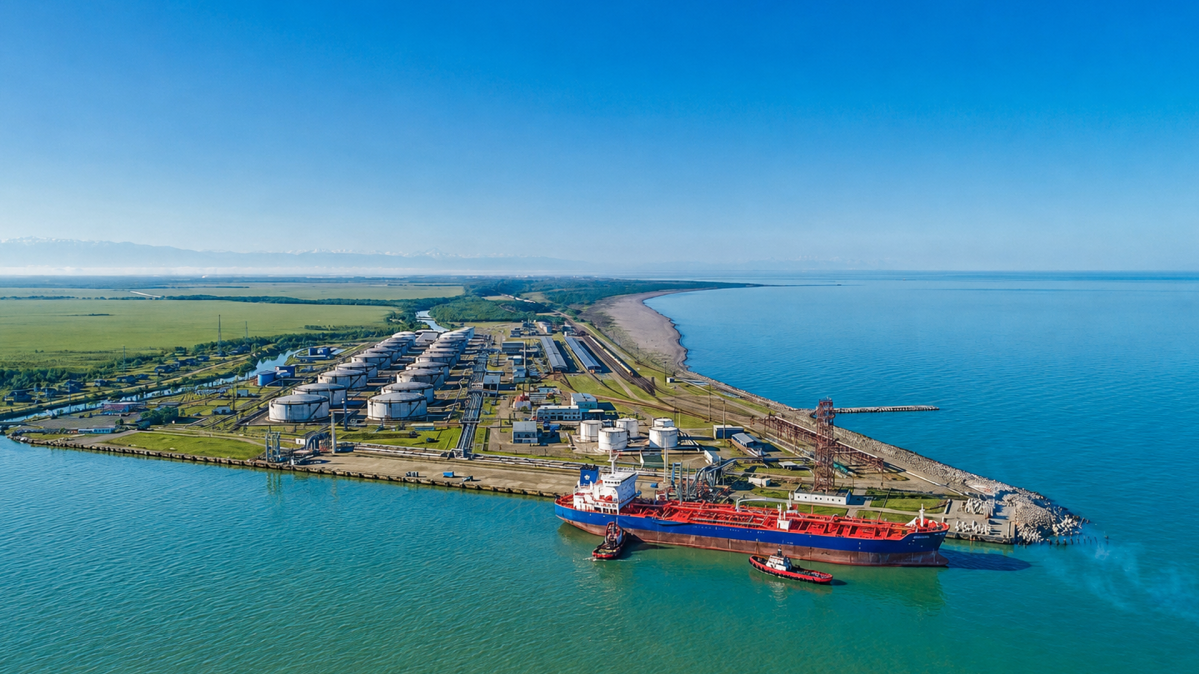
Black Sea Petroleum (BSP), the company behind Georgia's Kulevi plant on the Black Sea coast, has announced that as of 23 August, the refinery is processing exclusively non-Russian oil.
This brings to a close a diversification plan the company had been racing to finish since being named in the EU's sanctions list against Russia.
According to the statement, the switch happened gradually. Kazakh crude was blended in alongside Russian supplies through July and the first three weeks of August, before Russian oil was phased out entirely.
The final piece fell into place on 30 August, when the tanker Kriti Legend docked at Kulevi carrying the refinery's first cargo of Libyan crude - around 90,000 tonnes, delivered under a long-term contract signed back on 3 July.
BSP says the move fulfils the raw material diversification plan it first laid out in July and August, when it came under pressure from Brussels. The Kulevi refinery was named in the EU's 21st sanctions package over its processing of Russian crude, with a six-month grace period to clean up its supply chain before a full transaction ban kicks in. If the company's account holds up, that would put Kulevi ahead of its own deadline.
A shift for Black Sea Petroleum
It's a notable shift in tone from the company. When Reuters first reported in October 2025 that Russian oil was reaching Kulevi, BSP largely stayed quiet rather than address it directly, and it kept processing Russian crude even after the refinery narrowly avoided the EU's 20th sanctions package in February.
It wasn't until this July, with a listing in the 21st package now looming, that BSP shifted from playing down the issue to publicly promising change - and, in its own words, trying to "confirm the legitimacy of its operations." Tbilisi, for its part, has stuck to a consistent line throughout.
When the sanctions were announced, Georgia's Foreign Ministry said it regretted the decision, insisted there were "neither factual nor legal grounds" for targeting Kulevi, and pointed to documentation it says it had already shared with the European Commission.
The Ministry also stressed that Georgia takes sanctions compliance seriously and has never recorded a case of sanctions evasion on its territory, while asking Brussels to revisit the listing once the six-month window closes.
It's a position that puts the government somewhat at odds with BSP's own admission that Russian oil needed replacing in the first place - and with the mounting criticism, including from British diplomats in Tbilisi, that Georgia has been too slow to move away from Russian crude.
It's worth noting that BSP's announcement also sits a little awkwardly next to Georgia's own trade figures.
Geostat's recent statistics for January to July showed Russian crude still making up the overwhelming bulk of the country's oil imports, with the refining boom built almost entirely on Russian barrels right up until the summer. BSP's timeline and the state's own numbers don't fully line up, and it will likely take a few more months of data - and probably a fair bit of EU scrutiny -before it's clear whether Kulevi has genuinely gone Russia-free or is simply saying so a little early.
Read more from Georgia:















What is your opinion on this topic?
Leave the first comment