Azerbaijan's President Ilham Aliyev has outlined an expanded vision for the Zangezur Corridor, describing it not simply as a transport route connecting mainland Azerbaijan with the Nakhchivan exclave, but as a future platform for energy, telecommunications and wider regional integration.
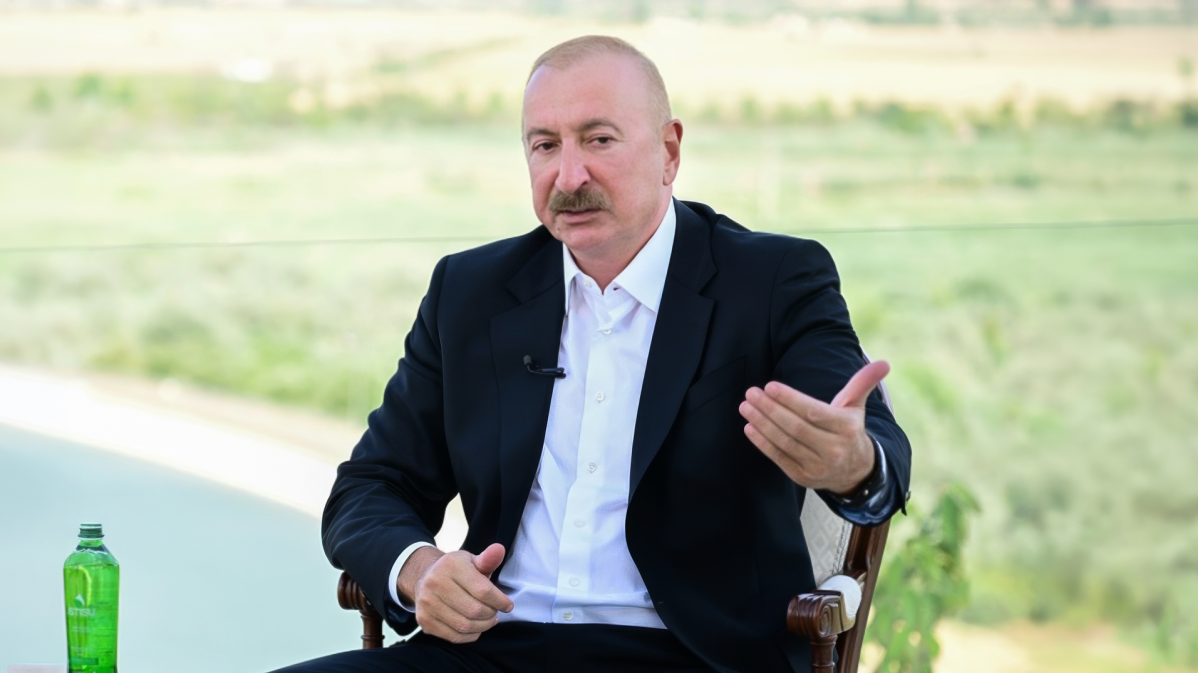
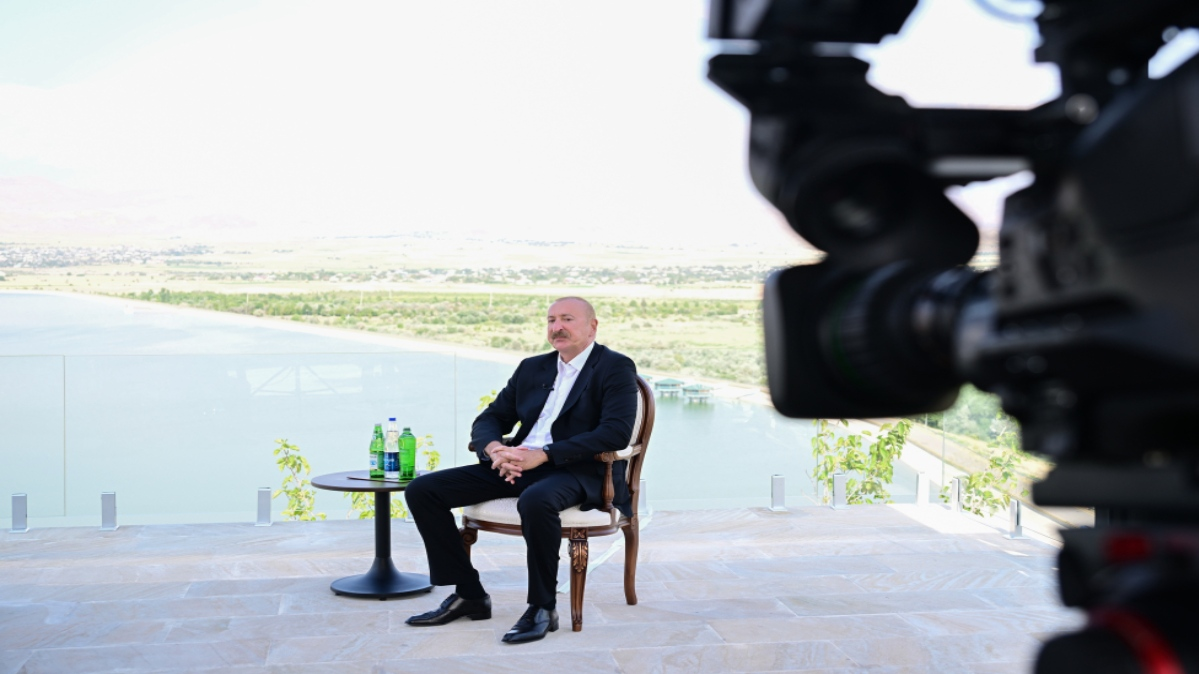
In an interview with Azerbaijan State Television (AZTV) while visiting Nakhchivan, Aliyev linked the corridor to broader plans for the area's economic and strategic development. He argued that the exclave's growing role in transport, energy and industry is closely tied to the corridor project, which he said is moving from concept to implementation.
Aliyev noted that reconnecting Nakhchivan with mainland Azerbaijan has long been a national priority.
"Connecting the main part of Azerbaijan with Nakhchivan, which is an integral part of it, has been our long-standing dream," he said. "We have now moved closer to it with confidence and great skill."
The president described the opening of the corridor as one of the most significant developments shaping Nakhchivan's future, saying it would create new economic opportunities while strengthening the region's strategic importance.
From post-war commitment to regional project
According to Aliyev, Azerbaijan insisted on including provisions relating to a connection between mainland Azerbaijan and Nakhchivan in the trilateral statement signed after the Second Garabagh War. However, he argued that little practical progress followed in subsequent years despite repeated discussions with Armenia and Russia.
"Over the five years that have passed since the Second Garabagh War, no practical steps have been taken regarding the opening of the Zangezur corridor," he said.
Aliyev said momentum changed after diplomatic efforts led by the United States resulted in agreements reached during the Washington summit of 8 August 2025.
"As a result, this issue found its solution at the historic Washington Summit on August 8, 2025. The implementation of this project, named TRIPP, has already been launched," he said.
He added that the issue was also discussed during a recent conversation with U.S. President Donald Trump, with both sides expressing confidence that the project would move forward quickly.
Rail and road links take shape
While much public attention has focused on transport links, Azerbaijan has already invested heavily in roads, railways and logistics infrastructure leading towards Nakhchivan.
"Our goal is to have at least 15 million tonnes of cargo transit through this transport corridor."
Ilham Aliyev
President of Azerbaijan
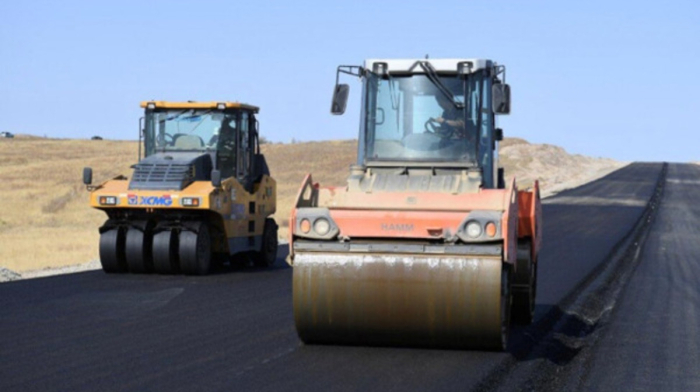
The Horadiz-Aghband highway is nearing completion, while railway construction on the Azerbaijani side is advancing towards the Armenian border. Aliyev said the line is expected to reach the border next year and stressed that Azerbaijan is planning for far greater capacity than initially envisioned.
According to the president, the railway on Azerbaijani territory is being upgraded to eventually handle that volume, while work is also underway on the Nakhchivan section of the route.
Aliyev said several international actors, including the European Union, have shown interest in participating in parts of the project, particularly within Nakhchivan, although Azerbaijan remains prepared to complete the work independently if necessary.
Beyond transport: An energy corridor
Aliyev made clear that cargo transit is only one element of Azerbaijan's vision.
He said Azerbaijan has already prepared plans for electricity transmission infrastructure connecting mainland Azerbaijan and Nakhchivan through Armenian territory.
"Today, we look at this in a broader context," he said. "Our project to lay power transmission lines from the main part of Azerbaijan to Nakhchivan through the territory of Armenia is ready."
Aliyev said a major converter substation built in Jabrayil was specifically designed to transmit large volumes of electricity through a future energy corridor.
He argued that the project could also benefit Armenia, particularly given concerns surrounding the future of its ageing nuclear power plant.
"The energy corridor extending through the territory of Armenia to Nakhchivan, and subsequently to Türkiye and Europe, will also allow Armenia's energy system to remain stable should a crisis arise," he said.
According to Aliyev, Azerbaijani specialists have already identified potential routes for transmission infrastructure crossing Armenian territory and implementation could proceed rapidly once agreements are finalised.
Nakhchivan's renewable energy ambitions
The energy dimension is closely linked to Azerbaijan's wider plans for Nakhchivan.
During the visit, Aliyev highlighted the construction of a new 300-megawatt thermal power plant, ongoing solar power projects and new hydropower developments. He said Nakhchivan's solar generation potential could eventually reach between 500 and 1,000 megawatts.
Foreign investors are already expressing interest in renewable energy projects in the exclave, he said, while additional transmission links would create new export opportunities to neighbouring markets.
Aliyev argued that Azerbaijan's existing energy links with Russia, Iran, Georgia and Türkiye place the country in a strong position to develop new regional electricity corridors.
Fibre optics, power lines and future pipelines
The president repeatedly stressed that Azerbaijan no longer views the Zangezur Corridor solely through the lens of transport.
"This project is not merely a railway or a highway," Aliyev said. "Fiber-optic cables, power lines, and in the future, if needed, oil and gas pipelines can also pass through here."
The comments reflect a significant broadening of the project's scope. Initially framed as a transport connection between mainland Azerbaijan and Nakhchivan, the corridor is increasingly being presented as a multi-layered infrastructure network that could facilitate trade, energy exports, digital connectivity and regional integration.
Nakhchivan at the centre of regional connectivity
Aliyev linked the success of the corridor to wider plans for Nakhchivan's development, including new industrial facilities, transport infrastructure, tourism projects and energy investments.
The president said the region is positioned to become a key node within both East-West and North-South transport routes, giving it a strategic role far beyond its geographic size.
"The significance of this route will extend not only to Azerbaijan, but to a broader geography as well," he said.
If implemented as envisioned, the Zangezur Corridor would not only reconnect Nakhchivan with mainland Azerbaijan but also transform the region into a major transit, logistics and energy hub linking the South Caucasus with Türkiye, Europe and neighbouring regions.














What is your opinion on this topic?
Leave the first comment