U.S. envoy says ‘meaningful progress’ made as Ukraine talks enter second day
U.S. special envoy Steve Witkoff said talks between Russia and Ukraine had brought “meaningful progress” towards ending the war, as negotiations m...
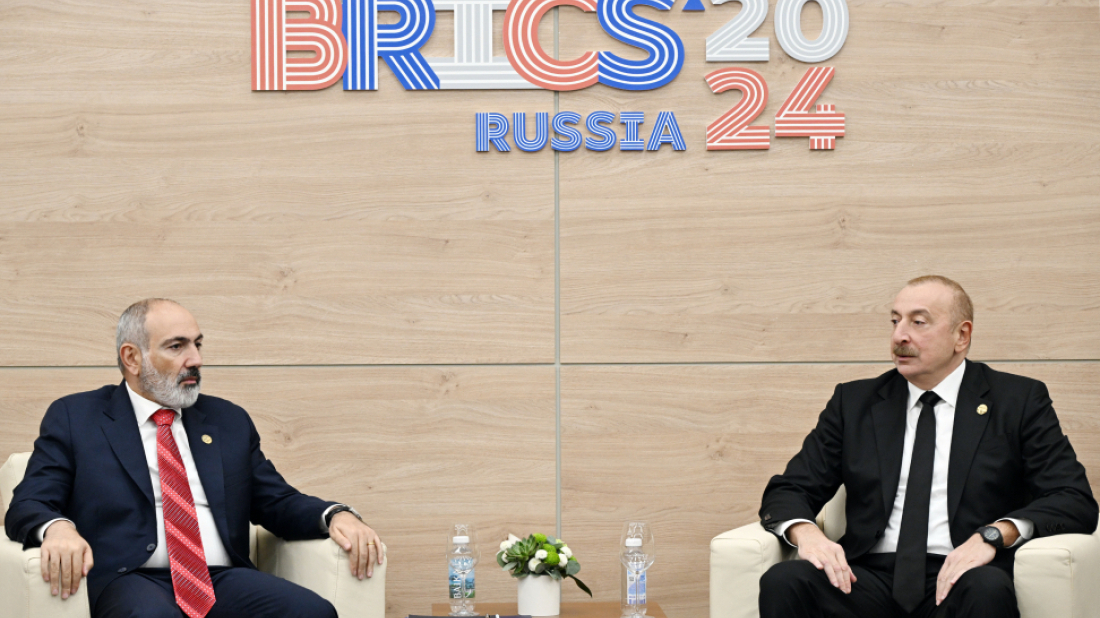
Large-scale military actions between Armenia and Azerbaijan in 2025 are unlikely happened, but clashes along the borders remain a distinct possibility. It is highlighted in the first public report from Armenia‘s Foreign Intelligence Service (FIS).
“In the absence of a peace treaty and established interstate relations, the risk of localized tensions and border escalations persists,” – the report noted, while progress in the delimitation and demarcation of borders between the two neighbouring countries “could help reduce these risks.”
The report, titled “On External Security Risks to Armenia,” placed significant emphasis on the normalization of relations with Azerbaijan and said that bilateral negotiations between Armenia and Azerbaijan will remain “the most effective” this year following to frequent high-level talks and communication around the peace agreement, border delimitation, humanitarian and other issues.
Based on its assessment of developments in 2023 and 2024, FIS predicts that Azerbaijan will continue strengthening its military capabilities through new arms acquisitions and military infrastructure, “working on the transition to more mobile units.”
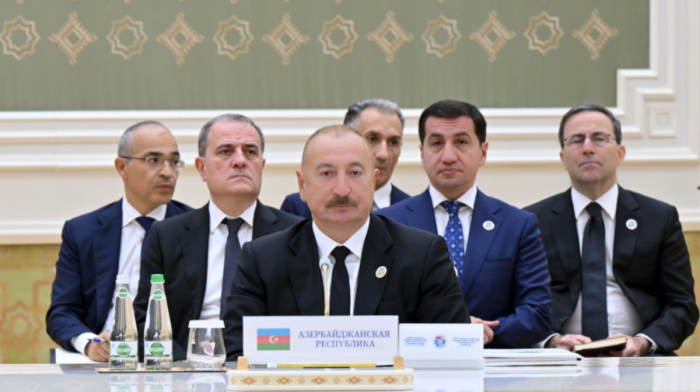
Azerbaijan’s President Ilham Aliyev, in an interview with Russian news agency RIA Novosti, announced that the country will have a record-breaking military budget for 2025.
“This amounts to approximately five billion dollars. We have no choice. At least 60 percent of this sum would not have been spent if these threats did not exist. We would have allocated it to rebuilding Karabakh, social benefits, and other needs. But we are compelled to do this, and we will do it.”
Aliyev added that he considers the arms race a destructive path: “I believe this is a harmful course. First of all, Armenia cannot sustain an arms race with us, even though they receive the majority of their weapons from the West for free or on credit, which will, of course, eventually be forgiven. But even under these circumstances, they cannot keep up with us.”
At the same time, both sides “significant progress” made on the peace treaty between Azerbaijan and Armenia, with 15 out of 17 articles already agreed upon.

Cuba’s fuel crisis has turned into a waste crisis, with rubbish piling up on most street corners in Havana as many collection trucks lack enough petrol to operate.
Iran’s Revolutionary Guards navy held military exercises in the Strait of Hormuz on Monday (16 February), state-linked media reported. The drill took place a day before renewed nuclear negotiations between Tehran and Washington in Geneva.
The 2026 Munich Security Conference (MSC) unfolded over three intense days in Munich, confronting a defining question of our era: has the post-Second World War international order collapsed - and if so, what will replace it?
Ruben Vardanyan has been sentenced to 20 years in prison by the Baku Military Court after being found guilty of a series of offences including war crimes, terrorism and crimes against humanity.
Canadian Prime Minister, Mark Carney, announced on 16 February that the Honourable Janice Charette has been appointed as the next Chief Trade Negotiator to the United States. She's been tasked with overseeing the upcoming review of the Canada-United States-Mexico Agreement (CUSMA).
The United Nations Development Programme (UNDP) has warned that clearing the vast of rubble in Gaza could take up to seven years at the current pace, as the overwhelming majority of residents continue to live in what it describes as extremely dangerous conditions.
Kyrgyzstan faces a critical political turning point as elite splits and public protests highlight deep divisions in Bishkek. Analysts warn that President Japarov’s dismissal of a top ally could shift the balance of power and threaten Kyrgyzstan’s political stability.
Tehran’s right to develop and use nuclear energy for peaceful purposes is “inherent, inalienable, and non‑negotiable,” Iranian Foreign Minister, Abbas Araghchi, told the high-level segment of the United Nations Conference on Disarmament in Geneva on Tuesday (17 February).
Georgia’s ruling party, Georgian Dream, is moving to criminalise what it calls “extremism against the constitutional order”, introducing a new article to the Criminal Code that could lead to prison sentences of up to three years.
For many Palestinians, the holy month of Ramadan is being observed amid hunger, displacement and uncertainty. Families are relying on humanitarian aid to uphold faith and dignity, even as violence, poverty and restrictions shape daily life.
You can download the AnewZ application from Play Store and the App Store.
What is your opinion on this topic?
Leave the first comment