India tightens anti-pollution curbs in New Delhi as air quality dips
India has imposed stricter anti-pollution measures in its capital New Delhi and adjoining areas on Tuesday, as the air quality deteriorated to "severe...
Presidents of Kazakhstan and Azerbaijan have reviewed a new development plan for the Middle Corridor, a key trade route linking China to Europe via Central Asia and the South Caucasus.
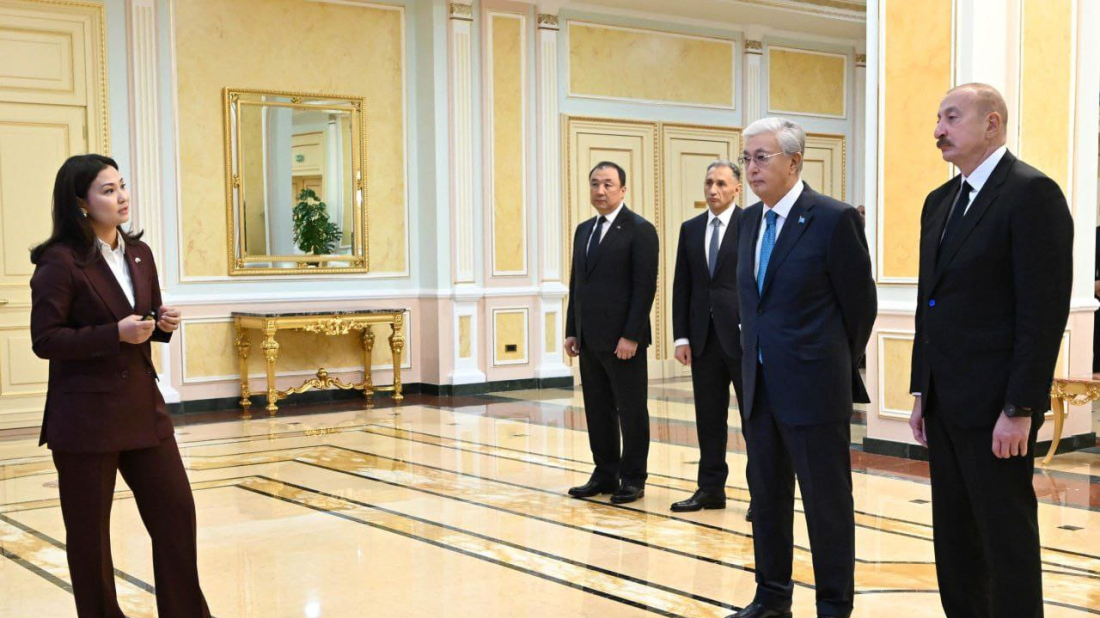
Kazakh President Kassym-Jomart Tokayev and Azerbaijani President Ilham Aliyev were presented with the “Development of the Middle Corridor” project during a briefing by officials on Tuesday, according to the Kazakh president’s office (Akorda).
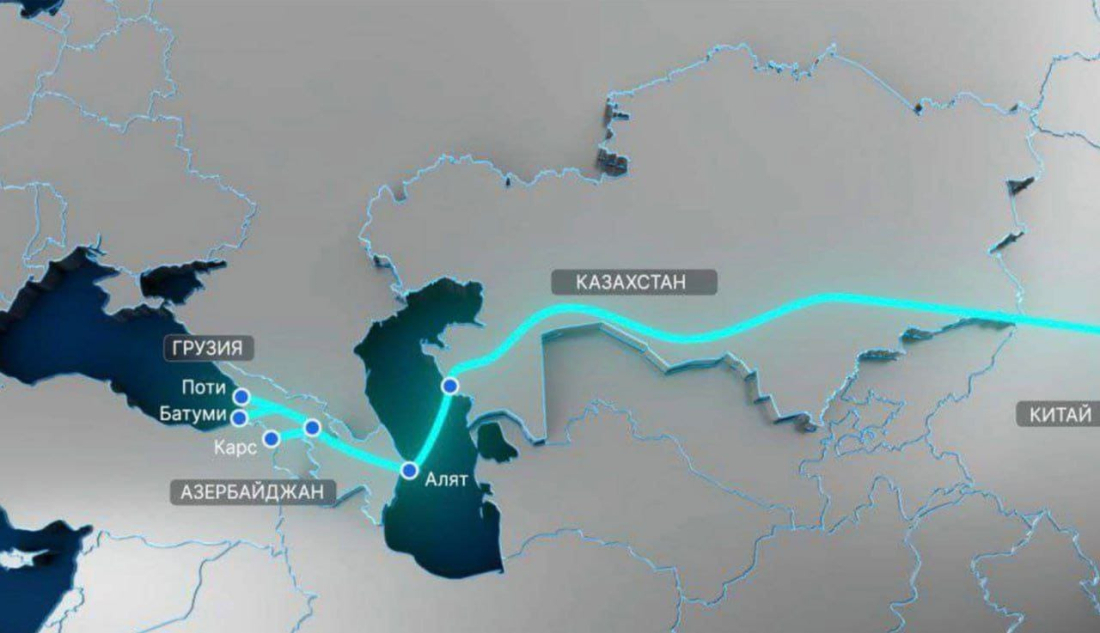
The route, also known as the Trans-Caspian International Transport Route, connects China and Central Asian countries to Europe through Kazakhstan, the Caspian Sea, Azerbaijan, Georgia and Türkiye.
Assel Zhanassova, advisor to President Tokayev, outlined a roadmap to improve infrastructure and logistics along the corridor. She said the main growth driver was the rising volume of shipments from China to Azerbaijan.

Currently, goods shipped from the Chinese border to Georgian ports via the corridor take 15 to 18 days in transit. Officials forecast that cargo volumes along the route will triple by 2030.
Tokayev and Aliyev were also briefed on initiatives aimed at improving competitiveness and efficiency, including digitalisation, port modernisation, and harmonisation of customs procedures.
The Middle Corridor has gained strategic importance amid shifting global supply chains and efforts to diversify trade routes.

Billionaire Jeff Bezos’s Blue Origin has launched NASA’s twin ESCAPADE satellites to Mars on Sunday, marking the second flight of its New Glenn rocket, a mission seen as a crucial test of the company’s reusability ambitions and a fresh challenge to Elon Musk’s SpaceX.
Elon Musk’s bold vision for the future of technology doesn’t stop at reshaping space exploration or electric cars. The Neuralink brain-chip technology he introduced in 2020 could mark the end of smartphones as we know them, and his recent statements amplify this futuristic idea.
Two trains crashed in Slovakia on Sunday evening after one ran into the back of the other, injuring dozens of passengers, police and the country's interior minister said.
China has announced exemptions to its export controls on Nexperia chips intended for civilian use, the commerce ministry said on Sunday, a move aimed at easing supply shortages affecting carmakers and automotive suppliers.
Russia said its forces have captured the village of Rybne in Ukraine’s southeastern Zaporizhzhia region, though Kyiv has not confirmed the claim. Ukraine’s military says it repelled multiple Russian assaults nearby amid ongoing heavy fighting.
Iraqis began casting ballots on Tuesday in parliamentary elections to choose a new 329-member legislature, state television said, with nationwide polling set to close at 6:00 p.m. (1500 GMT).
Iranian President Masoud Pezeshkian has urged the public to drastically reduce water consumption in the aftermath of an unprecedented drought across the country.
Uzbekistan is increasing its involvement in global space research with the signing of a new memorandum of understanding between the Ministry of Digital Development and U.S. aerospace firm, Vast Space.
Kazakhstan’s President Kassym-Jomart Tokayev is preparing for a state visit to Moscow on 12 November, highlighting the continued engagement between the two countries.
The Vatican has launched an investigation into Spanish Bishop Rafael Zornoza over an allegation of sexual abuse of a teenage boy in the 1990s, a charge the cleric firmly denies.
You can download the AnewZ application from Play Store and the App Store.
What is your opinion on this topic?
Leave the first comment