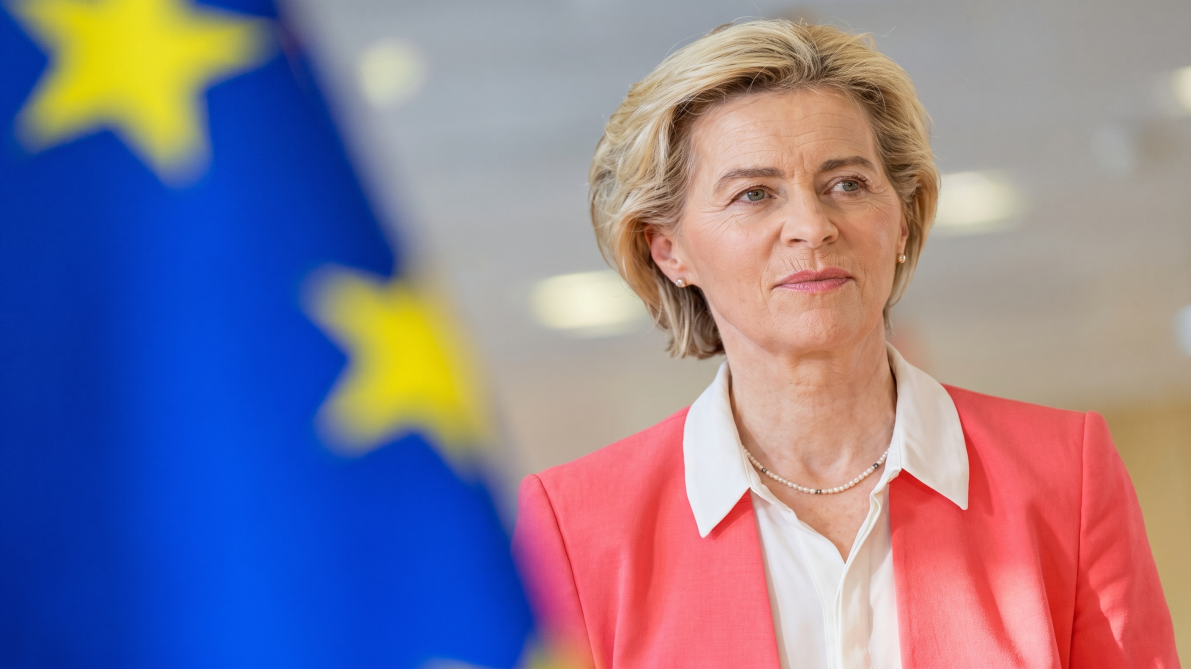
European Commission President Ursula von der Leyen's visit to Azerbaijan highlights the country's growing importance to Europe not only as a supplier of natural gas, but also as a strategic partner in transport, infrastructure, connectivity and renewable energy.
The visit marks von der Leyen's first trip to Baku since 2022, when Azerbaijan and the European Union signed a memorandum of understanding on a strategic energy partnership.
Since then, Europe's energy landscape has changed significantly, increasing the bloc's focus on diversifying supply routes and reducing dependence on traditional sources.
Azerbaijan has emerged as a key contributor to that strategy. In 2025, the country exported around 25 billion cubic metres of natural gas, with approximately 13 billion cubic metres supplied to EU member states. Through the Southern Gas Corridor and the Trans Adriatic Pipeline, Azerbaijani gas now reaches 12 European countries and 16 nations overall, including 10 EU members.
The 2022 agreement set a target of increasing gas supplies to the EU to 20 billion cubic metres annually by 2027. Since 2021, Azerbaijani exports to Europe have risen by more than 50%, helping to meet around 4% of EU gas demand.
Partnership evolving beyond hydrocarbons
Political analyst Elmira Talybzadeh, in an interview with AnewZ, said the relationship has evolved considerably since von der Leyen's previous visit.
“Although natural gas will remain a prominent topic, the relation has evolved significantly since the last visit to Baku,” Talybzadeh said.
According to the analyst, cooperation is increasingly focused on renewable energy, offshore wind development in the Caspian Sea and electricity transmission projects linking the South Caucasus with Europe.
The agenda also includes critical infrastructure investment, digital connectivity, transport modernisation and potential future transit routes for Central Asian energy resources.
“This broader agenda reflects Europe’s effort to diversify not only its energy imports, but also its strategic supply chains,” she said.
Azerbaijan central to trade and connectivity plans
The EU remains Azerbaijan's largest trading partner, accounting for a substantial share of the country's foreign trade.
Trade turnover between Azerbaijan and the European Union exceeded $10 billion in the first half of 2025, while European investment continues to play a major role in both the country's energy sector and its wider economy.
President Ilham Aliyev highlighted the depth of economic ties during talks with European Council President António Costa earlier this year.
“I looked at some economic figures, and this January, 50 per cent of our trade turnover was with the European Union,” Ilham Aliyev said. “For us, the European Union is the number one trading partner.”
Beyond energy, Azerbaijan is positioning itself as a major transport hub connecting Europe and Asia through the so-called Middle Corridor. The route links Europe with Central Asia and China via the South Caucasus, bypassing more traditional northern transit routes.
The Port of Baku, the Baku-Tbilisi-Kars railway and wider regional infrastructure projects have increased the corridor's strategic value, with the EU supporting development through its Global Gateway initiative.
Green energy emerging as new pillar
Renewable energy cooperation is expected to feature prominently during von der Leyen's visit.
Azerbaijan has also designated Garabagh, East Zangezur and Nakhchivan as green energy zones, while expanding solar and wind generation projects aligned with European climate objectives.
The growing emphasis on green energy reflects a broader shift in EU-Azerbaijan relations from a narrow focus on oil and gas towards long-term cooperation in sustainable energy and infrastructure.
Strategic significance beyond economics
The visit comes amid renewed European engagement in the South Caucasus. It follows discussions between António Costa and President Aliyev in March and coincides with the launch of new regional connectivity initiatives under the Global Gateway framework.
Observers also note reports that von der Leyen met executives from several major European financial institutions, including BNP Paribas and Société Générale, before departing for the South Caucasus, suggesting investment and financing issues could play an important role in future cooperation.
For Brussels, Azerbaijan has become a significant partner in ensuring energy security, strengthening supply chains and developing alternative transport routes.
For Baku, deeper engagement with the EU reinforces its ambition to serve as a bridge between Europe and Asia and to expand its role in both conventional and renewable energy markets.
As Europe seeks greater resilience in energy and trade, von der Leyen's visit reflects a partnership increasingly defined by strategic interdependence rather than solely by gas exports.











What is your opinion on this topic?
Leave the first comment