Iran and Russia are seeking closer cooperation on arms control and Iran’s nuclear programme as the two countries deepen strategic ties amid heightened tensions with the U.S. and Israel.
Strategic ties deepen
Senior Iranian and Russian diplomats held talks in Moscow on arms control, disarmament and non-proliferation, as well as regional developments involving Iran, the U.S. and Israel, Iran's IRNA news agency reported.
The talks brought together Mohammad Hassannejad Pirkoohi, Director General for International Peace and Security at Iran’s Foreign Ministry, and Oleg Postnikov, Director for Non-Proliferation and Arms Control at the Russian Foreign Ministry.
The meeting formed part of consultations under the Iran-Russia Comprehensive Strategic Partnership Treaty, a 20-year agreement designed to expand political, economic and military cooperation between the two countries.
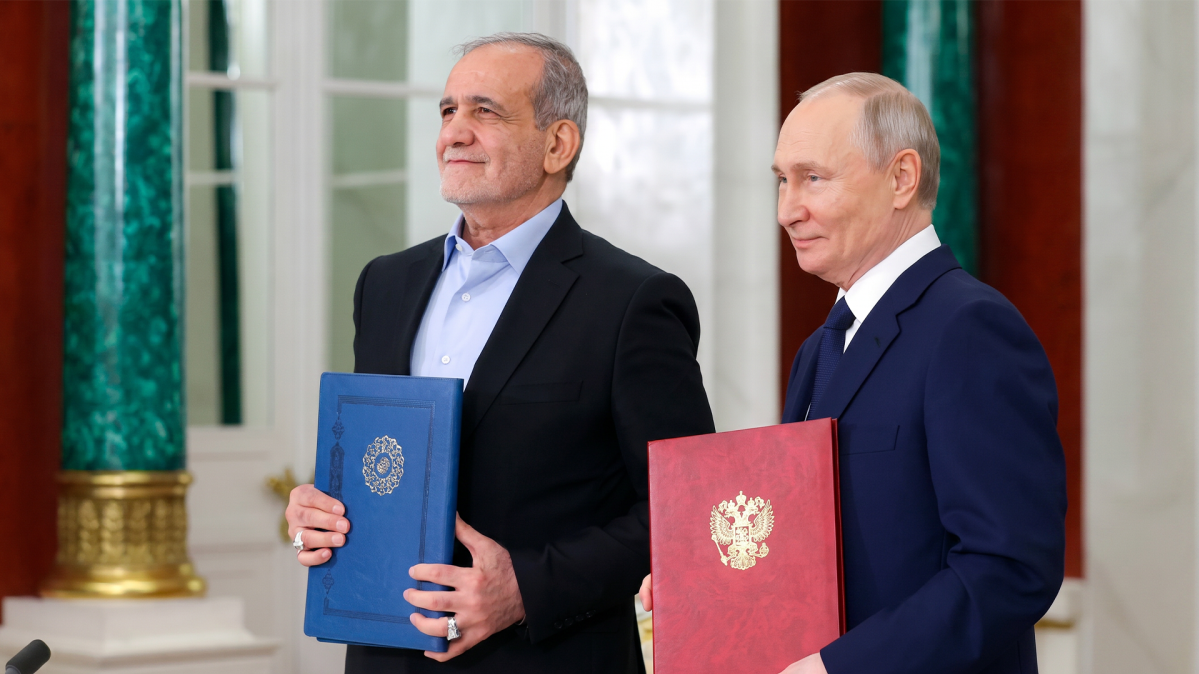
The treaty was signed on 17 January 2025 by Iranian President Masoud Pezeshkian and Russian President Vladimir Putin.
It covers areas including defence, energy, finance, technology, cybersecurity, peaceful nuclear energy, counter-terrorism, regional cooperation, environmental protection and efforts to combat money laundering and organised crime.
Nuclear and chemical weapons discussed
According to IRNA, the two sides also discussed cooperation involving the International Atomic Energy Agency (IAEA), the Organization for the Prohibition of Chemical Weapons (OPCW) and the Biological and Toxin Weapons Convention (BTWC), as well as the peaceful use of outer space.
Iran’s nuclear programme and recent tensions involving Tehran, Washington and Israel were also a focus of the talks.
Russia's state TASS news agency cited the Russian Foreign Ministry as saying the discussions addressed ways of resolving the crisis and issues surrounding Iran's nuclear programme.
"Considerable attention was paid to the prospect of overcoming the crisis triggered by U.S.-Israeli aggression against Iran and to resolving the issues surrounding Iran’s nuclear program," the ministry was quoted as saying.
The two sides also expressed an interest in continuing intensive bilateral contacts on arms control, disarmament and non-proliferation through a range of formats, according to the Russian ministry.
Read more:










What is your opinion on this topic?
Leave the first comment