The UK has authorised transactions involving Kazakh oil transported through Russia, creating a limited exemption within its sanctions regime while maintaining broader restrictions on Russian-linked entities.
The decision, formalised through a general licence published on the UK government’s official website, reflects an effort to balance sanctions enforcement with the practical realities of global energy supply chains. The authorisation was issued by the Office of Financial Sanctions Implementation (OFSI), a body within HM Treasury responsible for overseeing compliance with financial sanctions and granting limited exemptions where necessary.
OFSI’s mandate allows it to introduce general licences enabling specific categories of transactions that would otherwise be prohibited, provided they serve broader economic or trade-related purposes. In this case, the licence permits activities related to the purchase, supply, transport and delivery of Kazakh oil, as well as the processing of associated payments.
Tightly defined exemptions
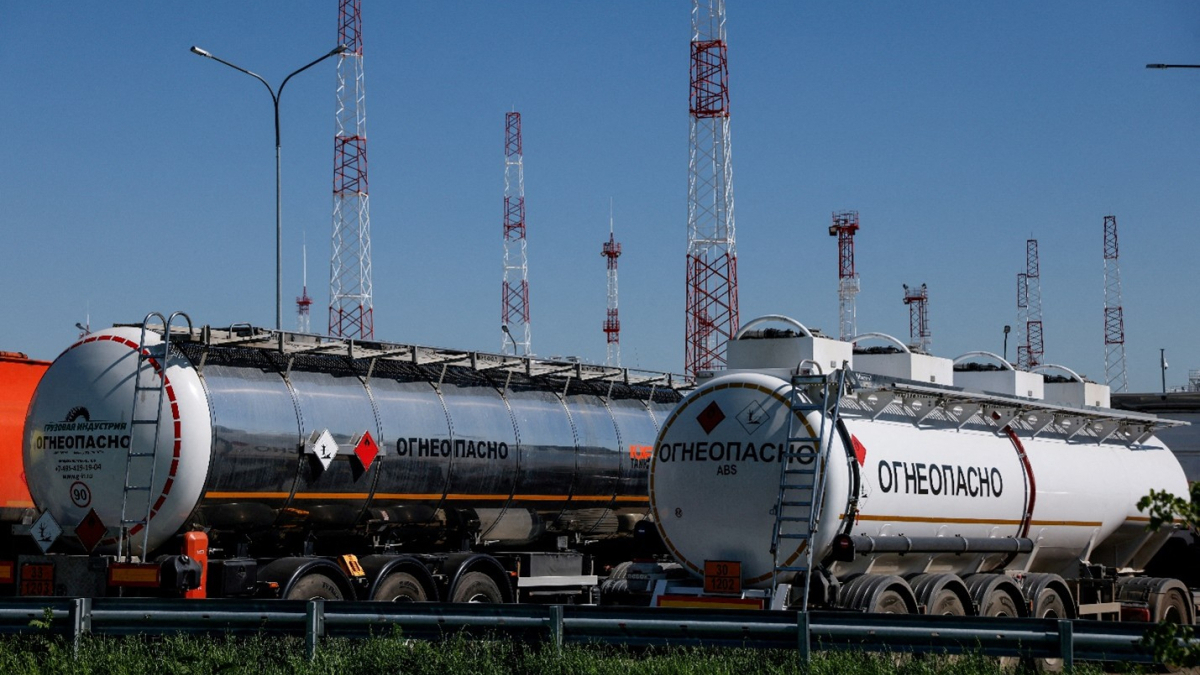
However, these permissions are tightly defined. The oil must originate in Kazakhstan and must not be owned by individuals or entities connected to Russia. At the same time, the licence explicitly allows for the loading, shipment and transit of this oil through Russian territory, recognising the logistical dependence of Kazakh exports on Russian infrastructure.
A notable provision is the inclusion of Russia’s state pipeline operator, Transneft, and its subsidiaries, despite their sanctioned status. Their involvement is permitted strictly within the framework of transporting Kazakh-origin oil, highlighting the structural constraints of regional energy routes, where viable alternatives remain limited.
The authorisation also extends to the financial sector, allowing UK-based institutions to process payments linked to such transactions. Nonetheless, compliance requirements remain stringent: all parties involved must retain comprehensive documentation of these operations for a minimum of six years, ensuring transparency and regulatory oversight.
Importantly, the licence does not constitute any easing of sanctions against Russia. Rather, it introduces a narrowly defined exception intended to prevent unintended disruption to legitimate trade flows. The measure came into force on 19 March 2026 and will remain valid until 18 March 2028.
For Kazakhstan, the implications are significant. A substantial share of its oil exports passes through Russian territory, making access to compliant transit routes essential. Without such provisions, these flows risk falling within the scope of sanctions, potentially complicating export operations.
The UK’s decision comes amid continued Western pressure on Moscow. The European Union has recently extended its individual sanctions against Russia for a further six months, until 15 September 2026, underlining that while the overall regime remains firmly in place, policymakers are increasingly adopting targeted mechanisms to safeguard stability in global energy markets.













What is your opinion on this topic?
Leave the first comment