A U.S.-backed initiative is quietly transforming the South Caucasus, linking Azerbaijan to its exclave of Nakhchivan through a high-security transit corridor. According to PBS News, the Trump Route for International Peace and Prosperity (TRIP) could shift regional trade and politics.
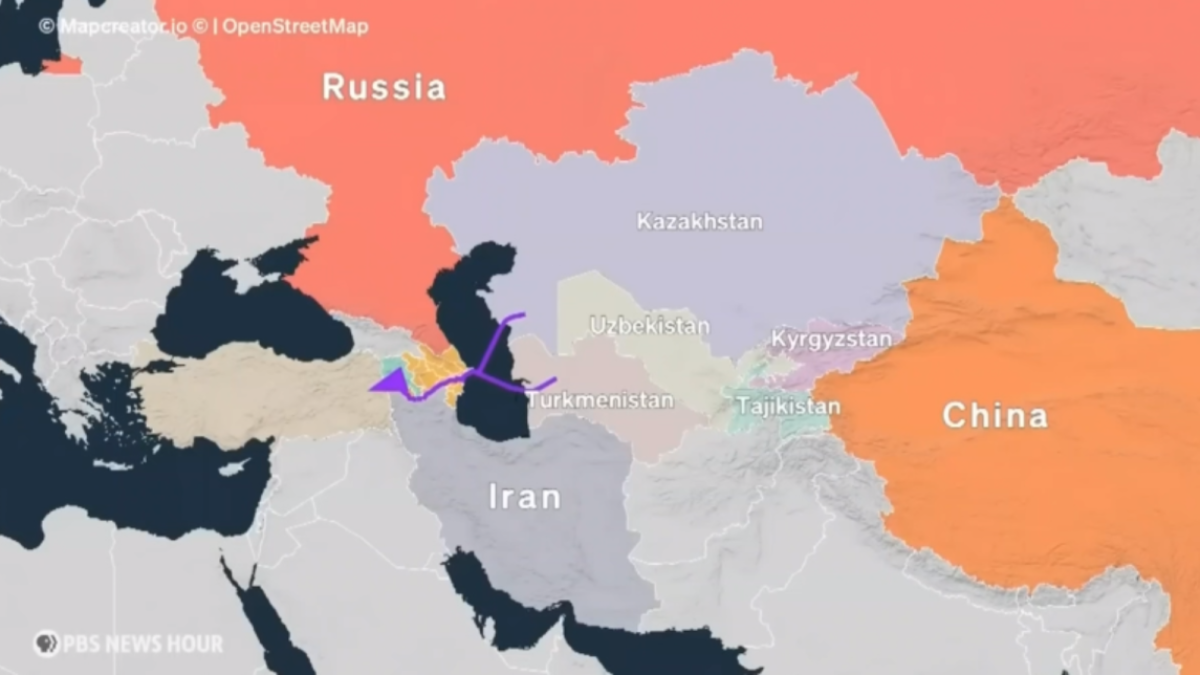
The corridor, part of the Trump Route for International Peace and Prosperity (TRIP), aims to connect Azerbaijan with its Nakhchivan exclave via rail and road, a link that has been closed since the outbreak of war with Armenia.
“This American initiative offers tremendous opportunities for U.S. companies entering Central Asian markets, including rare earth materials and other commercial ventures,” Hikmet Hajiyev, assistant to the President of Azerbaijan, told PBS News.
The corridor is not just a transport project, the plan includes a U.S.-Armenian joint venture to manage the route, an AI data centre powered by NVIDIA and Dell servers, nuclear energy cooperation, and exploration projects in Azerbaijan led by ExxonMobil.
PBS News reports that the project faces significant challenges. The mountainous terrain makes construction complex, and the corridor runs along the Iranian border, recently a site of U.S. military strikes, while Armenia outsources border security to Russian forces.
“Relations with Russia are obviously a sensitive topic,” an Armenian official told the PBS correspondent.
TRIP’s geopolitical stakes and regional impact
Armenia’s Deputy Foreign Minister Vahan Kostanyan told PBS News that a U.S. pledge of $145 million, including funding for TRIP and border capacity upgrades, is key to ensuring lasting peace.
“There is an agreement between Armenia and the U.S. government to establish a joint company to develop the infrastructure,” he said. “It has huge potential for regional and global logistics.”
PBS News reports that while peace has held since the August Washington agreement, the details of TRIP remain unresolved, including the role of Russian border forces.
If fully implemented, however, the corridor could open a 'Middle Corridor' connecting Europe with Central Asia, bypassing Russia, China, and Iran, and strengthening U.S. influence in the region.
“Until August, these countries were literally at war. But now we have real peace on the ground,” the PBS correspondent reports. Time will tell if TRIP is built and a final settlement is signed, but the United States appears poised to reshape a region long under Moscow’s shadow.











What is your opinion on this topic?
Leave the first comment