Although against international humanitarian war, targeting desalination plants and other key locations is increasingly being used as a way of making an opponent weaker in battle. Water-related violent events have increased rapidly since 2022.
The war in the Middle East, started by the U.S. and Israel striking Iran, has seen targeting of water pipelines and dams. Airstrikes and drone attacks have hit desalination facilities in both Bahrain and Iran, potentially affecting water supplies for millions of people.
Iran has accused the United States of targeting a desalination plant on Qeshm Island which disrupted water supplies to 30 villages. The U.S. denies it was responsible. An Iranian drone has recently caused material damage to a desalination plant in Bahrain but did not disrupt water supplies.
Importance for communities
The average daily temperature in Gulf countries is around 40°c during summer, meaning there is a high demand for water supplies during these months.
Mohammed Mahmoud, a water security expert and Middle East lead at the United Nations University Institute for Water, Environment and Health, said
“Desalination plants provide anywhere from roughly half of national water supplies to nearly 90% in some Gulf countries. When you impact infrastructure that generates the water supply and it goes offline, it creates a really dangerous situation.
There has absolutely been recorded and historical evidence in recent years of the weaponisation of water in times of conflict, which is actually a war crime. The water was being used by [ISIS] as a way to subjugate different tribes or communities.” he added.
In 2010, the CIA in America highlighted that distruption and damage to desalination plants in the Gulf “could have more serious consequences than the loss of any other industry or commodity.”
Records from 2023 show that there were around 815 desalination plants across the Gulf Cooperation Council states. 83% of the Middle East population currently face severe renewable water scarcity and this is expected to rise to 100% by 2050.
Water as a weapon
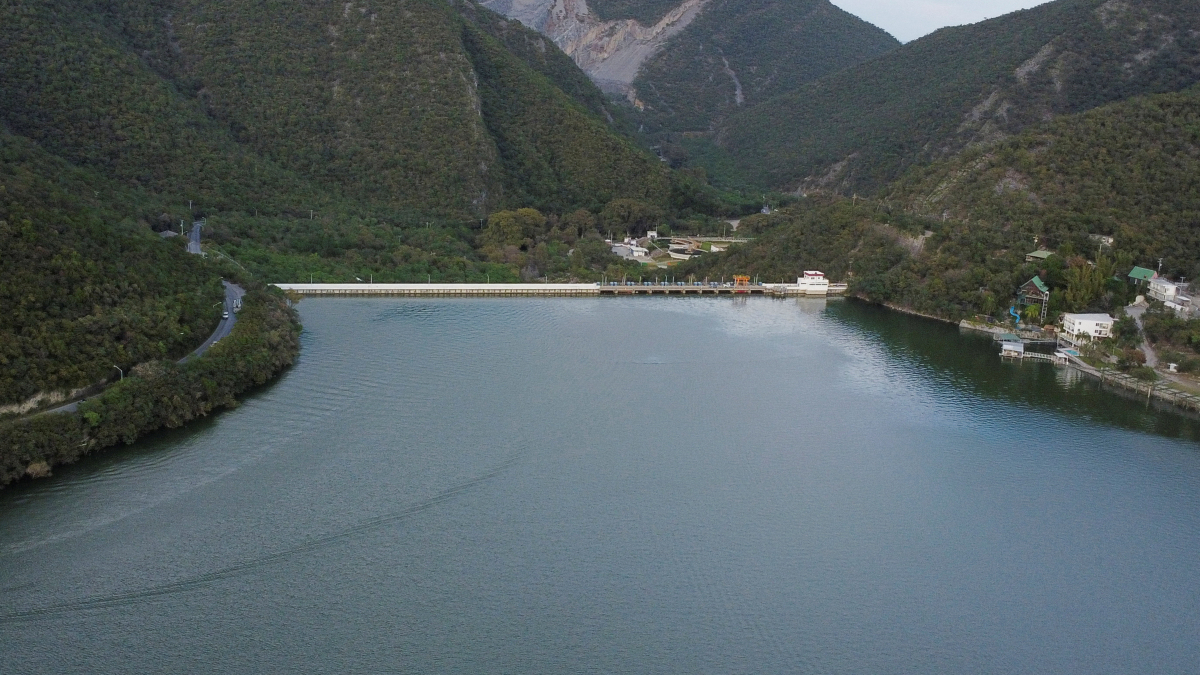
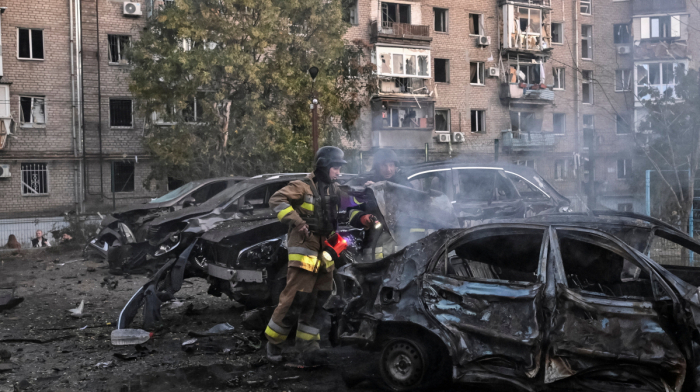
International humanitarian law prohibits any attack on civilians or civilian infrastructure, including water however there have been notable examples of this in recent times, including during Russia-Ukraine war, when the Kakhovka dam was destroyed in a 2023. Both sides blamed the other.
David Michel, a senior associate with the global food and water security program at the Center for Strategic and International Studies (CSIS), explained the tactical shift:
“Water can be used as a tool directly to withhold water sources from adversaries or to flood territory controlled by an adversary. Further direct deliberate attacks on desalination plants would be one of the most explicit direct signals of weaponisation of water."
In 2025 India restricted water flow to Pakistan, a move that Michel calls "unprecedented".
"Targeting the infrastructure would amount to deliberate attempts to disrupt the lives and welfare of the essentially innocent. There were four times more water conflicts recorded between 2012 and 2021 than there were in the preceding decade. There are multiple pressures on our shared water resources.” he said.
Experts categorise water-related violence in three main ways: water used as a weapon, water infrastructure damaged as a casualty of conflict, or disputes over water acting as a trigger for violence.













What is your opinion on this topic?
Leave the first comment