Prospects for Azerbaijan–Türkiye ties in 2026 will largely depend on regional peace efforts and the broader geopolitical environment in the South Caucasus according to a regional analyst.
Yashar Sarı, Director of the Heydar Aliyev Center for Eurasian Studies in Türkiye, while speaking to AnewZ said that relations between Ankara and Baku are already anchored in a solid strategic framework, leaving future milestones closely tied to developments in the wider South Caucasus.
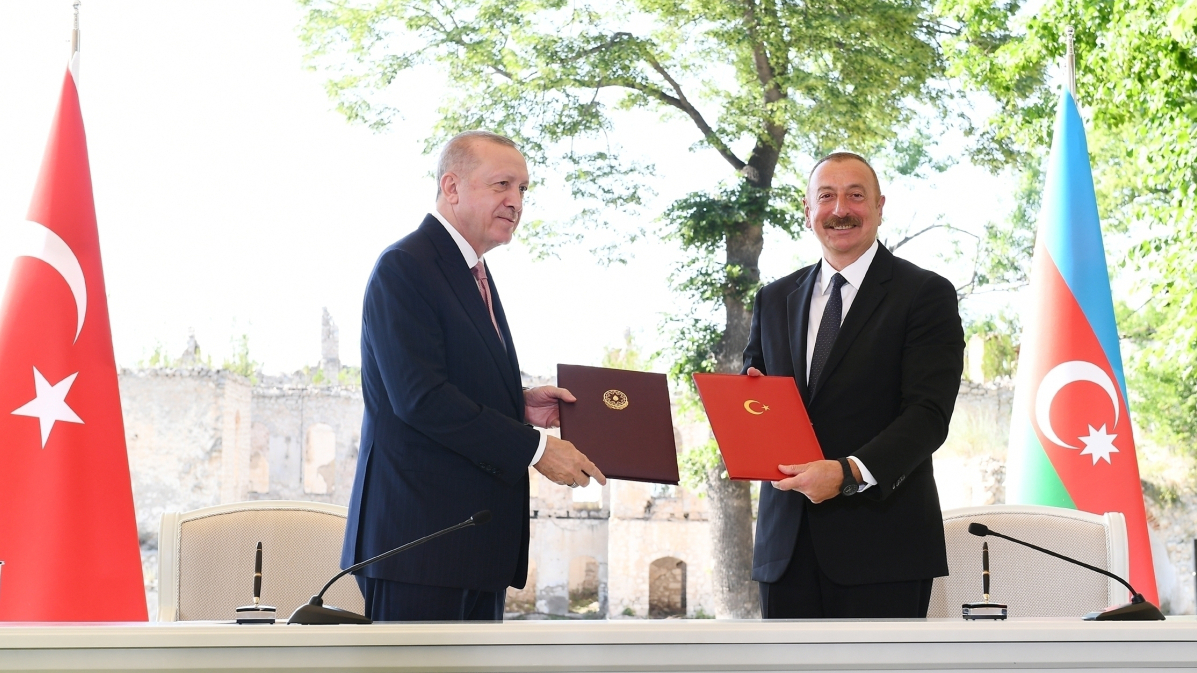
“Türkiye and Azerbaijan have both economic and security strategic partnership agreements,” Sarı said, pointing to the Shusha Declaration, signed on 15 June 2021, as the cornerstone of bilateral ties.
The Shusha Declaration on allied relations between the Republic of Azerbaijan and the Republic of Türkiye elevated cooperation to alliance status, encompassing defence, political coordination, economic cooperation and cultural ties.
The agreement was signed by Azerbaijani President Ilham Aliyev and Turkish President Recep Tayyip Erdoğan in the city of Shusha, and has since been ratified by the parliaments of both countries, formalising its legal status.
Sarı also noted that the partnership has since moved beyond political symbolism.
In July 2025, Türkiye and Azerbaijan signed a memorandum aimed at strengthening mutual military security, expanding cooperation on joint military exercises, defence industry projects and interoperability between their armed forces.
This development was reflected in parliamentary discussions in Baku towards the end of 2025, highlighting the increasing institutional depth of defence cooperation.
Vitality of regional peace
Despite these advances, Sarı stressed that unresolved regional issues remain a key limiting factor. He argued that a comprehensive settlement between Azerbaijan and Armenia would significantly ease constraints on Ankara-Baku cooperation.
The expert said that the restoration of diplomatic relations with Armenia on both sides would make the cooperation "much easier, much closer in that sense.”
Analysts say ongoing negotiations between Baku and Yerevan on border delimitation and a broader peace treaty remain critical for the region’s future.
According to recent reporting, Türkiye’s foreign minister has reaffirmed that normalisation of Türkiye–Armenia relations is linked to a final peace agreement between Azerbaijan and Armenia.
The Shusha Declaration itself places strong emphasis on restoring regional transport links and fostering long-term stability in the South Caucasus, reflecting broader strategic goals shared by both capitals.
Policy forums and expert meetings held in Shusha and Istanbul in late 2025 have highlighted the role of such connectivity in strengthening cooperation across political, economic and cultural spheres.
Observers say the focus of bilateral relations is likely to centre on implementing existing agreements rather than announcing new frameworks.
This includes translating defence commitments into operational cooperation and expanding economic and diplomatic coordination should progress be made on the peace front.
Sarı concluded that while Azerbaijan and Türkiye already maintain one of the closest strategic partnerships in the region, a breakthrough in the Armenia–Azerbaijan peace process would represent the most significant milestone.
This would allow bilateral cooperation to advance to a more integrated and less constrained phase.


















What is your opinion on this topic?
Leave the first comment