The AnewZ Opinion section provides a platform for independent voices to share expert perspectives on global and regional issues. The views expressed are solely those of the authors and do not represent the official position of AnewZ
The fourth European Conference on Azerbaijani Studies was held in Vienna, Austria, on 5 December, by the European Network for Azerbaijani Studies and the Strategic Consultancy Group.
The main theme of the discussion was Azerbaijan’s role in the Middle Corridor. Three panels addressed and engaged 25 participants from 12 European Union (EU) member states. On one of those panels, Towards Lasting Peace, the New Strategic Landscape of the South Caucasus, I was a speaker.
The event ended with a High-Level Roundtable involving Azerbaijani Foreign Minister Jeyhun Bayramov as the sole speaker, leaving the remainder of the allocated 90 minutes for the keynote to take as many questions as possible.
Though I am not a citizen of any of the countries of the South Caucasus, I have lived and worked in the region since 1998, and I did report from Armenia and Karabakh in 1994. After almost 14 years based in Yerevan, I then moved to Tbilisi, where I could connect not only with Georgians but also with individuals and groups visiting from Azerbaijan as well as Armenia. The last time was at a conference last month. The Georgian capital still maintains a unique vantage point in the region.
Those almost 14 years in Georgia have also allowed me to spend considerable time in mixed ethnic Armenian–Azerbaijani villages in the country, a reality many are still unaware of. This February, I also travelled to and across the border through the ethnic Azerbaijani village of Sadakhlo into Bagratashen in Armenia. Until the mid-2000s, both served as a cross-border market for Armenia, Azerbaijan, and Georgia. Only concerns about the shadow economy saw it closed.
That market might no longer exist, but residents on both sides of the border still reminisce about the time when it worked. On an individual level, some trade and informal interaction still occurs today, but nothing compared to its heyday. This local dynamic matters. Economic interdependence will be central to discussions on future relations in the region. Five years after the 44-day-war in 2020, that moment is close. An agreement on normalising relations could well be in reach.
For Armenia, the stakes are high. The country is landlocked, with its borders with Azerbaijan and Türkiye closed since the early 1990s. Only its two other borders with Iran and Georgia are open. This semi-regional isolation has reinforced an over-dependence on Russia for energy, trade, and security. Since 2020, however, the restoration of regional connectivity has re-emerged as a priority, potentially providing Yerevan an opportunity to diversify.
Geography complicates that effort, but normalising relations with Azerbaijan and Türkiye offers a possible solution. An example of that emerged last month when Kazakh and Russian wheat reached Armenia via Azerbaijan and Georgia. The wheat still passed through Russia, but the development was unprecedented. It should be remembered that diversification means expanding and selecting from available options – not simply replacing one dependency with another.
Much has been made of Yerevan's “pivot” from Moscow to the West. However, it is more likely an attempt at balancing interests rather than replacing them. Even if the Pashinyan government wanted to, structural dependencies and vulnerabilities built up over decades remain significant. Russian forces still guard Armenia’s borders with Iran and Türkiye while Russia and the Eurasian Economic Union (EAEU) remain the dominant actors in key sectors of the economy.
Already, the lifting of the prohibition of goods destined for Armenia through Azerbaijan demonstrates how that could be addressed over time for the benefit of all. This should also be considered in the context of a process of normalisation that has most definitely started. Signs are encouraging so far.
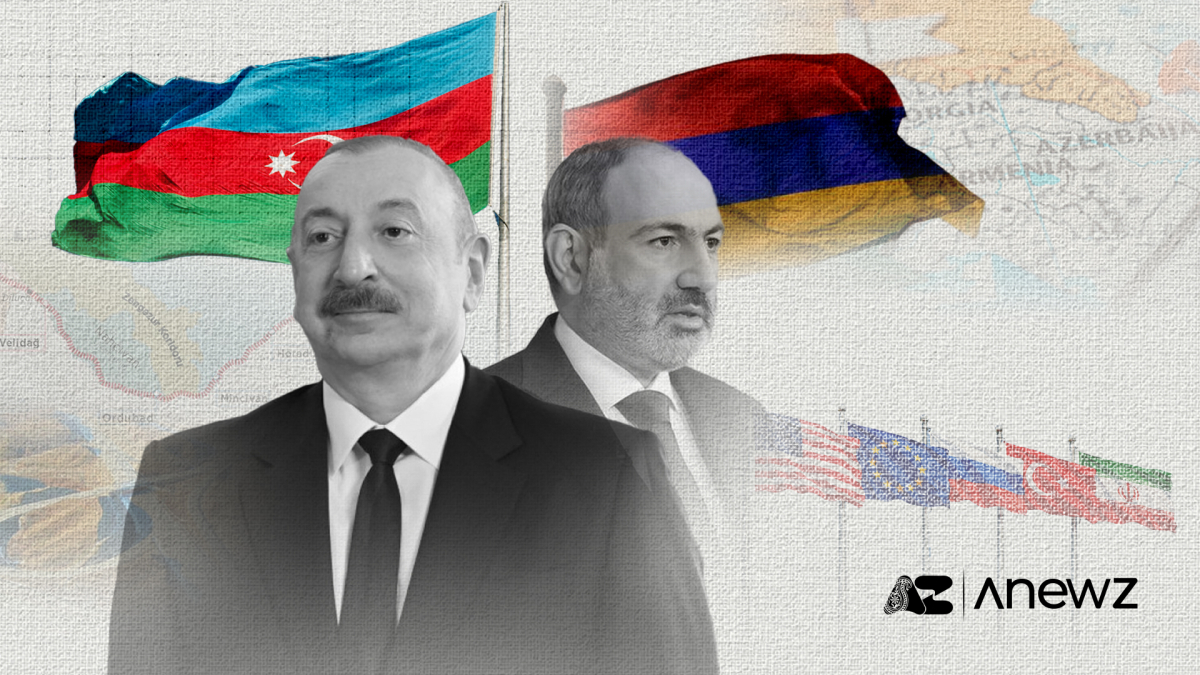
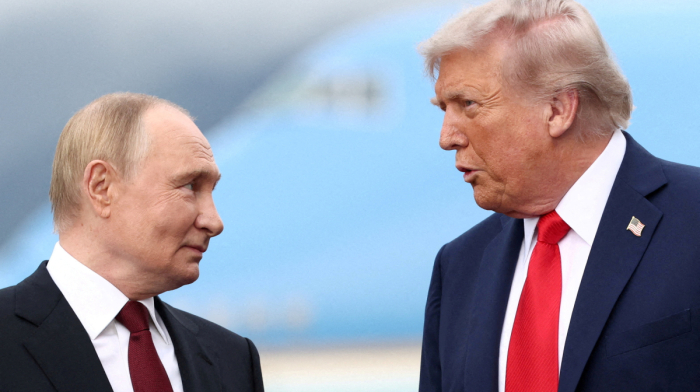
Here, the United States is playing a critical role. The 8 August Trump-facilitated meeting between Armenian Prime Minister Nikol Pashinyan and Azerbaijani President Ilham Aliyev, in Washington D.C., is widely considered a turning point. It was there that the Armenian and Azerbaijani foreign ministers initialled the 17-point normalisation agreement finalised in March, accelerating the peace process more than many could have imagined.
Key here has been the agreement on what is often called the Zangezur Corridor connecting mainland Azerbaijan with its exclave of Nakhchivan along the Armenian border with Iran. The segment of the route that passes through Armenia has now been officially named the Trump Route for International Peace and Prosperity (TRIPP). The U.S. looks set to take a controlling role in a commercial company managed with an Armenian partner, leasing the land for 49 or 99 years.
This arrangement seems acceptable for Baku as long as its operation allows unimpeded transit in some form. The lease is important for Azerbaijan here. Though the agreement between the U.S. and Armenia is bilateral, it will have to be acceptable for Baku too. Once formalised, that should make it impossible to renege on it at a later date. As the entry and exit points are in Azerbaijan and Nakhchivan, TRIPP would anyway be of no benefit to Armenia if it doesn’t function.
Though the sides are nearing normalisation, there still remains a deficit of trust that will take time and interaction to overcome. Armenia has also pinned its hope on an open border with Türkiye, though that too relies on a solution to the problem of its constitution. It should be remembered that Ankara could well raise the issue of territorial claims on its territory even if Baku were to drop its own concerns, something that remains unlikely. There are other potential problems too.
For the EU, TRIPP is less about Azerbaijan and Nakhchivan but more about its own involvement in the Middle Corridor, possibly diminishing Georgia’s existing role given Brussels’s current battle with Tbilisi. Ideally, any unblocking of transport routes through Armenia should complement rather than nullify Georgia’s existing options to and from Azerbaijan. Brussels should also be careful not to irk Russia sufficiently to push it into acting as a spoiler.
Despite competing geopolitical interests and a broader shift from a unipolar to a multipolar world, developments since the Washington Declaration in August at least remain positive. A direct flight carrying Azerbaijani think-tank representatives to Yerevan in October was followed by a reciprocal visit by Armenian civil society to Baku in November. The two border commissions also met the same month in Gabala and will next meet in a location in Armenia.
Discussions on media exchanges and the engagement of border communities, as well as trade and connectivity, continue. These are small steps, but taken in context and as a whole, are of significant importance. Still, challenges remain.
Armenia will enter a politically tense period in 2026 with parliamentary elections scheduled for 7 June. Public trust in the government and opposition is low, with many among the electorate undecided or disillusioned. Constitutional reform, and especially disagreements over its preamble, will also intensify. It remains essential for any agreement between Armenia and Azerbaijan. Pashinyan has anyway committed himself to doing so following the coming vote.
Geopolitical competition will continue, however. It seems that the priority for the EU is to oust Russia from the region, rather than to finally support stabilizing it. Meanwhile, Armenia continues to rely heavily on Russia for trade, energy, and critical infrastructure. No outside actor can replace Moscow overnight. While Yerevan seeks closer ties with the EU, membership is distant and likely unrealistic. Pashinyan knows this and is simultaneously deepening engagement with China.
Whether this complex diversification can succeed remains uncertain, but it is logical. There is also the issue of Iran in the south, bordering, as it does, both Armenia and Azerbaijan. If handled correctly, a genuine opportunity for the betterment of all exists, even if it is currently fragile and influenced by shifting global dynamics. The South Caucasus now has an opportunity impossible to imagine even a year ago. It is likely that Azerbaijan and even Türkiye will be crucial here.
Earlier this month, Armenian Security Council Secretary Armen Grigoryan and Assistant of the President of the Republic of Azerbaijan Hikmat Hajiyev shared the stage at the 23rd Doha Forum in Qatar, upbeat and optimistic.
“A new transport map of the South Caucasus is taking shape – with Azerbaijan at its center,” wrote Saleh Mehdizade for the Caspian-Alpine Society a month earlier.
After missing that chance in the 1990s, Armenia now has an opportunity to benefit this time.












What is your opinion on this topic?
Leave the first comment