Azerbaijan sends humanitarian supplies to neighbouring Iran
Up to 30 tonnes of food will be delivered to Iran amidst ongoing hostilities with U.S. and Israel, following a phone converstation between the ...
President of the Republic of Azerbaijan Ilham Aliyev is taking part in the at the 7th Consultative Meeting of Central Asian leaders, which is being held in Tashkent, the capital of Uzbekistan.
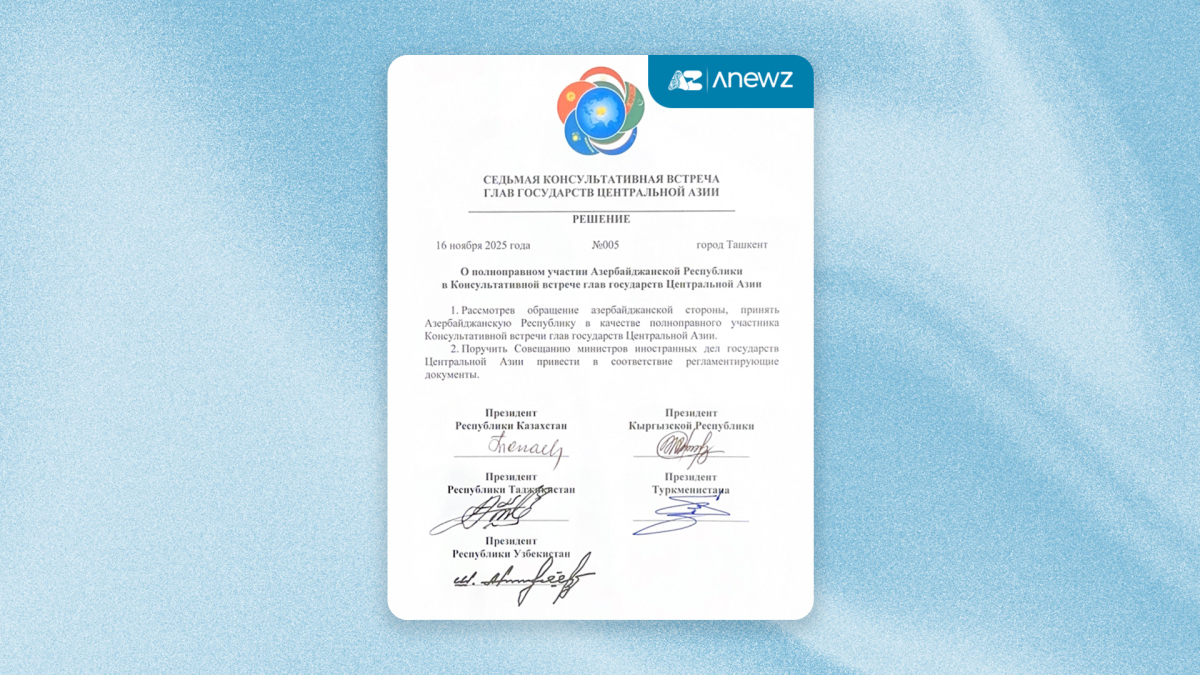
The leaders of Central Asia have officially approved Azerbaijan’s accession as a full participant in their Consultative Meeting of Heads of State. The decision was signed on November 16 in Tashkent during the seventh gathering of the regional format.
According to the document, the presidents of Kazakhstan, Kyrgyzstan, Tajikistan, Turkmenistan, and Uzbekistan agreed to admit Azerbaijan after considering Baku’s formal request. The foreign ministers’ council has been tasked with updating all regulatory documents to reflect the country’s news status.
Azerbaijan and Central Asia are evolving into a single format in which historical, cultural and spiritual ties are consolidating into a political centre.
Central Asia is no longer a group of five countries, Azerbaijan is now an integral part of the region, participating as a full member of the cooperation and consultative format.
From now on, Azerbaijan will take part in all meetings held within the Central Asia framework, including gatherings of heads of state, heads of government, ministries, state bodies, public institutions and others.
This does not contradict Azerbaijan’s place in the South Caucasus. The country will continue its activity within the South Caucasus platform while simultaneously expanding its engagement towards Central Asia.


Mojtaba Khamenei, son of the late Ayatollah Ali Khamenei, is a hardline cleric with strong backing from the Islamic Revolutionary Guard Corps. His rise signals continuity in Tehran's anti-Western policies.
Global oil prices surpassed $119 a barrel on Monday (9 March, 2026), an almost four year high, as the Middle East conflict rumbled on.
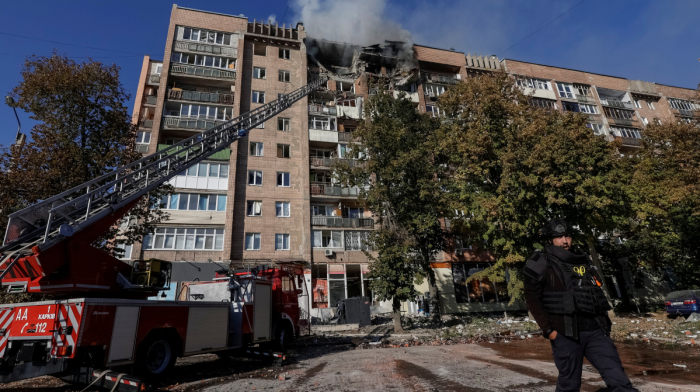
Welcome to our live coverage as the conflict involving Iran enters its 11th day. Tensions in the region remain high as the United States and Iran exchange increasingly sharp warnings over the strategic Strait of Hormuz, a critical artery for global oil supplies.
China has urged Afghanistan and Pakistan to resolve their dispute through dialogue after Chinese envoy Yue Xiaoyong met Afghan Foreign Minister Amir Khan Muttaqi, as fighting between the two neighbours entered its eleventh day.
Entry and exit across the state border between Azerbaijan and Iran for all types of cargo vehicles, including those in transit, will resume on 9 March, according to a statement by the Cabinet of Ministers of Azerbaijan.
The Strait of Hormuz has become a focal point of global concern as tensions rise following the conflict involving Iran, the United States and Israel. Tehran has threatened to block the strategic waterway, raising fears of disruption to global oil shipments and energy markets.
Reports of so-called “acid clouds” moving from Iran towards Central Asia are not supported by scientific data, national hydrometeorological services in Kazakhstan, Uzbekistan and Kyrgyzstan say, adding there is no threat to the region.
A senior delegation from the OSCE Parliamentary Assembly has been holding meetings with Georgian government officials, opposition leaders and security authorities this week, as international observers attempt to gauge the country’s political climate following last year’s contentious elections.
Turkish President Recep Tayyip Erdoğan has told Masoud Pezeshkian, his Iranian counterpart, that violations of Turkish airspace by Iran could not be justified “for any reason whatsoever.”
The Cabinet of Ministers of Kyrgyzstan has approved a new programme aimed at developing educational courses and training sessions for young parents.
You can download the AnewZ application from Play Store and the App Store.
What is your opinion on this topic?
Leave the first comment