Tensions between Pakistan and Afghanistan have escalated again, with Pakistani security sources saying its troops thwarted an attempted Afghan Taliban attack in the Gulistan sector of Balochistan on Thursday, along Pakistan’s western border with Afghanistan, killing several Taliban fighters.
The sources said Afghan Taliban fighters attempted to enter Pakistani territory and carry out an act of aggression.
Intermittent firing continued in the area, they said, while Pakistani forces remained on alert. The Afghan Taliban government had not immediately commented on the allegation.
The reported clash comes a day after Pakistan struck targets inside Afghanistan and two days after Islamabad said it intercepted eight drones entering its airspace from Afghan territory.
Pakistan targets 10 locations in Afghanistan
On Thursday, Information Minister Attaullah Tarar said Pakistan conducted precision aerial and drone strikes against 10 locations inside Afghanistan, which he said were being used to launch and store drones.
Tarar said the operation followed what Pakistan described as a deliberate and unlawful drone incursion on Wednesday (23 September). He said Pakistan’s air defence systems detected, tracked and neutralised all eight drones before they could reach their intended targets.
Pakistani security sources said four drones were brought down near Torkham, a major Pakistan Afghanistan border crossing, while another four were intercepted in mountainous areas near Kohat, a city in northwestern Pakistan’s Khyber Pakhtunkhwa province near the Afghan border.
Taliban denies drone attack
The Taliban government denied that it launched the drones.
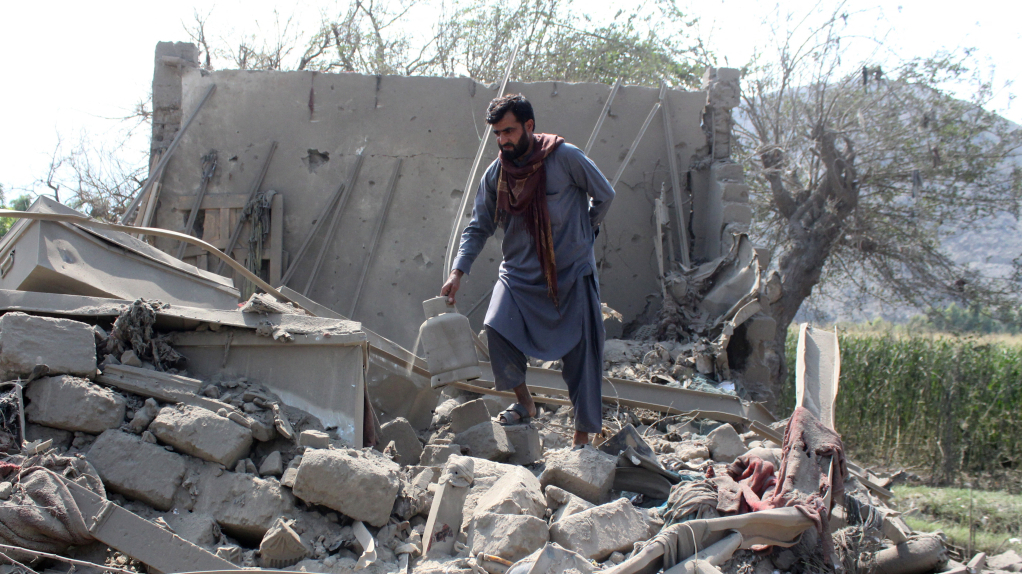
Taliban government Chief Spokesperson Zabihullah Mujahid said the Pakistani strikes hit Kandahar, Paktia and Khost provinces and reported civilian deaths. He condemned the strikes and said Afghanistan would give an “appropriate response”.
A strike was also reported in Kandahar city in southern Afghanistan, where Taliban supreme leader Hibatullah Akhundzada is based. Pakistan said the targets were military infrastructure linked to the alleged drone attacks, while Afghan authorities disputed Islamabad’s account and reported civilian casualties.
What triggered Pakistan’s first strikes?
Pakistan’s 21 September strikes followed a deadly attack on a police facility in Kohat, in northwestern Khyber Pakhtunkhwa near the Afghan border, and a roadside bombing in nearby Hangu district that killed six Pakistani soldiers, according to Pakistani authorities and reporting from the area.
Pakistan subsequently said its strikes in Afghanistan killed 28 militants, while Afghan authorities reported three civilian deaths, later confirmed by the United Nations.
Pakistan then reported the 23 September drone incursions, leading to Thursday’s separate strikes against 10 locations in Afghanistan.
Cross border militancy
Islamabad accuses the Taliban government of allowing the Tehreek-e-Taliban Pakistan, or TTP, and other militant groups to operate from Afghan territory. Kabul denies harbouring anti-Pakistani militants and says militancy inside Pakistan is an internal problem.
Deputy Prime Minister and Foreign Minister Ishaq Dar, speaking at an Organisation of Islamic Cooperation (OIC) Contact Group meeting on Afghanistan on the sidelines of the United Nations General Assembly (UNGA) this week, called for concrete and verifiable action to prevent Afghan territory from being used for terrorism against neighbouring countries, particularly Pakistan.
The relationship deteriorated sharply in February, when Pakistan and the Afghan Taliban entered their worst fighting in years. A period of relative calm followed, but the dispute over cross border militancy remained unresolved.
Friday’s reported fighting adds another direct confrontation to a rapidly worsening security relationship between Islamabad and Kabul, with both sides maintaining sharply different accounts of the violence.
Read more:















What is your opinion on this topic?
Leave the first comment