live Iran, U.S. make competing claims over control of Strait of Hormuz
Iran says the Strait of Hormuz remains under its control, rejecting U.S. President Donald Trump’s claim of “total control” over t...
Iran warned on Wednesday that it would respond firmly to any direct U.S. involvement in Israel’s military campaign, as tensions between Tehran and Tel Aviv escalated sharply.
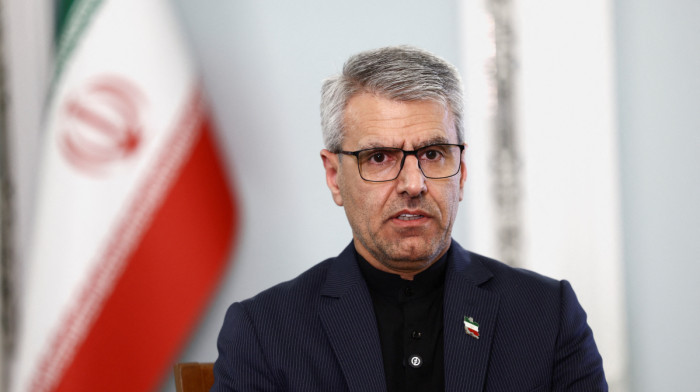
Iran’s ambassador to the United Nations in Geneva, Ali Bahreini, told reporters that Tehran views the United States as “complicit in what Israel is doing” and has conveyed a clear message to Washington that any direct action would trigger a strong Iranian response.
Israel launched its largest-ever air campaign against Iran on Friday, claiming Tehran was on the verge of developing a nuclear weapon. So far, the U.S. role has been limited to indirect actions, including intercepting missiles aimed at Israel and deploying additional fighter aircraft to the Middle East, according to three U.S. officials cited by Reuters.
“We will show no doubt, no reluctance in defending our people, in defending our security, in defending our land. We will respond very, very, very seriously and strongly... Nobody should expect Iran to show any kind of restraint,” Bahreini said.
The Iranian envoy also said that Tehran would respond strongly to further Israeli strikes.
Meanwhile, Iranian media reported thousands of people fleeing Tehran and other major cities on Wednesday, as both countries exchanged fresh missile attacks despite U.S. President Donald Trump’s calls for Tehran’s unconditional surrender.
The Israeli military said that two waves of Iranian missiles targeted Israel early Wednesday, with explosions heard over Tel Aviv.

Disruption in the Strait of Hormuz has increased the strategic importance of Bab al-Mandab, raising fears that instability in both waterways could trigger a wider global energy and trade crisis.
Flights at Catania airport in Sicily will remain suspended until early Friday as ash from Mount Etna continues to disrupt air travel, following hundreds of cancellations and diversions over the past week.
Iran says the Strait of Hormuz remains under its control, rejecting U.S. President Donald Trump’s claim of “total control” over the strategic waterway and insisting it will not reopen until Washington fulfils its commitments under an interim deal.
Iran and the United States remain at loggerheads over efforts to agree a permanent end to the war in the Gulf, according to a senior Iranian source who said there had been no progress in talks to revive the interim deal agreed in June and define a timeframe to implement it.
Russia has accused Ukraine of threatening global grain supplies after recent strikes on Black Sea agricultural infrastructure, while Moscow carried out a new overnight attack on Ukraine’s major Danube port of Izmail.
The suspension of two major grain terminals in Russia’s Black Sea port of Novorossiysk could increase pressure on Kazakhstan’s agricultural market if Russian exporters divert supplies to Central Asia at discounted prices.
Georgia’s Prime Minister says the EU’s inclusion of a major Black Sea cable project on a key infrastructure list is fresh evidence of the country’s importance to regional energy and digital connectivity.
Armenian Prime Minister Nikol Pashinyan has dismissed Security Council Secretary Armen Grigoryan and appointed former parliament speaker Alen Simonyan as his replacement.
Central Asia’s economy has surpassed $543 billion, driven by Kazakhstan’s economic weight, strong exports and foreign investment, while growing trade across Asia points to an increasingly connected region.
The United Nations refugee agency is planning a settlement and carpet-weaving workshop for Afghan returnees in Kabul as the country grapples with large-scale returns and growing pressure on housing, jobs and basic services.
You can download the AnewZ application from Play Store and the App Store.
What is your opinion on this topic?
Leave the first comment