Türkiye is urging Washington and Tehran to turn their fragile truce into a permanent ceasefire, as analysts say Ankara is seeking to use its geopolitical position to prevent a wider regional conflict.
Speaking to AnewZ, Yashar Sarı said Türkiye is actively supporting mediation efforts alongside countries including Pakistan, Saudi Arabia and Egypt.
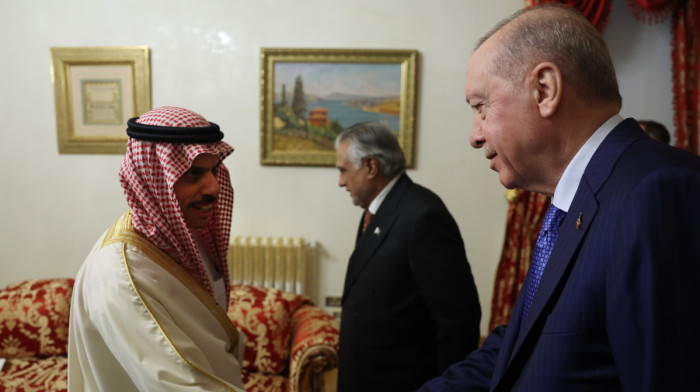
“Türkiye, as a neighbour to Iran and a close ally of the United States, wants to stop this war,” Sarı said, adding that Turkish Foreign Minister Hakan Fidan has maintained contact with both Iranian and U.S. interlocutors throughout the conflict.
According to Sarı, Ankara’s ability to communicate with all sides gives it an important diplomatic role, even if its influence remains limited compared with larger powers directly involved in negotiations.
Türkiye assesses regional fallout
Sarı said Türkiye views the conflict not only as a regional security crisis, but also as a major economic threat, particularly after disruptions linked to the Strait of Hormuz turned the war into a global issue.
“The Gulf region is extremely important for oil and natural gas trade, and this has become an international issue,” he said.
He warned that instability in the Middle East directly affects Türkiye politically and economically, recalling the long-term consequences of the Syrian civil war, including refugee flows and regional insecurity.
“When there is a fire in your neighbour’s house, it will affect your house too,” Sarı said.
He added that Ankara fears a prolonged war with Iran could trigger further displacement and deepen instability across the region.
Ankara advocates dialogue
Türkiye previously hosted talks between Iranian and U.S. officials in Istanbul before negotiations later shifted elsewhere, Sarı noted, adding that Ankara has consistently advocated dialogue over military escalation.
He argued that Turkish President Recep Tayyip Erdoğan and other officials see diplomacy not simply as a response to the current war, but as part of Türkiye’s longer-term regional strategy.
“Even before the war, Türkiye brought certain proposals, but unfortunately both sides were not interested,” he said.
Sarı also criticised the idea that military force alone could resolve the crisis, warning that attempts to impose solutions through war had repeatedly failed in the Middle East.
China-U.S. talks could shape ceasefire
Looking ahead, Sarı said upcoming talks between U.S. President Donald Trump and Chinese President Xi Jinping on 14–15 May could prove decisive for the future of the ceasefire.
He noted that Iran’s Foreign Minister Abbas Araghchi had travelled to Beijing ahead of the meeting, suggesting efforts were under way to prepare broader proposals involving China.
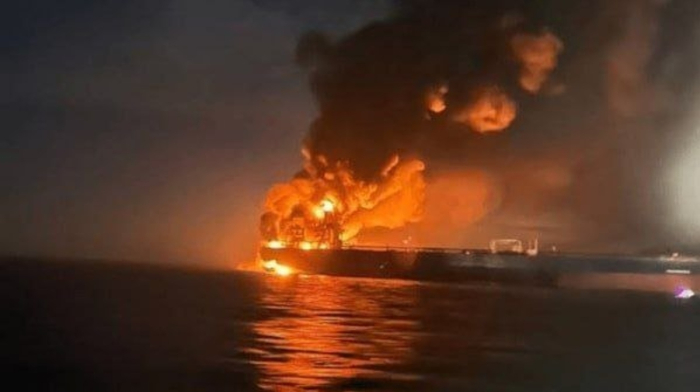
“The most important issue for the international system is the reopening of the Strait of Hormuz,” Sarı said, warning that both Iranian and U.S. maritime restrictions continued to disrupt global trade and energy markets.
He added that internal political pressures in both Washington and Tehran could complicate efforts to reach a durable agreement, with divisions remaining inside Iran between hardliners and more pragmatic factions open to negotiation.












What is your opinion on this topic?
Leave the first comment