Italian authorities have seized assets and companies worth more than €200 million ($232 million) in a major investigation into an international money-laundering network linked to late Sicilian mafia boss Matteo Messina Denaro.
Italy’s finance police announced on Thursday that the operation targeted proceeds from decades of alleged drug trafficking connected to the former head of the Sicilian Cosa Nostra crime syndicate.
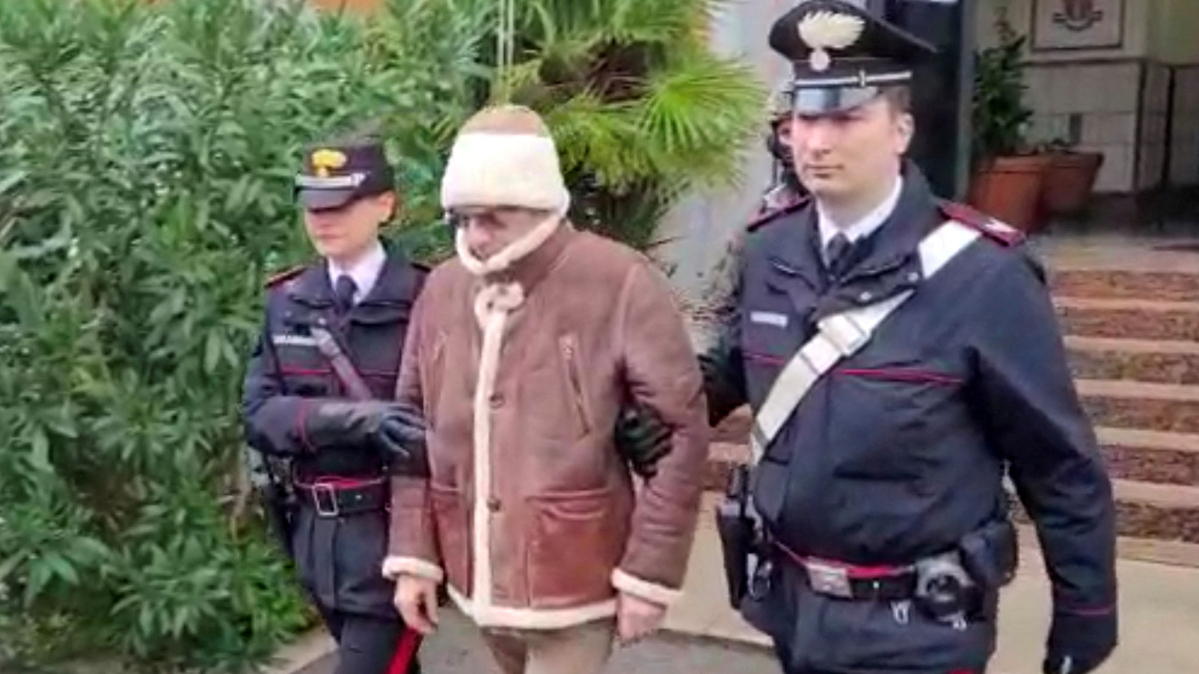
Messina Denaro, one of Italy’s most wanted fugitives, was arrested in 2023 after spending 30 years on the run. He was accused of playing a central role in the Cosa Nostra’s violent campaign against the Italian state during the 1980s and 1990s, including involvement in the killing of anti-mafia prosecutor Giovanni Falcone.
Nicknamed “U Siccu”, meaning “the skinny one” in Sicilian dialect, Messina Denaro died from cancer months after his arrest. Since then, prosecutors have focused on dismantling the financial network that supported his criminal empire and enabled him to evade capture for decades.
International network uncovered
Investigators said the probe traced assets linked to the reinvestment of drug trafficking profits accumulated since the 1980s across several European and non-European jurisdictions.
“We believe we have identified a significant portion of the investments made by the mafia, including abroad,” Palermo chief prosecutor Maurizio de Lucia said.
The investigation involved locations including Switzerland, Luxembourg and the Cayman Islands, but focused largely on Andorra.
Police said funds in Andorra were traced to a woman from Campobello di Mazara, the Sicilian town where Messina Denaro maintained his final hideout. She had reportedly been married to a man with previous drug-related convictions.
According to investigators, the findings strengthened suspicions that the assets originated from narcotics trafficking operations tied to organised crime networks.
Luxury assets and offshore companies
Prosecutors identified eight companies allegedly connected to the laundering scheme, including five based in Spain, two in Gibraltar and one in the Cayman Islands.
Authorities said the network controlled a substantial stake in a Lebanese bank, alongside gold reserves and luxury real estate holdings.
Messina Denaro, who was born into a mafia family in the western Sicilian town of Castelvetrano near Trapani, was considered one of the most powerful figures within the Cosa Nostra. Closely associated with notorious mafia boss Salvatore Riina, also known as “Totò Riina,” he was linked to the 1993 bomb attacks in Florence, Rome and Milan that killed 10 people.
Continuing the fight against organised crime
Italy’s national anti-mafia prosecutor Giovanni Melillo said targeting mafia wealth remained essential to weakening organised crime structures.
“It means continuing the dismantling process needed to prevent the emergence of structures once again capable of projecting, on a global scale, Cosa Nostra’s full intimidating power and economic influence,” he said.
The operation marks one of the largest recent financial crackdowns linked to the Sicilian mafia and highlights the increasingly international nature of organised crime investigations.











What is your opinion on this topic?
Leave the first comment