Hong Kong fire survivors return to homes months after deadly blaze
Residents displaced by Hong Kong’s deadliest fire in decades have begun returning to their damaged homes, hoping to recover belongings that s...
The Middle East conflict has entered a new phase, with Israel expanding its operations into southern Lebanon and tensions with Iran escalating. Analysts warn that the collapse of traditional deterrence and rising nuclear risks could trigger a global arms race.
A recent Bloomberg report suggests the world may be entering a “new nuclear age,” as tensions between major powers intensify.
Speaking to AnewZ, political analyst Lamis Jidid said both Iran’s nuclear potential and the breakdown of deterrence are driving fears. “I think both of these could be applied in answering such a question,” she said, adding that the war initially aimed to curb Iran’s nuclear capabilities.
Jidid noted that conventional strategies have so far failed to deliver decisive results. “All methods that America and Israel saw that might topple the regime or take this war or win this war did not work until today,” she said, warning that this raises fears of a potential nuclear option.
She also highlighted broader geopolitical implications, saying the conflict is reshaping global security dynamics. “This is a war that concerns so many other countries… It's war on borders. It's war on water, on ports. So everybody is concerned,” she said, pointing to growing uncertainty among U.S. allies.
On the risk of escalation, Jidid warned that potential strikes on Iran’s nuclear facilities could have far-reaching consequences. “This will not be a win for anyone in Iran, not anyone in the Gulf, and not anyone in Israel itself,” she said.
The analyst also cautioned that the conflict could trigger a wider nuclear race in the region. “It might open the race for nuclear arms in the whole region. And this is a very, very delicate point that we all fear,” she said, referencing concerns involving major regional players.
She further warned that expanding military operations, including in Lebanon, could create new risks rather than enhance security. “If they cannot secure their own cities… spreading in all direction, I think it will not work for them,” she said.
As the conflict continues, Jidid stressed that the global outlook remains uncertain. “We are just now in the middle of a storm and nobody… can predict the future for the time being,” she added.

Dozens of Chinese-made humanoid robots have demonstrated improvements in speed, balance and autonomous navigation after completing a half-marathon in Beijing on Sunday (19 April), in a showcase of the country’s fast-developing robotics sector.
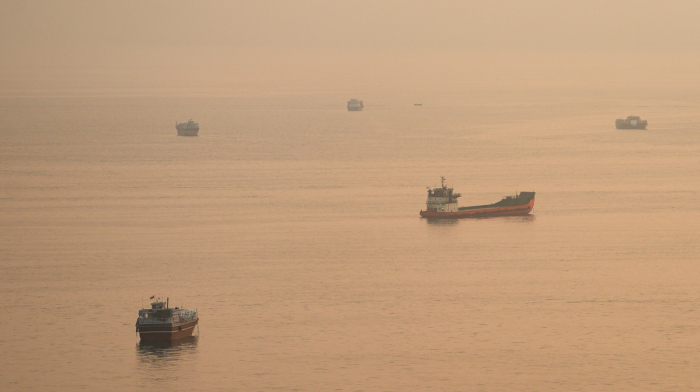
The U.S. Navy has forcibly intercepted and boarded the Iranian cargo ship TOUSKA in the Gulf of Oman after it attempted to breach the ongoing naval blockade. President Trump confirmed that the vessel was neutralised and seized by Marines following a direct strike on its engine room.
Iran accuses the United States of breaching a ceasefire after a commercial ship was seized in the Gulf of Oman, vowing retaliation, as Israel warns south Lebanon residents to avoid restricted areas.
Progessive Bulgaria, led by pro-Russian Eurosceptic Rumen Radev is on track to form Bulgaria’s next government, after official results showed a runaway victory for the coalition in the Balkan nation's parliamentary elections on Monday (20 April).
Secretly filmed footage from two UK laboratories has reignited debate over animal testing in drug development, after a former worker alleged that monkeys, dogs and other animals endured prolonged distress during safety trials for new medicines.
Kyrgyzstan plans to expand its nationwide video surveillance system, with up to 20,000 cameras set to be installed, President Sadyr Zhaparov has announced.
Turkish authorities are mulling new measures to protect children from dangerous online content after the country was shaken last week by two separate school shootings.
Five Central Asian states are launching a $30 million programme to tackle water scarcity and land degradation, as climate pressures and rising demand sharpen risks across the region.
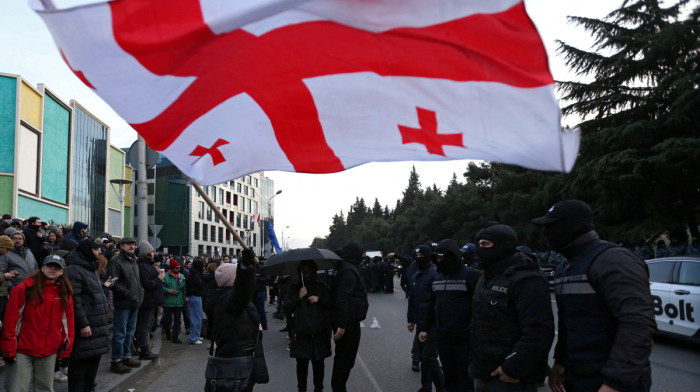
Georgia has been named among a growing number of states accused of targeting critics beyond their borders, according to a new report by Freedom House. The finding raises questions about the country’s recent political trajectory and international standing.
Armenian Prime Minister Nikol Pashinyan says he expects business ties with Azerbaijan to emerge soon, describing economic engagement as key to consolidating peace between the two countries.
You can download the AnewZ application from Play Store and the App Store.
What is your opinion on this topic?
Leave the first comment