Fresh Houthi missile and drone strikes on Israel mark a significant widening of the Iran-centred conflict, raising fears the Yemen-based group could open a new front. Their position near the Bab el-Mandeb strait also threatens global shipping and energy flows.
A Houthi military spokesman, Yahya Saree, said on Saturday that the Iranian-backed group had launched missiles and drones towards “several vital and military sites” in Israel.
The escalation follows more than a month of Israeli and U.S. strikes on Iran, with Tehran responding by targeting U.S.-linked interests in Gulf states. The confrontation has already disrupted shipping through the Strait of Hormuz, a critical route for roughly a fifth of the world’s crude oil, as well as major flows of gas and fertilisers.
With limited alternatives, vessels have been forced either to pass through the Red Sea or to take the far longer route around southern Africa.
Analysts warn that the Houthis, operating from Yemen, could again target Red Sea shipping, raising the prospect of disruption at the Bab el-Mandeb, another key chokepoint for global trade.
Who are the Houthis?
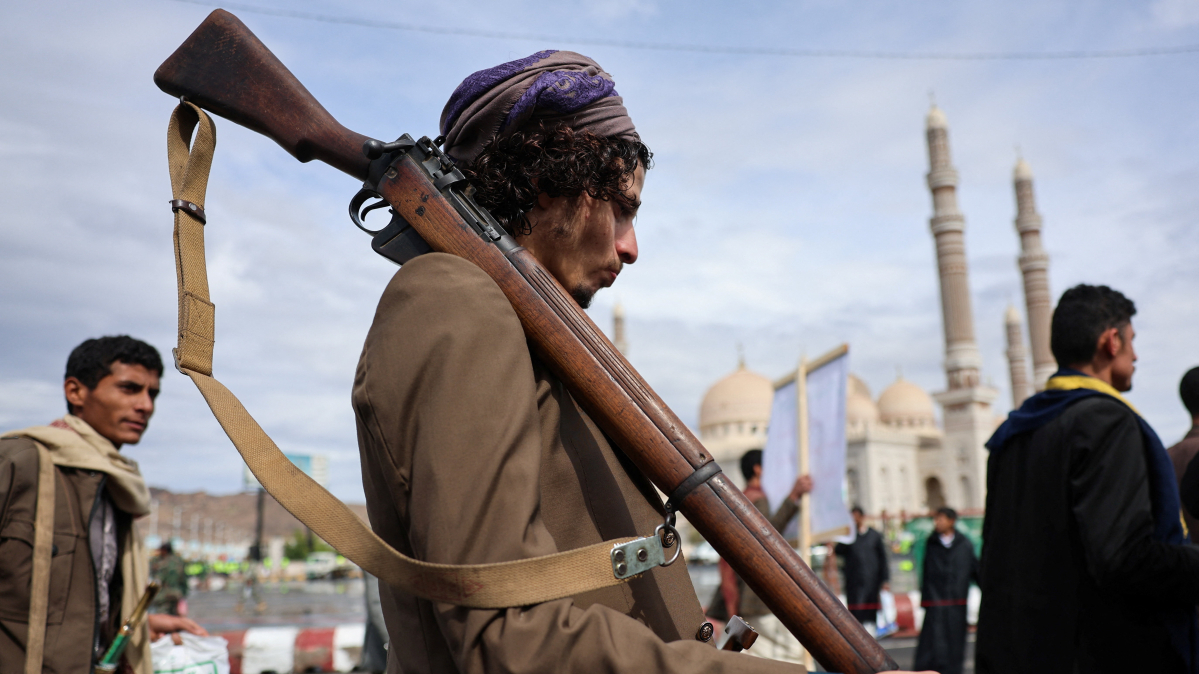
The Houthis, formally known as Ansar Allah (“Partisans of God”), are a political, military and religious movement that has grown from a localised insurgency into Yemen’s most powerful de facto authority.
Originating in the mountainous Saada province in the 1990s, the group drew early support from followers of the Zaydi branch of Shia Islam, who had long felt politically and economically marginalised since the fall of their ruling imamate in 1962.
The Houthis are part of what Iran calls its “axis of resistance” - a loose network of allied armed groups that includes Hamas in Gaza and Hezbollah in Lebanon. While Israeli and U.S. strikes have targeted these groups across the region, all three remain active, underlining the resilience of Iran’s proxy network and its ability to sustain pressure on multiple fronts.
Initially focused on reviving Zaydi identity and resisting the spread of Saudi-backed Salafist ideology, the movement evolved into an armed rebellion in the early 2000s under its founder, Hussein al-Houthi, and later his brother, Abdul Malik al-Houthi.
After years of intermittent clashes with the government of former president Ali Abdullah Saleh, the Houthis capitalised on instability following the 2011 Arab Spring uprising. Aligning tactically with forces loyal to Saleh, they swept south from their northern stronghold and captured the capital, Sana’a, in September 2014.
By 2015, they had forced the internationally recognised president, Abdrabbuh Mansour Hadi, to flee abroad, prompting neighbouring Saudi Arabia to lead a military coalition aimed at reversing their gains. Despite years of air strikes and ground fighting, the Houthis have retained control over large parts of northern and western Yemen, including key population centres.
The conflict has been devastating for civilians. By the end of 2021, it was estimated to have caused around 377,000 deaths and displaced some four million people, underscoring the scale of the humanitarian crisis. A UN-brokered truce agreed in 2022 has since helped to reduce large-scale fighting and, while fragile, has broadly held.
In recent years, the Houthis have demonstrated growing military reach, using missiles and drones to target infrastructure in Saudi Arabia and the United Arab Emirates, as well as threatening shipping routes in the Red Sea - a vital artery for global trade.
Regionally, the Houthis position themselves within Iran’s so-called “axis of resistance”, alongside groups such as Hezbollah and Hamas, opposing Israel, the United States and their allies. Washington and Gulf states have repeatedly accused Iran of supplying the group with weapons, training and financial support, while Tehran and the Houthis deny a direct command relationship, describing their ties as ideological rather than operational.
More recently, the group scaled back its attacks, a move closely tied to shifting regional dynamics. Houthi leaders framed earlier strikes - particularly those targeting Israel and Red Sea shipping - as a response to the war in Gaza, presenting themselves as acting in solidarity with Palestinians.
Following a ceasefire linked to that conflict in late 2025, they signalled a pause in operations, portraying it as conditional on continued reduced hostilities.
Why might the Houthis join the war?
Ahmed Nagi, a senior analyst for Yemen at the International Crisis Group, told AnewZ that the Houthis’ decision-making is rooted in both ideology and hard security calculations, reflecting their position within Iran’s regional network of allied groups.
“For the Houthis, this is not simply a war on Tehran; it is a war on the entire axis of resistance, of which they are a core part. So their military involvement is not purely about Iran - it is also about their own survival,” he said.
Beyond ideological alignment, Nagi pointed to the group’s long-term dependence on Iran for military expertise, weapons technology and political backing. That relationship has enabled the Houthis to evolve from a local insurgency into a force capable of launching long-range drone and missile attacks. Entering the conflict, therefore, is also about preserving that strategic lifeline.
“A weakened Iran means the Houthis become the next target, and they know they would emerge from that scenario significantly diminished. That is why they are standing with Tehran at this moment.”
He added that the group also sees participation as a way to reinforce its regional relevance, signalling to allies and adversaries alike that it remains an active and capable player in a multi-front confrontation.
Why have the Houthis held back until now?
Nagi said the Houthis’ initial restraint reflected a calculated effort to avoid premature escalation while assessing how the confrontation would unfold.
“First, the Houthis initially believed Iran could manage the pressure on its own - that by squeezing the global oil market, Tehran could force a diplomatic off-ramp without needing direct Houthi involvement.”
This assessment was tied to expectations that disruption in the Strait of Hormuz alone could generate sufficient economic pressure on Western governments to push for de-escalation.
At the same time, the Houthis preserved their own military resources, avoiding early exposure to retaliation that could degrade their capabilities before they were most needed.
“The calculation was not to throw all the cards on the table at once, but to pursue a gradual escalation, deploying different fronts at the right moment.”
Nagi said this phased approach mirrors broader Iranian strategy across the region, where allied groups apply pressure incrementally rather than simultaneously.
“Even then, their entry was carefully calibrated - they began with strikes towards Israel,” he said.
He noted that by delaying involvement, the Houthis retained the option to escalate further - particularly in the Red Sea - if the conflict deepens.
What is Bab el-Mandeb and why does it matter?
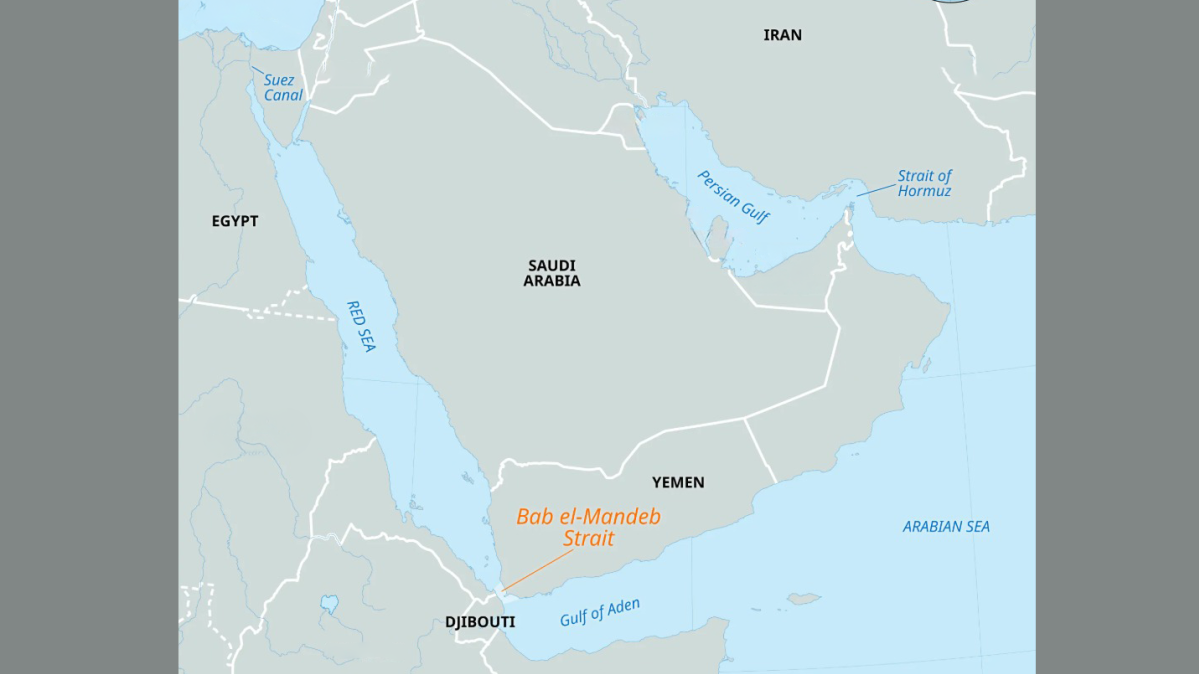
The Bab el-Mandeb, meaning “Gate of Tears” in Arabic, is a narrow but strategically vital strait linking the Red Sea to the Gulf of Aden and, beyond that, the Indian Ocean.
It lies between Yemen on the Arabian Peninsula and Djibouti and Eritrea in the Horn of Africa, forming a key gateway for ships travelling between Europe and Asia via the Suez Canal.
Despite its size, it carries a significant share of global trade, including large volumes of oil and gas, making it one of the world’s most important maritime chokepoints.
Its importance has taken on new urgency amid the Iran conflict. With tensions already disrupting another critical route, the Strait of Hormuz, attention has turned to the risk that the Bab el-Mandeb could also be targeted — particularly through Iran-aligned Houthi forces in Yemen.
Any disruption would force ships to reroute around Africa, adding time and cost to journeys and pushing up prices worldwide.
Could the Houthis disrupt the Bab al-Mandeb?
Nagi stressed that control of territory is less important than the ability to threaten shipping at scale in the Bab el-Mandeb.
“Disrupting the Bab el-Mandeb does not require direct physical control - the capacity to impose unacceptable risk on vessels is what matters.”
From positions along Yemen’s western coastline, the Houthis can deploy anti-ship missiles, naval drones and explosive-laden boats in repeated waves. Even a limited number of attacks - or attempted attacks - can raise insurance costs, deter commercial operators and effectively halt traffic without a formal blockade.
Nagi noted that this method has already been demonstrated during previous Red Sea operations, where sustained threats - rather than constant strikes - were enough to force shipping companies to reroute.
What are the wider risks of their entering the conflict?
Nagi warned that a deeper Houthi role could transform a contained confrontation into a systemic global crisis.
“Imagine a scenario where both the Strait of Hormuz and the Bab el-Mandeb are simultaneously closed or severely disrupted. That would be an extraordinarily difficult situation for the global economy.”
Such a scenario would affect not only oil flows but also container shipping, food supplies and industrial inputs moving through these corridors.
He noted that the Red Sea has become an increasingly important fallback route for Gulf exports, particularly as states diversify transit options.
“It is worth remembering that the Red Sea route currently functions as an alternative to the Strait of Hormuz, particularly since Saudi Arabia began routing exports westwards through its east-west pipeline via the port of Yanbu,” he said.
“Any serious escalation in the Red Sea would therefore disrupt those export flows, or at the very least create enough uncertainty to trigger significant market instability,” Nagi added.
Beyond trade, he said the conflict could expand both geographically and operationally.
“The conflict would no longer be containable - potentially expanding Houthi operations into the Gulf of Aden and even the Arabian Sea.”
















What is your opinion on this topic?
Leave the first comment