As the U.S.–Israel war with Iran enters its third week, disruption is spreading well beyond the battlefield. Analysts say the conflict is already constraining fertiliser supplies, driving up prices and increasing the risk of food shortages, particularly in developing economies.
Why fertiliser is so exposed to the conflict
Fertiliser production depends heavily on energy, especially natural gas. In some cases, energy accounts for up to 70% of production costs. This helps explain why much of the world’s fertiliser is produced in the Gulf region, where gas is abundant and relatively inexpensive.
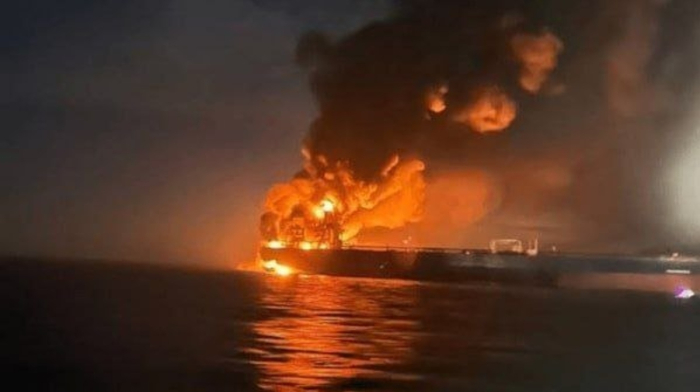
The problem is geography. Roughly one-third of global fertiliser trade passes through the Strait of Hormuz, a narrow shipping corridor along Iran’s coast. Since the conflict escalated, this route has been significantly disrupted due to security risks, including missile and drone strikes.
At the same time, about 20% of global oil and liquefied natural gas shipments also pass through this channel. As energy flows slow or stop, fertiliser production is being hit twice: factories are losing both their fuel supply and their ability to export.
Several plants across the Gulf have already halted operations, just as farmers in the Northern Hemisphere prepare for spring planting - a critical period with little room for delay.
Why this matters for food production
Fertilisers are essential for modern agriculture, with around half of global food production dependent on them. Without timely application, crop yields fall sharply.
Nitrogen-based fertilisers, such as urea, are especially important in the short term. Farmers typically need to apply them every growing season, and missing even one cycle can significantly reduce harvests.
Other fertilisers, such as those based on phosphate or potassium, tend to have longer-lasting effects in the soil and are less immediately critical.
A market already under pressure
Even before the conflict, global fertiliser markets were tight. Europe had reduced production after losing access to cheap Russian gas, while China had restricted exports, including urea, to protect domestic supply.
This left the market with little spare capacity to absorb further shocks.
Now, exports are falling sharply. Global urea shipments are expected to drop to about 1.5 million tonnes in March, well below typical levels.
Countries heavily dependent on imports are feeling the strain. Brazil, for example, relies almost entirely on imported urea, with nearly half of it passing through the disrupted Gulf route. In the U.S., farmers report shortages, with supply running roughly 25% below normal for this time of year.
Prices rising quickly
The supply shock is already feeding through to prices.
Urea export prices in the Middle East have risen by about 40%, climbing from under $500 to over $700 per tonne.
In the U.S., fertiliser prices have increased by as much as 32% since the conflict began.
Analysts warn that prices for nitrogen-based fertilisers could double if disruption continues.
The structure of the market makes a rapid recovery unlikely. The Middle East is a dominant supplier, and other producers cannot easily scale up to replace lost output. Russia is facing its own supply constraints, while China continues to restrict exports.
Why developing countries are most at risk
Higher fertiliser prices translate directly into increased farming costs. In some countries, fertiliser accounts for up to half the cost of growing grain.
For low-income nations already facing food insecurity, this presents a serious challenge. Farmers may reduce fertiliser use to cut costs, leading to lower yields and tighter food supplies.
African countries are particularly exposed, as many rely heavily on fertiliser imports from the Gulf. A large share of household income is spent on food, and governments often have limited capacity to subsidise rising costs.
Supply chain disruptions are already affecting key import routes. Some countries are also experiencing knock-on effects from rising fuel prices, which are increasing transport and production costs across the economy.
At the same time, export flows are being disrupted. For example, agricultural shipments such as tea and meat from East Africa to Middle Eastern markets have been affected by the conflict.
Wider economic pressures
The fertiliser shock is part of a broader economic strain caused by higher oil and gas prices.
For many developing economies, this creates a dual challenge of rising import costs for energy and agricultural inputs, alongside increased pressure on government budgets to fund subsidies.
Some countries are taking precautionary measures, such as building fuel reserves or introducing subsidies. However, analysts caution that these steps may not be sustainable if the conflict continues.


















What is your opinion on this topic?
Leave the first comment