




15:42 CET
Russia-Ukraine
live Russian strikes kill three, damage dozens of power facilities
Russian strikes killed ...


Jeffrey D. Sachs, an economist, public policy analyst, Columbia University professor, and UN advisor, said Azerbaijan and the wider South Caucasus could become one of the world’s key strategic connectors in an emerging multipolar order.
Speaking to AnewZ in Baku during the World Urban Forum (WUF), Sachs described the region as a natural bridge linking East and West, as well as North and South.
He said initiatives such as Europe’s Global Gateway and China’s Belt and Road Initiative could converge in Baku, strengthening the region’s role as a connectivity hub.
“In the new order that I would like to see - a peaceful, multipolar, and cooperative world - Azerbaijan and the South Caucasus would be natural key connectors,” Sachs said.
He stressed that Eurasia should become an integrated and peaceful economic region stretching from the Atlantic to the Pacific, arguing that cooperation, trade, investment, and tourism are more beneficial than geopolitical confrontation.
Sachs also highlighted Azerbaijan’s growing role in connectivity through energy and transport routes, but warned against turning energy and trade into geopolitical weapons.
While describing Azerbaijan as an important hydrocarbon power, he said the region also has major renewable energy potential, particularly in solar energy.
Discussing relations between Azerbaijan and Armenia, Sachs said neighbouring countries naturally benefit from economic cooperation and infrastructure development once conflict ends.
He argued that countries in the South Caucasus share a common interest in preserving their sovereignty and avoiding becoming battlegrounds for major power rivalries.
“The worst thing for countries is to become the site of a proxy war between major powers,” he said.
On global politics, Sachs described the United States and China as “roughly co-equal powers,” saying China had strengthened its position through investment, manufacturing, technology, and by staying out of wars.
He said the recent Trump-Xi summit in Beijing showed that both sides were interested in maintaining responsible competition rather than escalating into a new Cold War.
Sachs also criticised the increasing use of sanctions, tariffs, and financial systems as geopolitical tools, arguing that countries are rapidly developing alternatives to reduce dependence on the U.S. dollar and Western-controlled systems.
“The idea of economics as a weapon is very strong in American rhetoric, but to my mind, it is already outdated,” he said.
Speaking about tensions involving Iran, Sachs strongly opposed further escalation, describing conflict in the region as dangerous for stability, trade, and energy security.
He warned that a wider confrontation could have serious consequences for neighbouring regions, including the South Caucasus and the Caspian area.
He also addressed the issue of rapid urbanisation, saying housing has become not only a social challenge but also an issue of political and economic stability. Sachs noted that more than half of the world’s population now lives in cities, with the figure expected to rise to around 70% by 2050.
“These cities should be decent places to live. They should be healthful. They should be productive. They should have jobs,” he said.
According to Sachs, future cities should focus on sustainable infrastructure, public transport, walkability, digital innovation, and reduced dependence on private car ownership.
During the World Urban Forum in Baku, Sachs said the UN Sustainable Development Solutions Network and UN-Habitat would launch a new advisory council focused on the future of cities and sustainable urban development worldwide.

Russian strikes killed ...

Greek students braved heavy rain to pitch tents outside parliament in Athens on Tuesday, demanding affordable housing and more education funding as...

A former gang leader ...

The Saudi-led coalition in Yemen said late Monday that it intercepted and destroyed two ballistic missiles launched by the Houthi group toward Khamis Mushait in southwestern Saudi Arabia.

Yemen’s Houthis have claimed responsibility for the recent drone and missile strikes on Saudi Aramco facilities in Dhahran and Riyadh and at King Khalid International Airport in Saudi Arabia, vowing to carry out more attacks in the coming days.
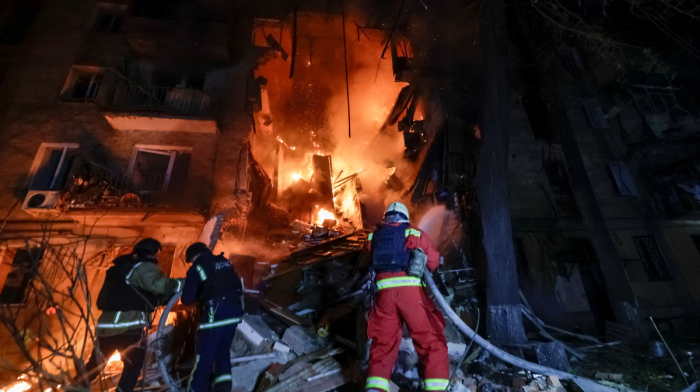
Ukrainian President Volodymyr Zelenskyy says Russia hit at least six energy targets in deadly strikes across Ukraine, showing Moscow is unwilling to accept the energy ceasefire announced by U.S. President Donald Trump.
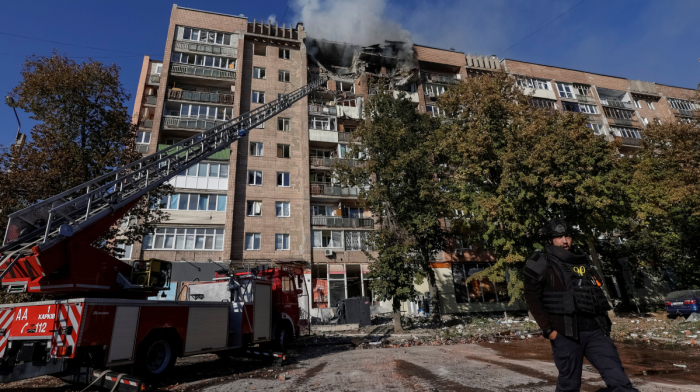
The Kremlin on Monday rejected a 60-day ceasefire idea proposed by Ukrainian President Volodymyr Zelenskyy to allow his country to hold presidential elections, saying it wanted an overall peace deal instead.

Thousands of young Georgians leave the country each year in search of better economic opportunities, with many moving west. As questions grow over Georgia’s European path, AnewZ spoke to people who have emigrated about what it would take for them to return.
Yemen’s Houthis have claimed responsibility for the recent drone and missile strikes on Saudi Aramco facilities in Dhahran and Riyadh and at King Khalid International Airport in Saudi Arabia, vowing to carry out more attacks in the coming days.
The Saudi-led coalition in Yemen said late Monday that it intercepted and destroyed two ballistic missiles launched by the Houthi group toward Khamis Mushait in southwestern Saudi Arabia.

Georgia and Uzbekistan are aiming to nearly quadruple annual trade to $1 billion, up from $267.6 million in 2025, as the two countries seek to strengthen economic ties and expand transport links.

Iran has warned against the military use of Starlink, saying it has developed domestic technology capable of countering cyber threats linked to the satellite internet service.
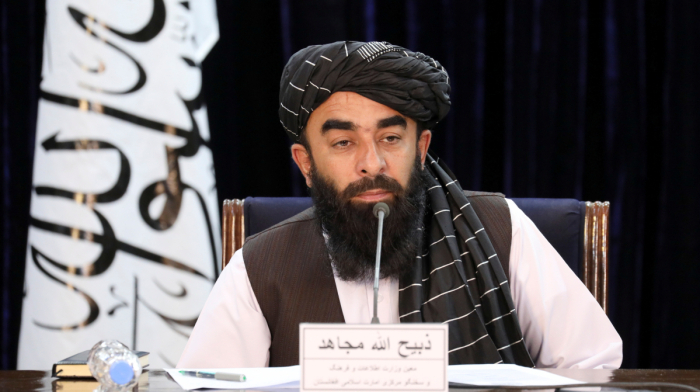
Afghanistan has accused Pakistan of blaming Kabul for its domestic political and security problems, as Islamabad repeated claims that militants are using Afghan territory to launch attacks across the border.
You can download the AnewZ application from Play Store and the App Store.




What is your opinion on this topic?
Leave the first comment