Escalating tensions between Iran and the U.S. are raising economic concerns across Central Asia. Although the region lies far from the conflict, its economies remain closely tied to global energy markets and trade routes linked to the Persian Gulf.
Any disruption to shipping routes or a sharp increase in oil prices could quickly ripple through regional economies, affecting logistics chains, import costs and financial markets.
For several Central Asian states, the most immediate vulnerability lies in fuel prices. Countries such as Kyrgyzstan and Tajikistan depend heavily on imported petroleum products, leaving their domestic markets highly sensitive to global price fluctuations. Security analyst Taalaibek Jumadylov warns that rising fuel costs in Kyrgyzstan could push up the price of essential goods, including food and clothing, placing additional pressure on household budgets.
Dependence on shipping routes
Tajikistan faces similar challenges. A potential disruption to maritime traffic through the strategically vital Strait of Hormuz could significantly increase the cost of imports entering the country.
At the same time, economic ties between Tajikistan and Iran have been strengthening in recent years. Bilateral trade expanded rapidly, reaching roughly $484 million in 2025 compared with $377.7 million in 2024. Tajik exports accounted for around $113 million of that total, while imports from Iran exceeded $371 million, giving Tehran a noticeable share of Tajikistan’s overall foreign trade.
Beyond direct trade flows, Tajikistan could also face indirect economic pressures. A surge in global oil prices would add strain to the country’s budget, while economic slowdowns in key partners such as Russia or China could affect Tajikistan through reduced investment, trade volumes and remittance flows.
In Uzbekistan, analysts are monitoring the growing role of Iran in regional transport diplomacy. According to Uzbek analyst Nargiza Umarova, Tehran has increasingly sought to position itself as a logistics gateway linking Central Asia to global markets.
Co-operation with China
This ambition aligns with China’s infrastructure strategy under the Belt and Road Initiative. A 25-year cooperation agreement signed between Iran and China in 2021 reinforced Tehran’s role in emerging Eurasian connectivity projects.
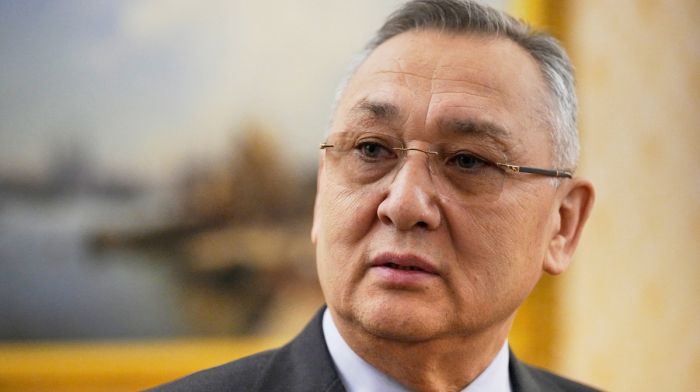
In contrast, officials in Kazakhstan currently see limited direct risks from the escalation in the Middle East. Deputy Prime Minister and Minister of National Economy Serik Zhumangarin says Kazakhstan has historically relied only minimally on transport routes passing through the Persian Gulf.
According to Zhumangarin, the country’s supply chains have already adapted to external challenges, including disruptions that followed the war between Russia and Ukraine.
He explained that routes through the Persian Gulf have rarely been used by Kazakhstan. Even the Iranian port of Bandar Abbas has never served as a major export gateway, largely because of complex logistics and the need to transit several countries before reaching the port.
The minister added that the principal economic risk for Kazakhstan lies in potential volatility of the national currency, the tenge, amid fluctuations in global oil prices.
Economist and associate professor Bauryzhan Iskakov says regional instability could also create strategic opportunities. In his view, Kazakhstan could strengthen its role as a regional transit hub through the development of the Trans-Caspian International Transport Route.
This corridor connects Central Asia with European markets via the Caspian Sea, Azerbaijan, Georgia and Türkiye. If maritime shipping through the Persian Gulf becomes less predictable and northern transport corridors face disruptions, Central Asia - including Kazakhstan - could play a more significant role in shaping alternative logistics flows between Asia and Europe.
For policymakers in Central Asia, the situation underscores a broader reality: economic stability in the region increasingly depends not only on domestic reforms, but also on the ability to adapt quickly to shifting geopolitical dynamics.












What is your opinion on this topic?
Leave the first comment