live Iran, U.S. make competing claims over control of Strait of Hormuz
Iran says the Strait of Hormuz remains under its control, rejecting U.S. President Donald Trump’s claim of “total control” over t...
Lebanon and Syria unite to secure borders, address smuggling, and discuss boundary issues in a historic meeting between leaders after 15 years.
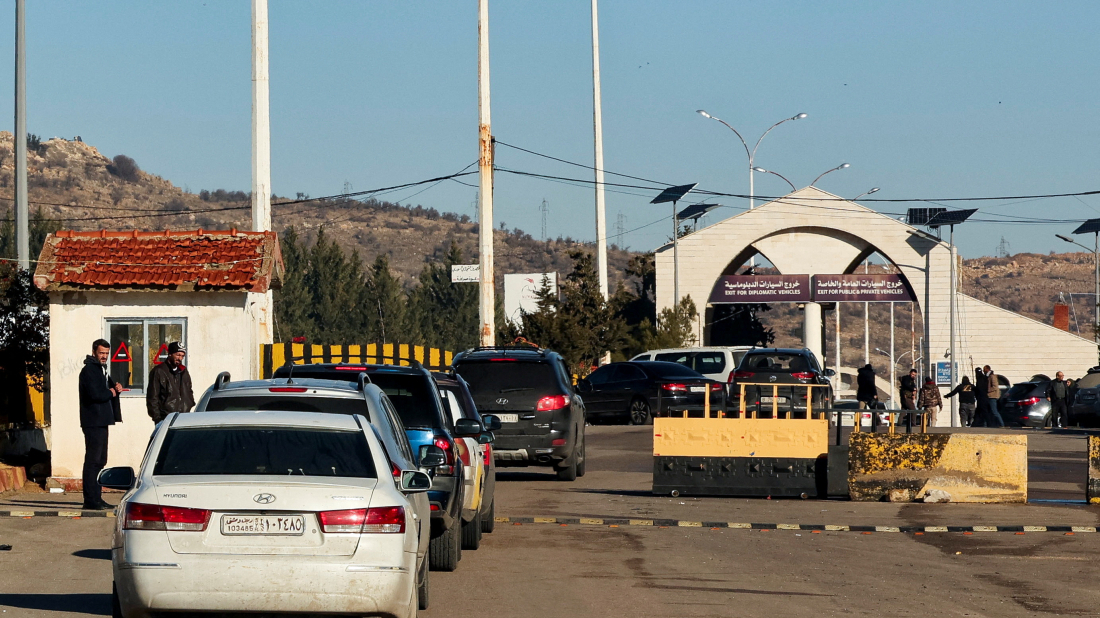
Lebanon and Syria will work together to secure their land borders, as well as to delineate both land and sea borders, Lebanon's caretaker Prime Minister Najib Mikati said on Saturday in Damascus.
In the first trip by a Lebanese prime minister to neighbouring Syria in 15 years, Mikati addressed a joint news conference in Damscus with Syria's de facto leader Ahmed al-Sharaa.
Al-Sharaa said they had discussed issues including smuggling between the two countries, border challenges, and Syrian deposits in Lebanese banks.
Both sides agreed to establish committees to address these matters and provide support.
Lebanon's President Joseph Aoun, said following his election on Thursday that there was a historic opportunity for "serious and equitable dialogue" with Syria.
For much of the Assad family's five decades in power, Syria held significant influence over Lebanon, maintaining a military presence there for 29 years until 2005 in the face of widespread opposition from many Lebanese.

Disruption in the Strait of Hormuz has increased the strategic importance of Bab al-Mandab, raising fears that instability in both waterways could trigger a wider global energy and trade crisis.
Iran and the United States remain at loggerheads over efforts to agree a permanent end to the war in the Gulf, according to a senior Iranian source who said there had been no progress in talks to revive the interim deal agreed in June and define a timeframe to implement it.
Millions of people across Spain and Iceland are preparing on Wednesday to witness a rare total solar eclipse, when the moon will pass directly between Earth and the Sun, briefly turning daylight into darkness along a narrow path.
Start your day informed with AnewZ Morning Brief. Here are the top news stories for the 12th of August, covering the latest developments.
Iran says the Strait of Hormuz remains under its control, rejecting U.S. President Donald Trump’s claim of “total control” over the strategic waterway and insisting it will not reopen until Washington fulfils its commitments under an interim deal.
Armenian Prime Minister Nikol Pashinyan has dismissed Security Council Secretary Armen Grigoryan and appointed former parliament speaker Alen Simonyan as his replacement.
Central Asia’s economy has surpassed $543 billion, driven by Kazakhstan’s economic weight, strong exports and foreign investment, while growing trade across Asia points to an increasingly connected region.
The United Nations refugee agency is planning a settlement and carpet-weaving workshop for Afghan returnees in Kabul as the country grapples with large-scale returns and growing pressure on housing, jobs and basic services.
Iran will soon join the New Development Bank (NDB), the lender established by BRICS nations, Central Bank Governor Abdolnaser Hemmati said in a state media report on Wednesday ahead of a BRICS finance meeting in India.
Azerbaijan's President Ilham Aliyev has outlined an expanded vision for the Zangezur Corridor, describing it not simply as a transport route connecting mainland Azerbaijan with the Nakhchivan exclave, but as a future platform for energy, telecommunications and wider regional integration.
You can download the AnewZ application from Play Store and the App Store.
What is your opinion on this topic?
Leave the first comment