Sisi urges Trump to stop Gulf war, warns oil could surge above $200 amid regional tensions
Egypt’s President Abdel Fattah al-Sisi on Monday urged U.S. President Donald Trump to intervene in the escalating Gulf conflict, warning that...
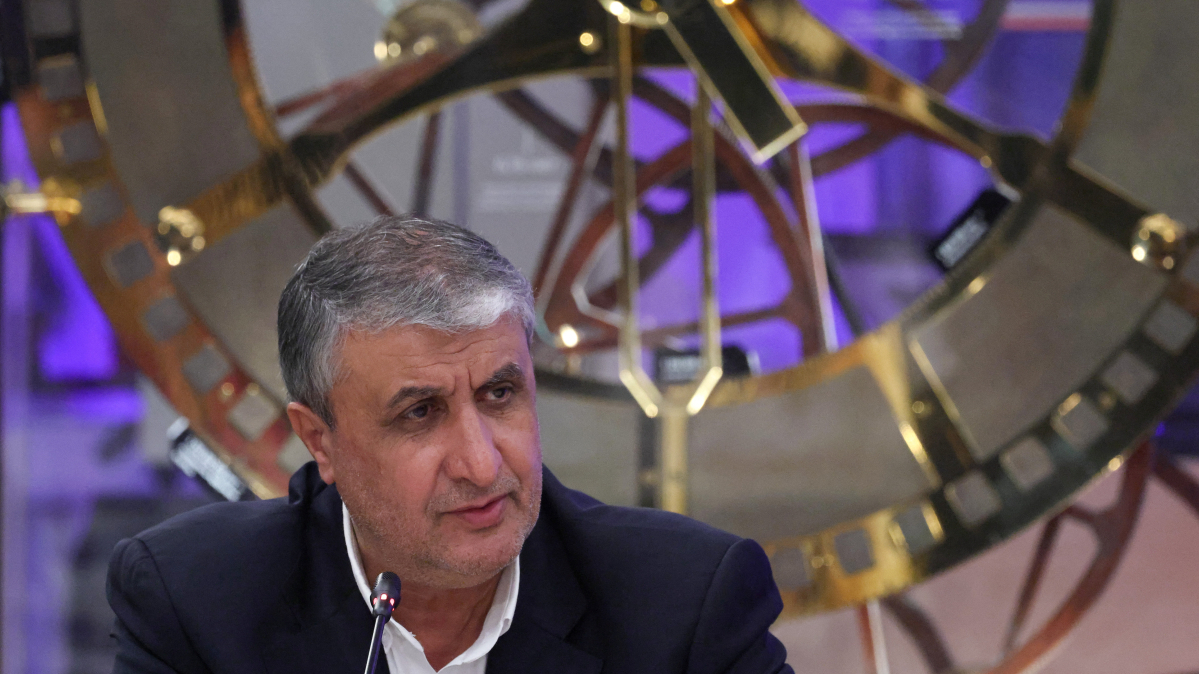
Iran’s atomic energy chief says Tehran could dilute uranium enriched to 60 per cent if all international sanctions are lifted, stressing that technical nuclear issues are being discussed alongside political matters in ongoing negotiations.
Mohammad Eslami, head of the Atomic Energy Organisation of Iran, said Iran’s cooperation with the International Atomic Energy Agency remains in place but accused the agency of failing to address what he described as a military attack on nuclear facilities under safeguards.
“Our relations with the Agency are established but the Agency has an unfinished task regarding a military attack on facilities under safeguards supervision,” Eslami said, according to ISNA. “If we are under the Agency’s supervision and accreditation, it cannot remain silent about what happened.”
Eslami said IAEA inspectors have continued visits to nuclear sites that were not damaged, with approval from Iran’s Supreme National Security Council. He added that inspections resumed after the war and that inspectors are currently visiting additional facilities.
He stressed that Iran expects its rights to be respected under IAEA regulations, saying the agency has a duty to support and promote the peaceful use of nuclear technology for all countries, including Iran.
Asked specifically about the possibility of diluting uranium enriched to 60 per cent, Eslami said the issue depends entirely on whether all sanctions are lifted in return.
Uranium enrichment has long been a core point of tension between Iran and the U.S., with Washington arguing that enrichment to high levels has no credible civilian justification and poses proliferation risks. Under the 2015 nuclear deal, Iran agreed to cap enrichment at 3.67 per cent in exchange for sanctions relief but it began enriching uranium to much higher levels after the U.S. withdrew from the agreement and reimposed sanctions.
Iran is now enriching uranium to up to 60 per cent purity - a level far above what is needed for civilian energy use, though still below weapons-grade, which starts at around 90 per cent.
U.S. officials and European allies say higher enrichment levels significantly shorten the time Iran would need to produce weapons-grade material, increasing pressure on diplomatic efforts. Iran denies seeking nuclear weapons, insisting its programme is peaceful and subject to international monitoring.
Tehran says any rollback of its nuclear activities depends on sanctions relief and recognition of its right to enrich uranium, while Washington has demanded verifiable limits on enrichment before easing sanctions.
U.S. President Donald Trump has said that the U.S is in talks with the new Iranian regime. He said this in a post on his Truth Social account but warned that the U.S. will "Obliterate" Iran's electric and oil facilities if no deal is reached, especially regarding the Strait of Hormuz closure.
Cuba and the United States have been at odds for more than six decades, with tensions rooted in the 1959 revolution that transformed the island’s political and economic system. Renewed focus on relations comes as Donald Trump’s rhetoric intensifies and conditions on the island worsen.
NASA is aiming to launch its Artemis 2 mission on Wednesday (1 April), sending astronauts on a 10-day journey around the Moon, officials confirmed. According to the Space Administration, the launch window is due to open at 23:24 GMT, with additional opportunities to 6 April if delays occur.
The four astronauts selected for NASA’s Artemis II mission have arrived in Florida, entering the final phase of preparations for the first crewed journey towards the Moon in more than five decades
Iranian Military Spokesman Lieutenant Colonel Ibrahim Zulfiqari has warned that American soldiers will become 'food for sharks' if U.S. President Donald Trump launches ground attacks against Iran. The threat comes after the U.S. military said it was deploying thousands of Marines to the region.
Egypt’s President Abdel Fattah al-Sisi on Monday urged U.S. President Donald Trump to intervene in the escalating Gulf conflict, warning that only he could prevent it from spreading further.
The Middle East conflict has entered a new phase, with Israel expanding its operations into southern Lebanon and tensions with Iran escalating. Analysts warn that the collapse of traditional deterrence and rising nuclear risks could trigger a global arms race.
Imports of industrial goods into Kyrgyzstan surged in January 2026, driven by a construction boom and the modernisation of production capacity, with China supplying $51.2 million in electrical equipment to become the country’s largest trading partner.
Georgia’s Minister of Economy, Mariam Kvrivishvili, met UK Ambassador Gareth Edward Ward in Tbilisi on 27–28 March to discuss trade, investment and transport links between Georgia and the United Kingdom.
Iran on Monday described U.S. proposals to end a month-long war in the Middle East as “unrealistic, illogical and excessive” and launched further missile strikes on Israel as oil prices continued to climb following Yemen’s Houthi entry into the conflict.
You can download the AnewZ application from Play Store and the App Store.
What is your opinion on this topic?
Leave the first comment