The United Nations nuclear watchdog must clarify its stance on U.S. and Israeli attacks on Iran's nuclear sites last June that lasted 12 days, before inspectors are allowed to visit those facilities, Iranian media on Friday quoted the country's atomic chief as saying.
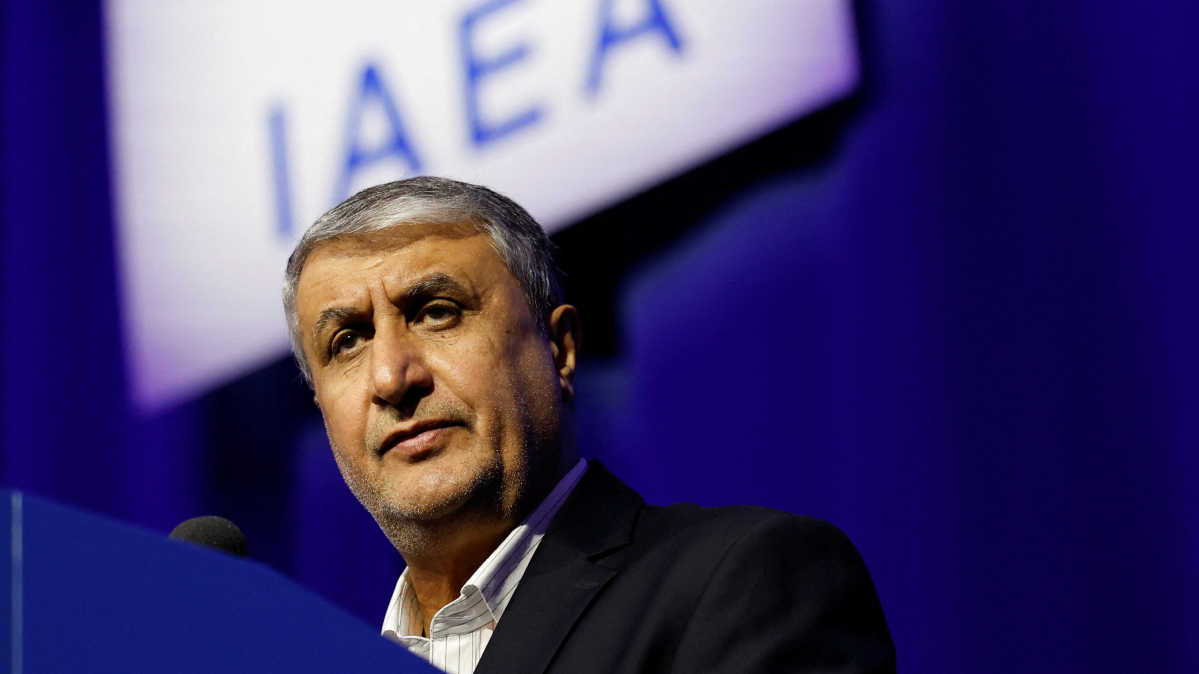
Head of the Atomic Energy Organization of Iran (AEOI) Mohammad Eslami said he has sent a letter to the Director General of the International Atomic Energy Agency (IAEA), Rafael Grossi, demanding instructions to visit Iran’s bombed sites.
He said Tehran had submitted a statement at the IAEA's General Conference last September demanding that attacks on nuclear sites be prohibited. But it was not placed on the agenda and was ignored, he said.
"We proposed a plan at the last IAEA General Conference that nuclear sites should not be attacked, but it was not considered,” he told reporters on Thursday (22 January) in Tehran.
"The agency has to clarify its position regarding the military attacks on the nuclear facilities that have been registered by the agency and are under its supervision so we can understand what role they play," state TV quoted Eslami as having told reporters in Tehran on 22 January.
"It is unrealistic, unprofessional and unfair that, because of pressure from Israel and the U.S., he [Grossi] is putting pressure on us," Eslami said.
He noted that the UN nuclear watchdog has not yet replied to Tehran’s letter.
“Mr. Grossi must first clarify his position and explain what access to Iran’s bombed facilities should be like," he added stressing that IAEA’s stance must be stated explicitly.
Grossi has not explicitly condemned or criticised the attacks nor has he formally outlined a protocol for inspecting the damaged facilities.
In the wake of Israel-U.S. air-raids last June, Iran suspended its coorporation with IAEA calling for condemnation of the attacks and demanding establishment of specific protocols to inspect the bombed nuclear facilities.
Iran’s nuclear chief also warned that IAEA is required to formulate inspection protocols for the nuclear sites targeted during military strikes because such attacks could pose environmental risks.
His remarks came after Grossi expressed concern over Iran’s banning inspection of its bombed sites earlier this week.
"This cannot go on forever because at some point … I don't have any idea where this material is,” Grossi said referring to Iran’s denying access to an estimated 440 kg of highly-enriched uranium.
However, in an interview at the World Economic Forum in Switzerland, Grossi confirmed that with an exception of three major nuclear sites of Natanz, Fordo, and Isfahan damaged in the war, the IAEA inspectors have visited all other 13 nuclear facilities in Iran.













What is your opinion on this topic?
Leave the first comment