Iran’s parliament met in an emergency session on Sunday as nationwide protests continued, with rights groups reporting more than 110 deaths.
According to the Reuters, lawmakers met to discuss the unrest, with some chanting "Death to America" from the parliamentary floor.
Parliament speaker Mohammad Baqer Qalibaf warned that any U.S. attack would prompt Tehran to strike Israel and U.S. military bases in the region, describing them as "legitimate targets".
Separately, sources said Israel had raised its alert level amid concerns about possible U.S. intervention in support of the protest movement.
Iran’s security forces have intensified their crackdown on nationwide protests, with demonstrations now reported in 185 cities across 31 provinces, according to Iranian human rights activists.
Rights groups say at least 116 people have been killed since the unrest began nearly two weeks ago, including seven children and four medical workers who were treating injured protesters.
They say 2,638 people have been arrested during the first 14 days of demonstrations.
The figures mark a sharp rise from earlier estimates. The Iranian rights group HRANA said it had confirmed 65 deaths as of 9 January, while the Norway-based group Hengaw reported more than 2,500 arrests at that stage.
Human rights activists say those killed include 37 members of the security forces and one prosecutor, who died in separate incidents linked to the unrest.
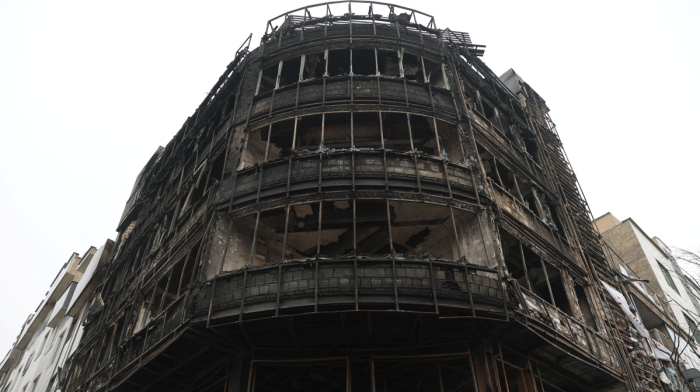
Unrest continued overnight, according to state media, which reported that a municipal building was set on fire in Karaj, west of Tehran. State television broadcast footage of funerals for members of the security forces it said were killed in clashes in Shiraz, Qom and Hamedan.
A witness in western Iran, reached by phone, said Revolutionary Guards forces were deployed in the area and had opened fire. The witness declined to be identified for safety reasons.
A doctor in north-western Iran said hospitals had received large numbers of injured protesters since Friday, including people with gunshot wounds, head injuries and broken limbs.
In a statement broadcast on state television, the Revolutionary Guards accused what they described as “terrorist groups” of targeting military and law enforcement facilities over recent nights, killing several citizens and security personnel and damaging public property.
The regular army said it would protect national interests, strategic infrastructure and public property.
Government narrative
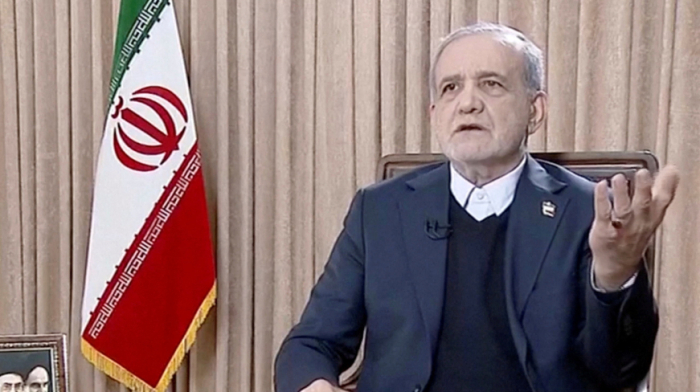
Senior Iranian official Ali Larijani, an adviser to Supreme Leader Ali Khamenei, said the protests amounted to a security crisis directed from abroad and accused Iran’s adversaries of seeking to polarise society and weaken national unity.
Larijani said Iran was operating in conditions of neither peace nor ceasefire and argued that creating a new internal crisis under such circumstances was “irrational”. He said the unrest had gone beyond economic grievances, citing attacks on what he described as national and religious symbols, and said security agencies had identified and arrested key organisers.
Iranian authorities accuse the United States and Israel of fomenting the unrest, claims both countries deny.
International reaction and analysis
Authorities have imposed widespread internet restrictions, sharply limiting the flow of information out of Iran. Analysts say the measures are intended to control the flow of information and limit international scrutiny.
Speaking to AnewZ, Alex Vatanka, a senior fellow at the Middle East Institute, said: “They want to shut down that line of communication. Preventing the flow of information is, frankly, a form of damage control.Images of people being shot or of casualties would make life much harder for the regime. The authorities are also acutely aware that, for the first time in the history of the Islamic Republic, an American president has openly said the United States could intervene if protesters are killed in large numbers.”
International reactions have intensified. U.S. President Donald Trump warned Iran’s leaders that Washington would respond if protesters were fired upon. U.S. Secretary of State Marco Rubio said the United States supported what he called the “brave people of Iran”.
Trump also said he was not inclined to meet exiled opposition figure Reza Pahlavi, who has called on supporters to prepare to seize city centres and urged workers in key sectors to strike.
France, Britain and Germany issued a joint statement condemning the killing of protesters and urging Iranian authorities to show restraint. The United Nations said it was disturbed by the loss of life and reiterated the right to peaceful protest.
Background to the unrest
The protests began nearly two weeks ago over soaring inflation but have since taken on a political dimension, with demonstrators calling for an end to clerical rule.
Iran’s clerical leadership has faced repeated waves of unrest in the past, but analysts say the current protests represent one of the most serious internal challenges in years, as the country grapples with a struggling economy, years of sanctions and the aftermath of last year’s conflict.








What is your opinion on this topic?
Leave the first comment