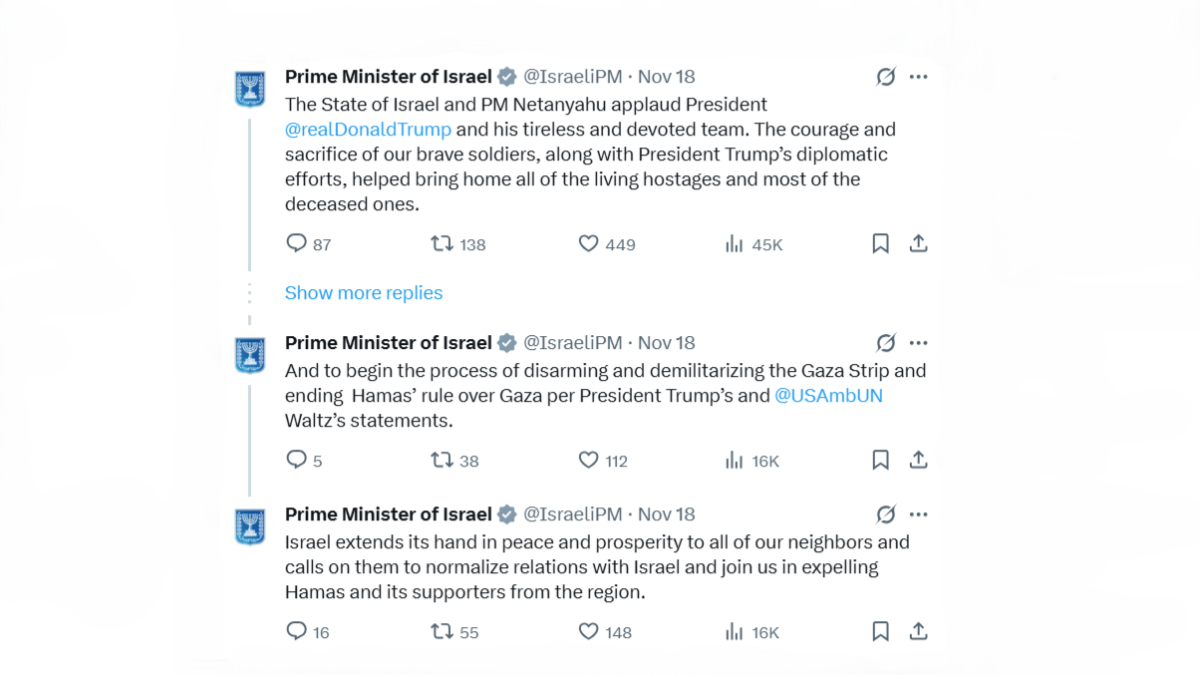
Israeli Prime Minister Benjamin Netanyahu called for Hamas to be expelled from the region on Tuesday. The coment on his X account comes a day after the United Nations Security Council endorsed U.S. President Donald Trump's plan to end the war that offers Hamas amnesty.
In one post, he applauded Trump and in another he wrote the Israeli government believes the plan would lead to peace and prosperity because it calls for the "full demilitarization, disarmament, and deradicalization of Gaza".
"Israel extends its hand in peace and prosperity to all of our neighbours" and calls on neighbouring countries to "join us in expelling Hamas and its supporters from the region," he said.
Asked what the prime minister had meant, a spokesperson said that it would mean "ensuring there is no Hamas in Gaza as outlined in the 20-point plan, and Hamas has no ability to govern the Palestinian people inside the Gaza Strip".
Trump's 20-point peace plan
Notably, Trump's 20-point plan includes a clause saying that Hamas members "who commit to peaceful coexistence and to decommission their weapons will be given amnesty" and members who wish to leave will be given safe passage to third countries.
Another clause says Hamas will agree to not having any role in Gaza's governance. There is no clause that explicitly calls for the Islamist militant group to disband or to leave Gaza.
The plan says reforms to the West Bank-based Palestinian Authority may ultimately allow conditions "for a credible pathway to Palestinian self-determination and statehood".
However, ahead of the UN vote, Netanyahu said on Sunday that Israel remained opposed to Palestinian statehood.
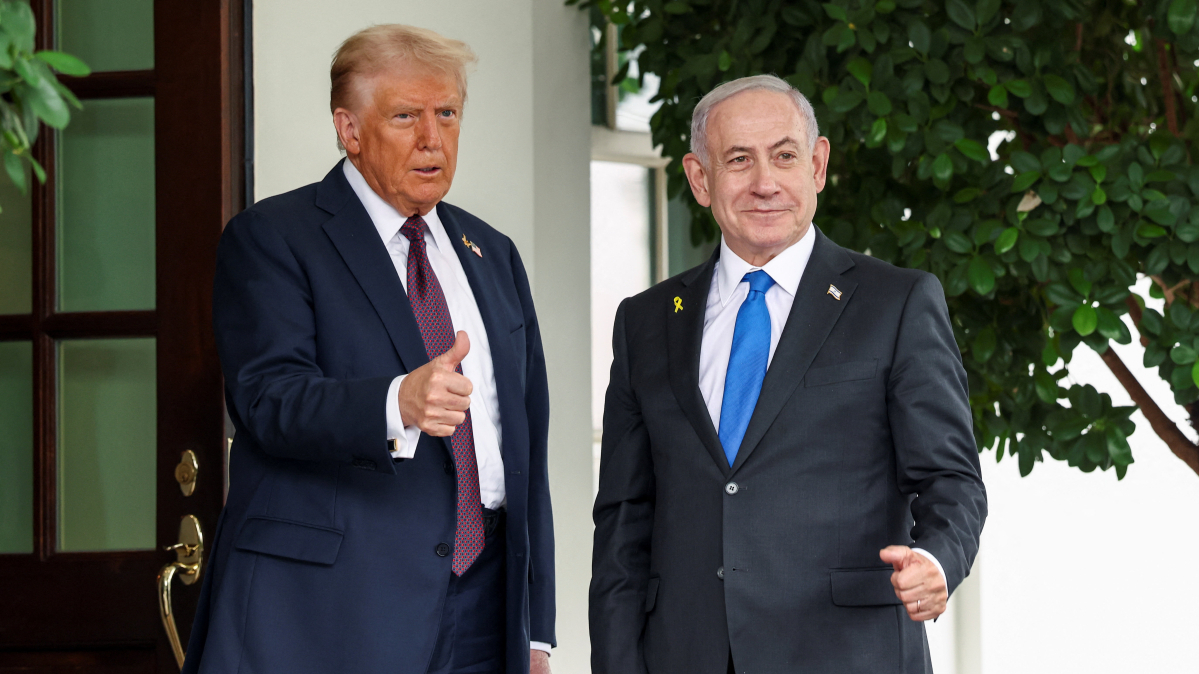
Previously Netanyahu publicly endorsed the plan during a White House visit in late September. However, his latest remarks appear to show that there are differences with the United States on the path forward. Hamas has also objected to parts of the plan.
It's reported that diplomats have said privately that entrenched positions on both the Israeli and Hamas sides have made it difficult to advance the plan, which lacks specific timelines or enforcement mechanisms. However, it has received strong international backing.
The ceasefire between Israel and Hamas came into effect on 10 October as part of Trump's multi-phased plan to end the war. Israel has partially withdrawn its forces but still controls 53% of Gaza and the sides have accused each other of violations.
















What is your opinion on this topic?
Leave the first comment