live U.S.-Iran standoff continues as Hormuz shipping and diplomacy remain uncertain
Shipping traffic through the Strait of Hormuz remains limited on Thursday, with no increase in vessel crossings as U.S.-Iran talks to res...
The United Nations Security Council voted to adopt a U.S.-drafted resolution endorsing President Donald Trump's plan to end the war in Gaza and authorising an international stabilisation force for the Palestinian territory on Monday.
The vote gives formal backing to a framework that includes a ceasefire, a hostage-release deal and the creation of a transitional governing structure.
Israel and Hamas agreed last month to the first phase of the 20-point plan, but the resolution is viewed as essential for countries assessing whether to send troops.
The text allows member states to participate in the Trump-chaired Board of Peace, which would oversee Gaza’s reconstruction and economic recovery.
It also authorises a force tasked with demilitarising Gaza by removing weapons and dismantling military infrastructure.
Hamas rejected the decision, saying the resolution imposes an external guardianship and insisting it will not disarm. The group reiterated that its actions constitute legitimate resistance against Israeli occupation.
U.S. ambassador Mike Waltz said the plan outlines a path toward Palestinian self-determination and aims to dismantle Hamas’s hold on the territory. He described the vote as opening space for “rockets to give way to olive branches” and for a political horizon to emerge.
Russia and China abstained, arguing the resolution sidelines the UN and grants broad authority to the Board of Peace and the stabilisation force without clear details. Their abstentions allowed the text to pass despite earlier objections from Moscow.
The Palestinian Authority welcomed the resolution and signalled readiness to help implement it. Diplomats said the Authority’s support was crucial in preventing a Russian veto.
Trump celebrated the outcome as a “moment of historic proportion,” promising further announcements about the Board of Peace in the coming weeks.
The resolution contains language on a potential “credible pathway” to Palestinian statehood once reforms are enacted and Gaza’s redevelopment progresses.
The reference has sparked controversy in Israel. Prime Minister Benjamin Netanyahu said his government remains opposed to a Palestinian state and vowed to demilitarise Gaza “the easy way or the hard way.”

The collective-defence agreement between Türkiye, Saudi Arabia and Pakistan signals that regional powers no longer want to rely solely on external security guarantees. Whether it becomes a stabilising deterrent or another axis of rivalry remains unresolved.
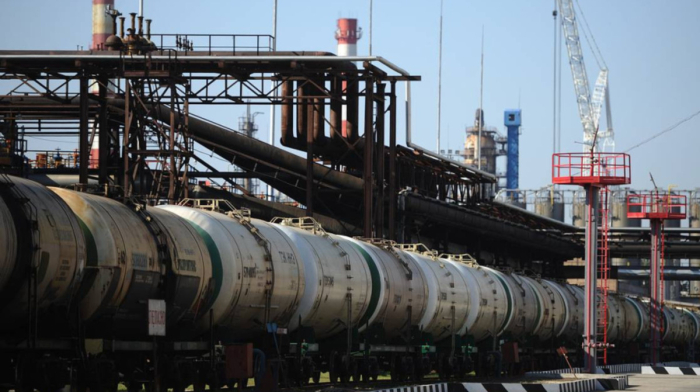
Shipping traffic through the Strait of Hormuz remains limited on Thursday, with no increase in vessel crossings as U.S.-Iran talks to resolve the conflict remained stalled. Nine commodity vessels transited the key waterway on Wednesday, unchanged from the previous day, according to Kpler data.
Shipping through the Strait of Hormuz has slowed, according to the latest data, as uncertainty over the waterway’s reopening kept most shipowners away. Six commodity vessels crossed the strait on Tuesday, down from nine the day before and below the 10-day daily average of 11.
Iran has said the Strait of Hormuz will remain closed until the U.S. fulfils the terms of an interim deal, including lifting the maritime blockade and sanctions and releasing Iran’s frozen assets.
Start your day informed with AnewZ Morning Brief. Here are the top news stories for the 19th of August, covering the latest developments.
Afghanistan and Belarus have agreed to advance joint industrial projects, investment and technical cooperation following talks in Minsk, as Kabul seeks Belarusian machinery and support to develop domestic manufacturing.
Uzbekistan and Azerbaijan are drawing up a new programme aimed at boosting bilateral trade to $1 billion by 2030, as the two countries move to deepen economic and industrial ties.
Syria says it assured Israel that Türkiye had no plans to establish a military presence at the Abu al-Duhur airbase before Israeli forces struck the site on Tuesday.
Israeli Prime Minister Benjamin Netanyahu has issued his strongest warning yet over Türkiye's growing military role in Syria, saying Israel will not accept Turkish forces expanding their presence further south.
Azerbaijan’s support for Ukraine could provide a model for neighbouring countries seeking to strengthen their sovereignty, the director of development at an organisation supporting Ukraine’s armed forces has told AnewZ.
You can download the AnewZ application from Play Store and the App Store.
What is your opinion on this topic?
Leave the first comment