Kazakhstan, Uzbekistan and the United Arab Emirates are exploring a new railway through Afghanistan that could open another route for Central Asian cargo to Pakistan’s seaports.
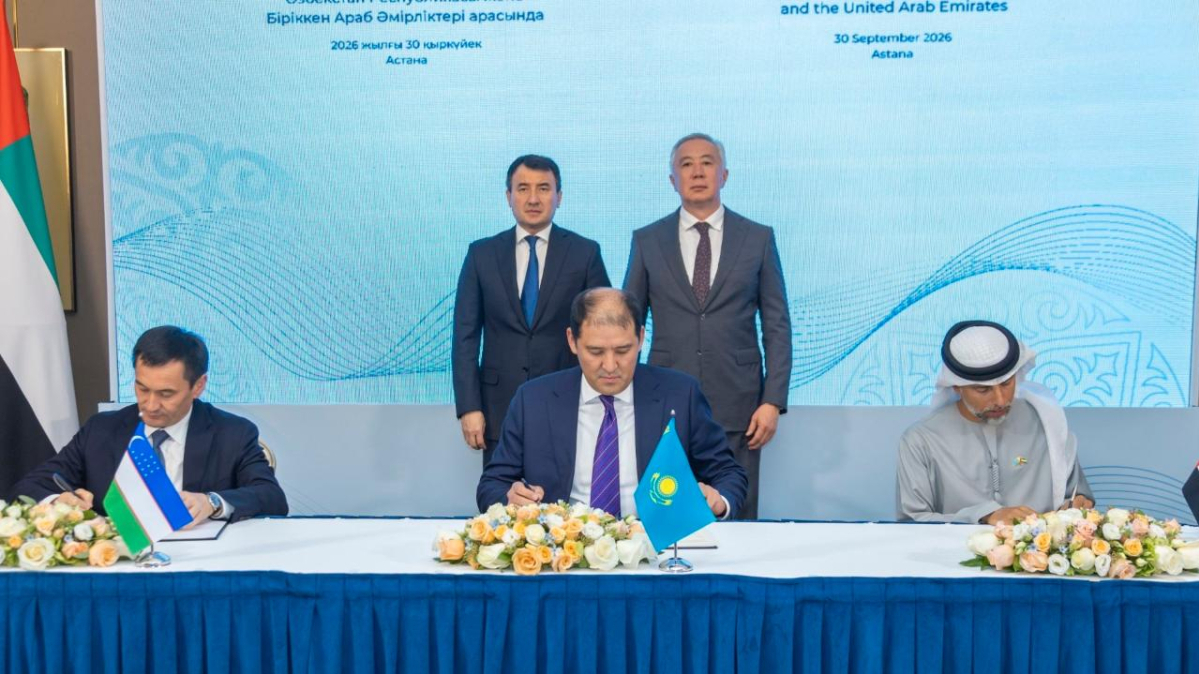
The three countries have signed a memorandum of understanding on the CASA project, covering a proposed railway link between Kazakhstan, Uzbekistan, Afghanistan and Pakistan.
Feasibility studies come first
The agreement does not mean construction is about to begin. Instead, it paves the way for detailed studies to determine whether the route is technically and economically viable.
The three countries will assess the infrastructure needed and examine options for implementing and financing the project.
For Kazakhstan and Uzbekistan, the proposed connection would provide another route to international markets. Both countries are landlocked and rely on transport links through neighbouring states and wider regional corridors to move goods abroad.
A railway through Afghanistan could connect Central Asian rail networks with South Asian markets while providing access to Pakistan’s ports of Karachi and Gwadar.
Potential capacity of 10 million tonnes
The potential scale of the corridor is already being discussed. During talks in Kabul in June 2026, Kazakhstan’s Deputy Prime Minister Serik Zhumangarin said the CASA route could eventually carry up to 10 million tonnes of cargo to Pakistani ports.
However, that figure remains a projection, with the proposed railway still at the planning stage.
The initiative also builds on wider efforts to develop railway links across Afghanistan. Kazakhstan has previously confirmed its intention to participate in the construction of the Turghundi-Herat railway, part of the broader Turghundi-Herat-Kandahar-Spin Boldak route.
Uzbekistan, Afghanistan and Pakistan have also been working on the broader Trans-Afghan railway, intended to connect Central Asia with Pakistan.
Trans-Afghan railway could cost more than $7 billion
The Trans-Afghan project is expected to have a capacity of up to 20 million tonnes of freight a year. The planned railway would stretch for around 600 kilometres, although its final technical parameters are still being assessed.
Uzbekistan has said the estimated cost could now exceed $7 billion, up from an earlier estimate of around $4.8 billion.A feasibility study is expected to be completed by the end of 2026.
The economic case for the route centres on cutting the time and cost of transporting goods between Central and South Asia.
Uzbek government estimates suggest the Trans-Afghan route could eventually cut delivery times between Pakistan and Uzbekistan from around 35 days to between three and five days.
The same estimates suggest transport costs for a standard container could fall by almost two-thirds. However, the figures remain projections rather than results from an operational railway.
CASA moves into detailed planning
For the CASA project, the next stage is detailed planning, rather than construction.
The countries will need to determine how their existing railway networks could be connected, where border crossings and logistics centres would be located, and how tariffs, digital systems, security and financing would be organised.
The UAE’s involvement adds a potential investment component. Alongside Kazakhstan and Uzbekistan’s existing railway networks and transit capacity, the UAE brings experience in major infrastructure and logistics projects and could play a role in discussions over the financial model for the proposed corridor.
Another route to global markets
Much will depend on the outcome of the studies. If the project is found to be technically and economically feasible, CASA could become part of a wider transport network linking Central Asian railways with Afghanistan, South Asia and the ports of the Arabian Sea.
For Kazakhstan and Uzbekistan, the railway could provide another route to global markets. For Afghanistan, it could strengthen the country’s role as a land bridge between Central and South Asia.



















What is your opinion on this topic?
Leave the first comment