Uzbekistan and Kazakhstan will remove tariff and non-tariff barriers affecting around 20 product categories from 10 August, in a move designed to facilitate cross-border trade and support businesses in both countries.
The decision was announced by Kazakhstan’s Ambassador to Uzbekistan, Yeraly Tugzhanov, during the Uzbek-Kazakh Business Forum. Officials described it as one of the fastest trade-related decisions reached between the two neighbouring countries.
According to Tugzhanov, the issue of trade restrictions was discussed during a meeting of the Uzbek-Kazakh Intergovernmental Commission in the Kazakh city of Aktau at the end of July, attended by the prime ministers of both countries.
He said decisions covering nearly 20 product categories were approved within a week and will come into force on 10 August.
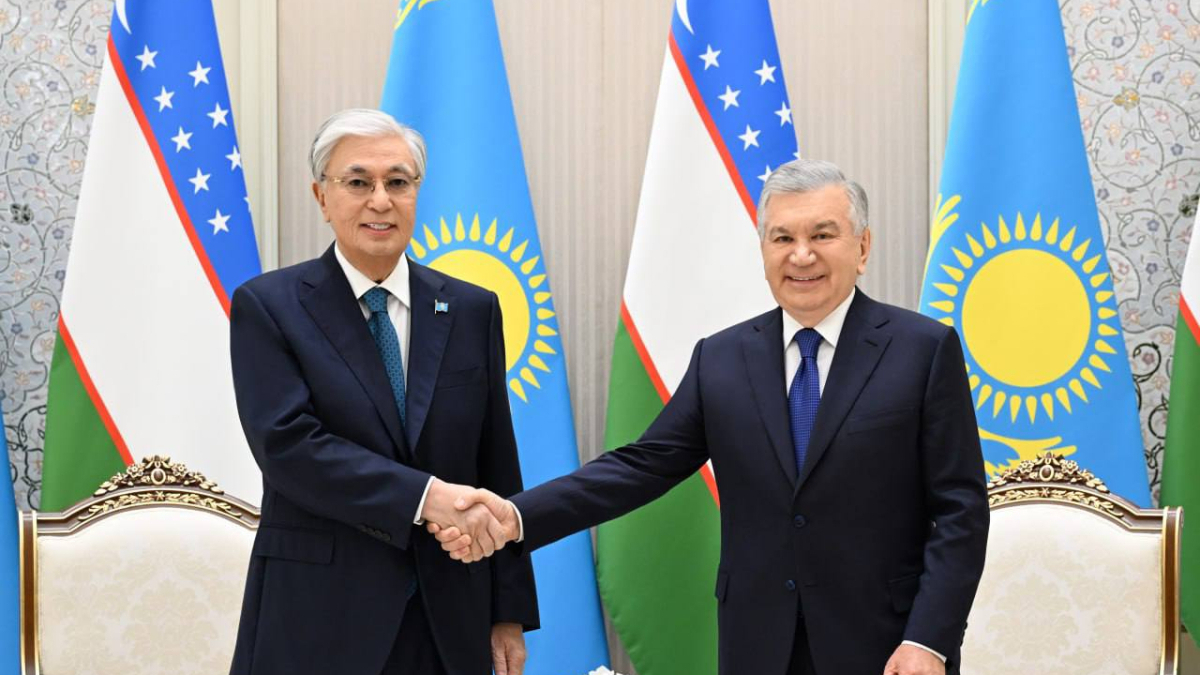
Tugzhanov said the current pace of bilateral cooperation reflects the close relationship between the presidents of Uzbekistan and Kazakhstan, while emphasising that governments and businesses must now implement the agreements reached.
Chairman of the Chamber of Commerce and Industry of Uzbekistan Davron Vakhabov confirmed that the restrictions affect around 20 product categories, although he did not disclose the full list.
According to Vakhabov, entrepreneurs in both countries have repeatedly raised concerns over the existing tariff and non-tariff barriers, making their removal an important step towards expanding bilateral trade.
“We are confident this will provide a major boost for businesses in both countries,” he said.
Trade continues to expand
The two governments have set a target of increasing bilateral trade to $10 billion.
Trade turnover between Uzbekistan and Kazakhstan increased by nearly 38 per cent during the first five months of this year, suggesting the target is becoming increasingly achievable.
Tugzhanov also said Kazakhstan has the potential to expand exports to Uzbekistan across 261 product categories, creating further opportunities for economic cooperation.
The ambassador added that he had met representatives of the Association of Exporters of Uzbekistan to discuss challenges facing businesses before visiting the border and meeting relevant authorities to help resolve some of the issues.
Bilateral trade between Uzbekistan and Kazakhstan reached $4.8 billion in 2025, while mutual trade totalled $2.8 billion during the first half of 2026, making Kazakhstan Uzbekistan’s third-largest trading partner.
Deepening economic integration
The latest decision reflects the broader trajectory of Uzbek-Kazakh relations rather than any reversal of political tensions. In recent years, the two countries have steadily expanded cooperation in trade, investment, transport and industry.
The removal of tariff and non-tariff barriers is intended to address practical obstacles that businesses have long identified as slowing the movement of goods across the border.
Industrial cooperation has also accelerated, with the two countries implementing around 80 joint industrial and manufacturing projects worth more than $1.8 billion. To further improve cross-border trade, Uzbekistan’s Chamber of Commerce and Industry and Kazakhstan’s Atameken National Chamber of Entrepreneurs are establishing a permanent expert working group to streamline customs procedures and border logistics.
Business ties continue to deepen on both sides of the border. According to Kazakhstan’s Bureau of National Statistics, 8,275 companies with Uzbek participation were operating in Kazakhstan as of 1 May 2026, nearly four times as many as in late 2022. Uzbekistan now leads all foreign countries in the growth rate of active businesses in the Kazakh market. Most Uzbek-backed companies operate in the services sector, followed by trade and construction.
At the same time, 1,221 enterprises with Kazakh capital are registered in Uzbekistan, making Kazakhstan the country’s fourth-largest foreign investor by number of registered businesses, after China, Russia and Türkiye. These companies operate across a wide range of sectors, including trade, industry, information and communications, construction, transport, agriculture, healthcare and hospitality.
The removal of the trade barriers is expected to further strengthen commercial ties, improve market access and support the long-term goal of building a more integrated Central Asian economy.
















What is your opinion on this topic?
Leave the first comment