Georgia is enjoying one of its biggest and highest-quality grape harvests since independence. By 6 October, growers in the country's main wine-producing region, Kakheti, had delivered 182,210 tonnes of grapes, with 99 per cent rated medium or high quality, despite recent protests over prices.
Harvest gathers pace in Kakheti
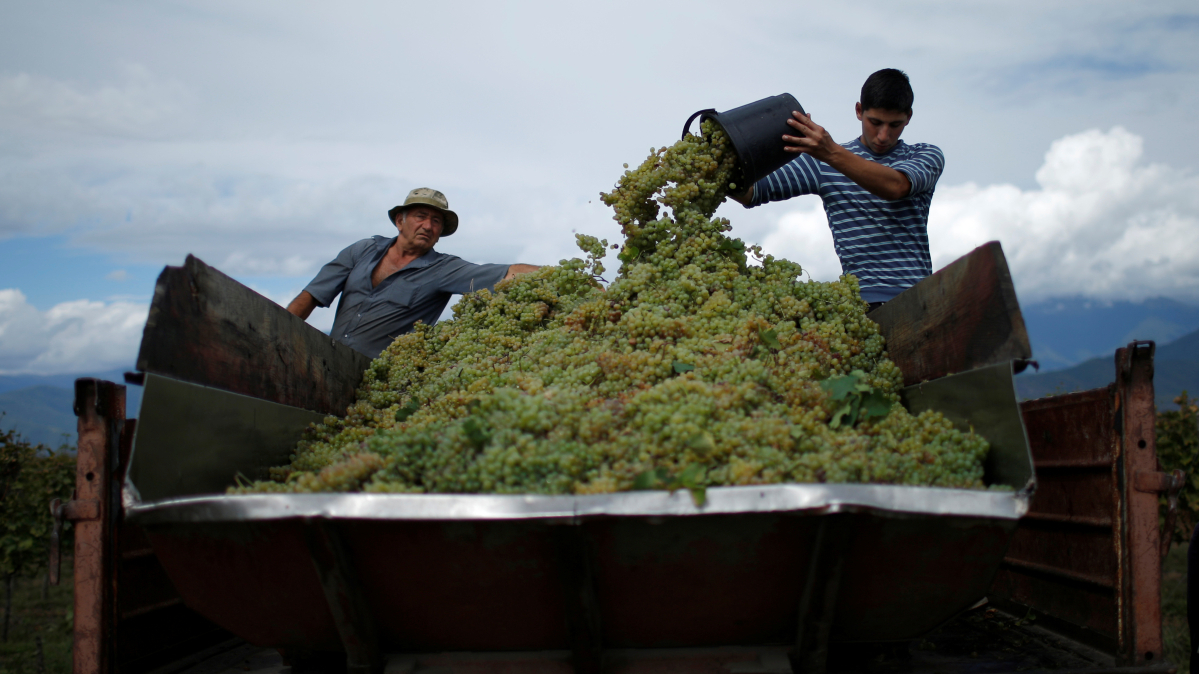
Georgia's grape harvest is in full swing, with between 13,000 and 14,000 tonnes being processed daily in Kakheti, the heart of the country's wine industry.
The state-backed Harvest Management Company is collecting grapes at 22 sites across the region, helping growers sell their produce as the harvest accelerates.
Saperavi, Georgia's signature red grape variety, accounts for 92,100 tonnes, while Rkatsiteli, a widely grown white variety, has contributed up to 77,400 tonnes.
The standout figure, however, is the quality of the crop.
Agriculture Minister Davit Songhulashvili has attributed the strong results to a new grading system introduced this year, which rewards growers with higher payments for better-quality grapes.
Just one per cent of the harvest has been classified as rotten or low quality.
Price protests prompt government intervention
The bumper harvest has not been without challenges.
Last month, grape growers in Kvareli and Gurjaani staged protests over prices, amid concerns that an abundant harvest could lead to oversupply and lower earnings.
In response, the government introduced a guaranteed purchase scheme to protect growers from being left with unsold grapes.
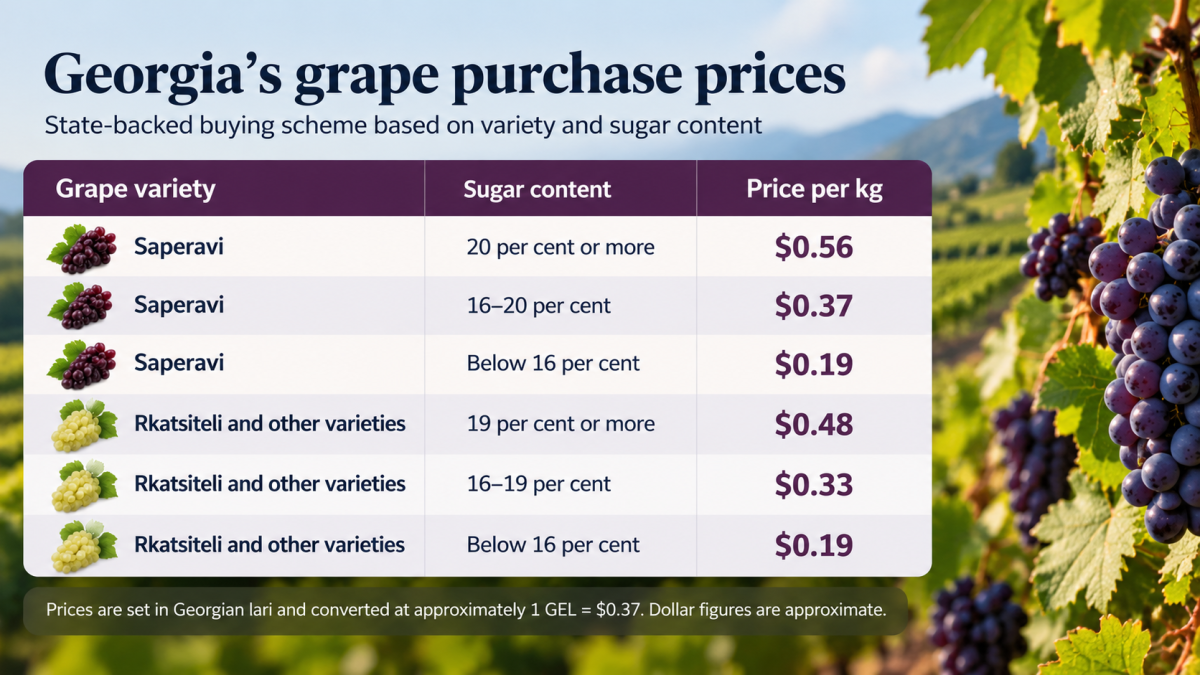
Under the scheme, the Harvest Management Company purchases surplus grapes that private wineries cannot absorb, with prices determined by grape variety and sugar content.
With around 13,200 growers having delivered grapes by 6 October, the scheme is providing a safety net during one of the country's busiest harvest seasons.
Why Georgia's grape harvest matters
Beyond its economic importance, the grape harvest holds a special place in Georgian culture.
Known locally as rtveli, the annual harvest is a tradition that brings families and communities together.
Relatives return to their villages, neighbours help gather grapes, and the hard work is often followed by communal feasts filled with traditional food, toasts and singing.
For many families, winemaking remains closely tied to centuries-old techniques, including fermenting grapes in large clay vessels known as qvevri, which are traditionally buried underground.
The harvest is also a vital source of income. Wine is one of Georgia's best-known exports, supporting thousands of rural households whose livelihoods depend on grape production and fair prices.
The country's winemaking heritage stretches back around 8,000 years, according to archaeological evidence, while traditional qvevri winemaking is recognised by UNESCO as part of humanity's intangible cultural heritage.
More than just wine
Not every grape harvested in Georgia ends up in a wine bottle.
Some are distilled into chacha, a strong traditional spirit made from grape pomace, while others are pressed into juice.
Grapes are also used to make churchkhela, a popular Georgian sweet made by dipping strings of nuts into thickened grape juice, creating a distinctive candle-shaped snack commonly found in local markets.
From traditional delicacies to internationally recognised wines, Georgia's grape harvest remains central to the country's culture, economy and rural communities.
Read more:






















What is your opinion on this topic?
Leave the first comment