Denmark has unveiled its national roadmap for phasing out fossil fuels at the COP31 climate conference in Antalya. Spain, Portugal, Luxembourg and Pacific island nations said they would soon publish their own plans.
Ministers at an event titled “Denmark: Ministerial Press Conference on Divesting Away from Fossil Fuels” called for wider electrification powered by clean energy and a faster move away from coal, oil and gas.
With France, Germany, Finland, Ireland, Brazil and the Netherlands having already announced roadmaps, the number of countries working on such plans has now reached 11, according to organisers.
Danish Minister for Climate, Energy and Utilities Samira Nawa congratulated the climate conference Presidency on its work on a roadmap for moving away from fossil fuels, and said renewable energy was replacing fossil fuels.
She said Denmark was working with countries taking concrete steps and would keep pushing for a fossil fuel phase-out until the next Global Stocktake, the UN’s periodic review of climate progress.
Spain: “The real question is when”
Spanish Deputy Prime Minister and Minister for Ecological Transition Sara Aagesen said moving away from fossil fuels required political will, and that the energy transition was vital for prosperity, security and peace.
She said about 57 per cent of Spain’s electricity now comes from renewable sources.
“In recent years, we have experienced an extraordinary increase in our renewable energy capacity. We know that we need to move away from fossil fuels. The real question is when this will happen. To achieve the energy transition, we need to join forces and take bolder steps,” she said.
“Today, as Spain, we want to announce that we will present our roadmap for moving away from fossil fuels. We invite all other countries to take steps in the same direction.”
Ralph Regenvanu, Vanuatu’s special envoy for climate change and the environment, said Pacific countries could attract more investment, strengthen their energy security and speed up the shift to renewables by acting together.
Marshall Islands Vice President and Environment Minister Jess Gasper called for concrete progress on the roadmaps already announced.
“A roadmap is just a design unless you use it to get started,” he said, inviting countries and partners ready to make real progress to join a group of high-ambition nations taking concrete steps.
He announced that the Marshall Islands was joining a coalition that aims to phase out fossil fuel incentives, including subsidies.
“Electrification is nothing more than an empty promise if it is achieved with coal, oil and other fossil fuels, which in the first place leave us at risk of exceeding the targeted limits for global temperature increase,” he said.
Portugal: climate neutrality by 2045
Jean Barroca, Portugal’s deputy minister for energy, said the government was committed to halving the country’s dependence on foreign energy and aimed to reach climate neutrality by 2045.
“Tomorrow, we will announce the updated version of our roadmap to achieving climate neutrality,” he said. “In achieving this goal, we want to protect people, maintain the competitiveness of our economy, and at the same time secure our energy security and energy independence.”
He said a just phase-out of fossil fuels was central to development, and that Portugal would focus on reducing energy consumption, lowering the carbon intensity of fossil fuel use, and implementing effective energy and renewable energy policies.
Luxembourg’s Minister for the Environment, Climate and Biodiversity, Serge Wilmes, said adaptation alone was not enough and that moving away from fossil fuels had to be part of the response.
“We cannot continue to talk about how to manage this crisis while keeping the tap that created the crisis running,” he said.
“At a time when many actors in international politics prioritise their own interests, we, as humanity, as brothers and partners, must take responsibility. We must act as people who one day will have to look into the eyes of our children. Now is the time to show courage. Now is the time to show that we stand behind what we said at COP.”
Why the shift takes so long
Even as more countries publish roadmaps, international agencies point to several reasons why moving away from fossil fuels has been slow.
- Production still on track to rise. The UN Environment Programme’s 2021 Production Gap Report found that governments planned to produce about 110 per cent more fossil fuels in 2030 than would be consistent with limiting warming to 1.5C. The planned output of coal was around 240 per cent above that level.
- Fossil fuels remain heavily subsidised. The International Monetary Fund estimated in 2023 that global fossil fuel subsidies reached a record $7 trillion in 2022, about 7.1 per cent of global GDP. Of that, $1.3 trillion was direct support, such as payments and tax breaks. The rest reflected the cost of pollution and climate damage that fuel prices do not cover.
- Power grids are a bottleneck. The International Energy Agency warned in 2023 that electricity grids risked becoming “the weak link of clean energy transitions”. It said at least 3,000 gigawatts of renewable projects were waiting to connect to grids worldwide, and that about 80 million kilometres of power lines would need to be added or replaced by 2040. “We must invest in grids today or face gridlock tomorrow,” said IEA Executive Director Fatih Birol.
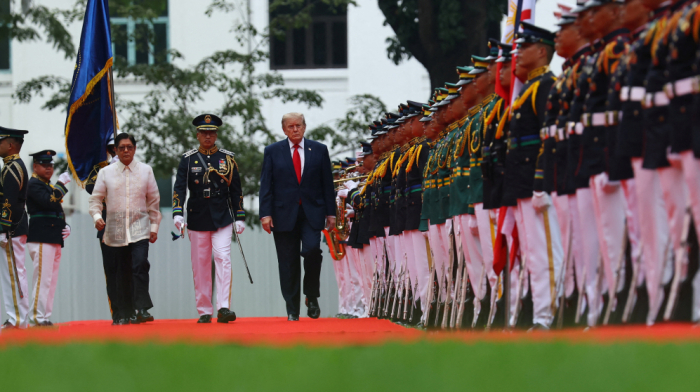
This week in Manila, UN Secretary-General António Guterres accused the fossil fuel industry of using its profits for lobbying and disinformation. He said political leaders had so far “lacked the courage to confront these lobbies”.
Read more:













What is your opinion on this topic?
Leave the first comment