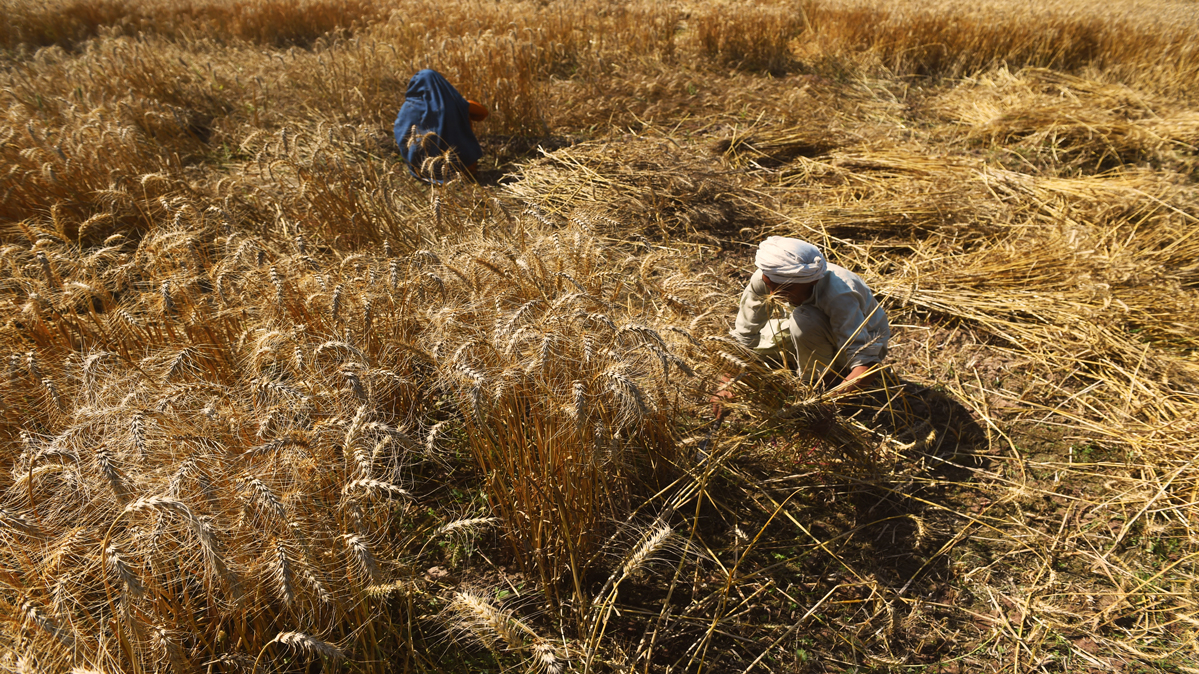
Extreme heat is threatening agricultural production and food security in Pakistan's eastern Punjab province, where increasingly frequent and severe heatwaves are disrupting farming, damaging livestock and reducing household incomes.
Fruit productivity has fallen by as much as 50 per cent in some parts of the province, while heat stress is reducing milk production and worsening food insecurity, according to a joint United Nations assessment.
Punjab, one of Pakistan's main agricultural regions, is particularly vulnerable in its rain-fed rural areas, where rising temperatures are placing growing pressure on farming communities.
A joint assessment of Punjab's agriculture
The assessment, titled “Extreme Heat and Agriculture”, was published jointly by the Food and Agriculture Organization of the United Nations (FAO) and the World Meteorological Organization (WMO).
It warns that rising temperatures have become one of the most serious threats to global food production, causing immediate economic and nutritional damage to vulnerable farming communities.
In Punjab's high-rainfall zones, fruit productivity has fallen by as much as 50 per cent, the agencies found.
Livestock operations are also facing significant pressure. Large livestock, including cattle and buffaloes, produce less milk under heat stress, while small livestock face increased outbreaks of foot-and-mouth disease.
For rural households dependent on agriculture, declining production means lower incomes and less money to purchase basic food supplies.
The problem is compounded by the faster spoilage of vegetables, dairy products and other perishable goods in extreme temperatures. This reduces local food availability and contributes to higher market prices.
Rural families are therefore facing a double burden. They are producing less diverse and nutritious food for their own consumption while losing the income needed to buy food from markets, limiting their access to healthy diets, the report said.
Women and vulnerable communities face greater heat risks
Women in rural Punjab are particularly exposed to extreme heat. Their responsibilities in agriculture, including harvesting and collecting water, often require prolonged exposure to high temperatures alongside physically demanding household work.
The health risks are particularly serious for pregnant and lactating women, whose nutritional needs are higher and whose diets are often compromised when household food supplies become scarce.
Research cited in the report indicates that every 1°C rise in temperature is associated with a four per cent increase in the likelihood of preterm birth. The report also cites research showing that the risk of preterm birth reaches 26 per cent during heatwaves.
Social and economic inequalities further increase women's vulnerability. Despite their contribution to agriculture, many lack land ownership and other assets, limiting their access to credit and financial services that could help them adapt.
Limited access to climate information and early warning systems further reduces their ability to prepare for extreme heat.
Some rural women also reduce their own food intake to prioritise other family members, a coping strategy that can further undermine their health and resilience, the report said.
Extreme heat threatens global food production
Beyond Pakistan, the FAO and WMO warn that extreme heat is intensifying existing environmental threats, including drought and wildfires, with consequences across agriculture, livestock, fisheries and forests.
Under high-emission scenarios, nearly half of the world's cattle could be exposed to dangerous heat conditions by 2100, with annual losses approaching 40 billion United States dollars. The impact on livestock exposure could be reduced by nearly two-thirds under a low-emission scenario.
Marine heatwaves have already caused repeated mass mortality events and forced fish stocks to migrate towards cooler waters. Fruit and nut trees are also facing production losses, while rising temperatures increase the risk of more frequent and intense wildfires.
The agencies warn that these losses could create a damaging cycle. As extreme heat reduces agricultural yields, farmers may clear more land to compensate for production shortfalls, increasing greenhouse gas emissions and further accelerating climate change.
Read more:
















What is your opinion on this topic?
Leave the first comment