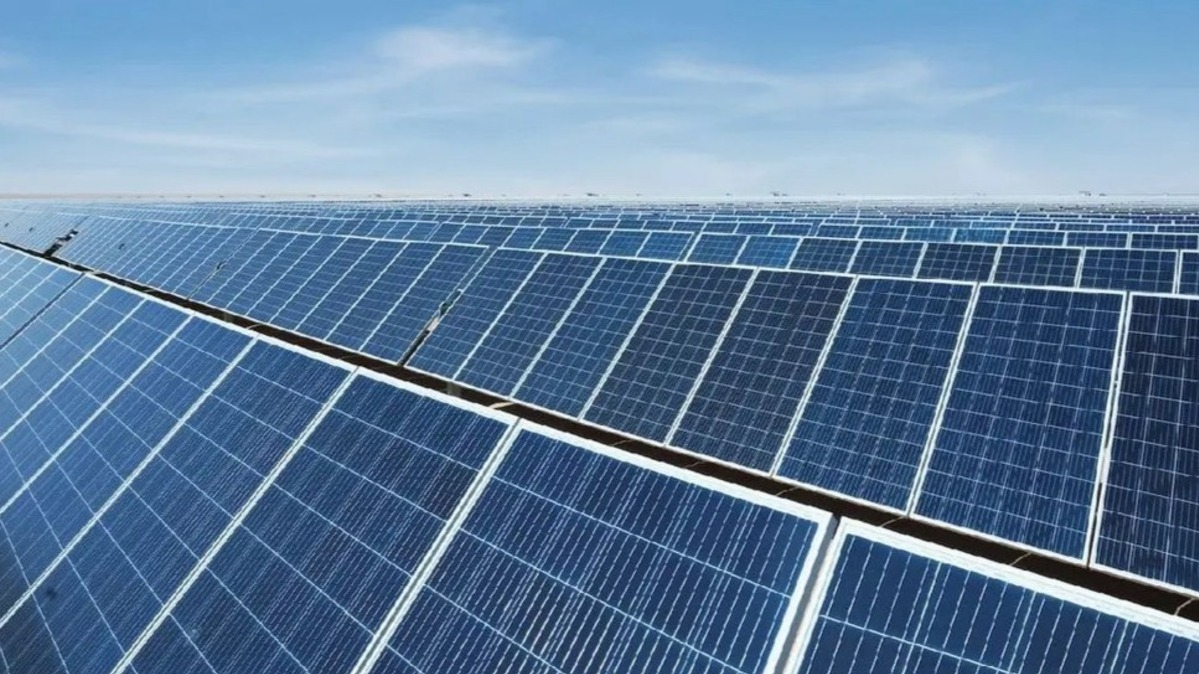
Uzbekistan has brought its $350 million solar power plant in the eastern Namangan region to full capacity of 500 megawatts (MW), boosting the country's renewable energy output as it seeks to reduce its dependence on natural gas.
Developed by Germany's Hyper Partners GmbH in the Pop district, the facility reached full capacity following a phased commissioning process, the Namangan regional administration said, according to Trend.
The plant is expected to generate 1.095 billion kilowatt-hours (kWh) of electricity annually, according to Uzbek government projections published when construction began in March 2024.
German investment supports energy diversification
The project operates under a presidential decree signed on 24 May 2024, which outlined measures to attract foreign investment, strengthen electricity supplies and reduce natural gas consumption in power generation.
Hyper Partners established a local project company, Next Solar Energy Group, under an investment agreement signed with Uzbekistan's government on 19 January 2024.
Under the amended presidential decree, Uzbekistan's electricity purchasing company, O‘zenergosotish, has committed to buying the power generated by the facility under a guaranteed 25-year purchase agreement.
The project also includes transmission infrastructure connecting the solar plant to the national electricity grid.
The long-term agreement gives investors greater revenue certainty while allowing Uzbekistan to expand its electricity generating capacity without relying solely on state funding.
Based on government projections, the plant is expected to operate at an annual capacity factor of 25 per cent. Actual output will depend on weather conditions, seasonal variations and operational performance.
Uzbekistan targets 54 per cent renewable electricity by 2030
The plant's commissioning comes as Uzbekistan steps up efforts to meet rising electricity demand and attract international investment.
At a meeting with energy investors on 16 October, President Shavkat Mirziyoyev outlined the country's progress and long-term objectives.
According to the presidential administration, Uzbekistan has attracted $35 billion in investment in its energy sector over the past decade, while renewable sources now account for 31 per cent of national electricity generation.
By 2030, Uzbekistan aims to add 22 gigawatts (GW) of generating capacity, increase annual electricity production to more than 129 billion kWh and raise the share of renewables in electricity generation to 54 per cent.
The country also plans to expand energy storage capacity to 4.5 GW, construct 5,000 kilometres of power lines and build 16 major substations.
Six additional solar and wind projects with a combined capacity of 2.2 GW are set to be offered through competitive tenders.
Reducing dependence on natural gas
The expansion of solar power has wider economic implications for Uzbekistan, which has traditionally relied heavily on natural gas to generate electricity.
Greater renewable energy capacity could free up gas supplies for other economic activities, including industrial production, while reducing the country's vulnerability to fuel supply constraints.
However, integrating more solar and wind power into the national grid will require investment in electricity storage and transmission networks to manage fluctuations in output.
Read more:

















What is your opinion on this topic?
Leave the first comment