Here's your AnewZ Daily Brief for 23 November, examining why COP31 climate talks broke down, where progress was made and what the outcome means for global climate action.
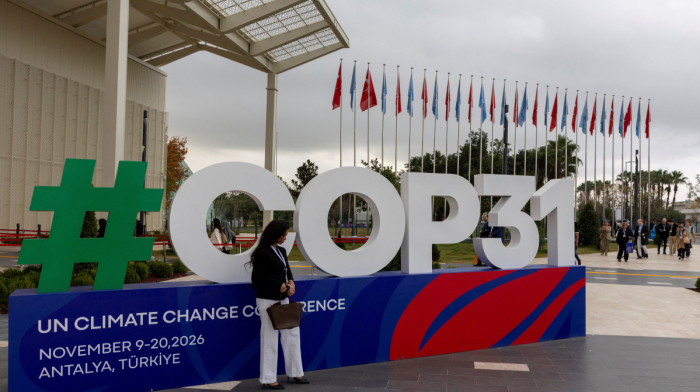
The COP31 climate summit in Türkiye ended without a major political deal, exposing deep divisions over fossil fuels, climate finance and efforts to curb global warming.
Held in Antalya, Türkiye, the summit came at a critical moment. It was the first COP since the UN warned that the world was on course to exceed the 1.5°C warming limit set by the 2015 Paris Agreement.
Negotiators had hoped to secure stronger commitments to tackle the climate crisis. Instead, disagreements between wealthy nations, developing countries and major oil producers blocked a final political declaration.
1. The 1.5C target is slipping out of reach
One of the biggest challenges facing COP31 was the growing likelihood that global temperatures would rise more than 1.5 degrees Celsius above pre-industrial levels.
The summit's draft agreement acknowledged this risk, calling for any breach of the threshold to be as small and short-lived as possible. However, with no final deal reached, the wording was left out of an agreed political declaration.
The consequences could be far-reaching. Scientists warn that the 0.5°C difference between warming of 1.5°C and 2°Ccould mean greater sea-level rise, more extreme heat and serious damage to marine ecosystems.
Despite the setback, many countries insisted that limiting warming to 1.5°C must remain the central goal of climate action.
“This COP sought to confront hard truths – that global warming is set to overshoot 1.5 degrees Celsius and that we must act with even more urgency to reduce emissions,” said UK Energy Secretary Miatta Fahnbulle.
2. Fossil fuels remain the biggest sticking point
Fossil fuels emerged as one of the summit's most divisive issues, with negotiators unable to agree on language addressing their future.
The European Union objected to the proposed deal because it failed to address the need to phase out reliance on coal, oil and gas.
Irish Environment Minister Darragh O'Brien described the omission as unacceptable.
“It is unconscionable that we would have a climate act that makes no reference to fossil fuel, no reference to transitioning away from fossil fuels,” he said.
Major oil-producing countries, including Saudi Arabia, opposed commitments that could accelerate the transition away from fossil fuels.
The deadlock highlighted a widening divide between nations pushing for urgent emissions cuts and those seeking to protect their oil and gas industries.
3. Climate finance remains a major concern
Funding for countries most vulnerable to climate change proved another major obstacle.
Developing nations warned that the proposed deal fell short of the financial support needed to cope with the growing impacts of global warming.
The draft called for adaptation finance to triple but did not specify the baseline against which the increase would be measured.
For vulnerable nations, the omission was a significant concern. Many are already grappling with rising temperatures, floods, droughts and extreme weather, despite contributing relatively little to global emissions.
Nevertheless, negotiators made some headway on funding.
COP31 agreed to allow the Adaptation Fund to receive revenue from international carbon markets under Article 6 of the Paris Agreement, including a mandatory 5 per cent share of proceeds from the Article 6.4 carbon market mechanism.
The move could unlock more funding for climate adaptation projects in developing countries, although its impact will depend largely on the growth of international carbon markets.
4. Electrification gained ground, despite a missed target
Electrification emerged as a rare area of momentum, even as negotiators failed to agree on a key target.
The summit did not secure agreement on a proposal to raise electricity's share of global energy consumption from around 23 per cent to 35 per cent by 2035.
Despite the setback, the issue gained prominence in discussions about cutting emissions.
Electrification involves replacing fossil fuel-powered equipment with electric alternatives, including cars, heat pumps and industrial technologies.
Falling costs for solar panels, wind power and batteries are making the transition increasingly affordable. Greater electrification could also improve energy efficiency and reduce reliance on imported oil and gas.
But cleaner electricity generation alone will not be enough. Transport, heating and heavy industry must also reduce their dependence on fossil fuels if countries are to meet their net-zero commitments.
5. A two-country presidency struggled to deliver
COP31 also raised questions about the effectiveness of its unusual leadership arrangement, with Australia and Türkiye sharing responsibility for the summit.
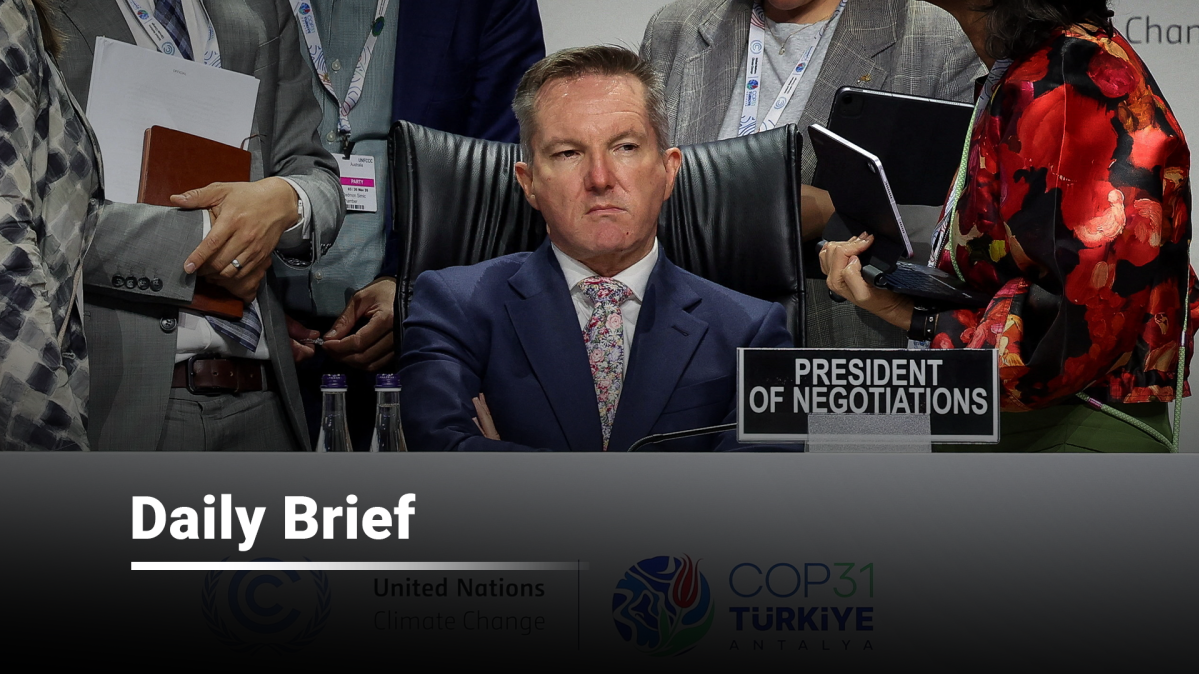
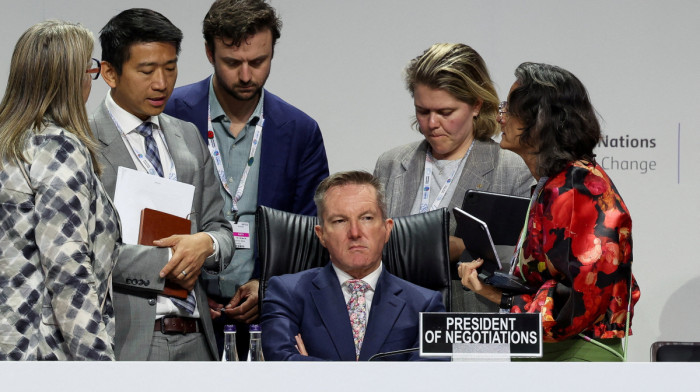
Australia's Chris Bowen led the negotiations, while Türkiye hosted the event. Both sides insisted the arrangement was working well.
But the final days exposed the difficulties of securing a compromise.
Negotiators revised the proposed agreement repeatedly, with drafts released on Monday, Thursday and Sunday before a final version was presented.
The drawn-out process underscored the challenge of bringing 195 countries together, particularly as the deadline approached and major disagreements remained unresolved.
The failure to reach a political deal has prompted questions about whether the shared leadership structure complicated efforts to find common ground.

















What is your opinion on this topic?
Leave the first comment