Uzbekistan has unveiled plans to deepen economic ties with Central Asia and Azerbaijan, proposing shared artificial intelligence infrastructure, a critical minerals alliance and a regional trade strategy extending to 2035.
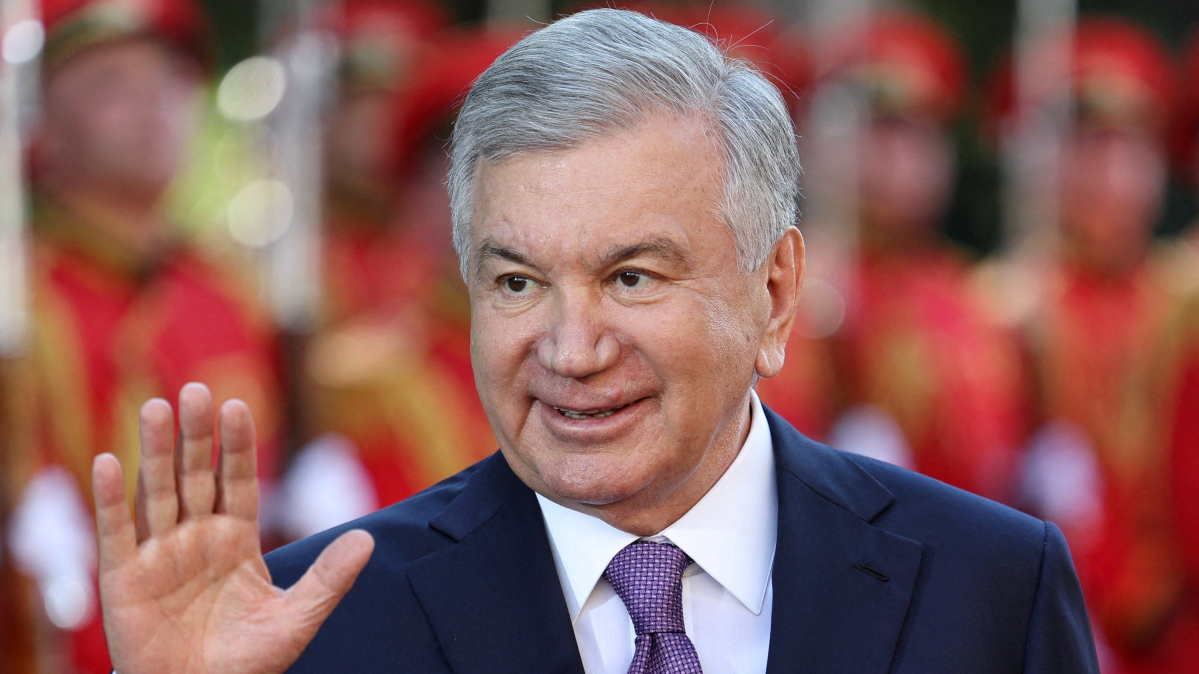
President Shavkat Mirziyoyev outlined the initiatives at the eighth Consultative Meeting of the Heads of State of Central Asia and Azerbaijan in Avaza, Turkmenistan. He called for closer cooperation across trade, industry, transport, energy and technology, focusing on joint projects to boost regional growth.
Regional trade strategy targets 2035
Mirziyoyev proposed a Comprehensive Regional Programme for Trade and Economic Cooperation running until 2035, aimed at cutting trade barriers, strengthening industrial links and encouraging joint investment.
He described the strategy as “six economies, one product”, envisaging integrated industrial and technological supply chains spanning all six countries.
The Uzbek president also proposed hosting a Central Asia–Azerbaijan business forum in Khiva in 2027, alongside a new platform offering financial and technical support for cross-border investment projects.
Transport and clean energy in focus
Improving regional transport links emerged as another key priority. Mirziyoyev called for greater coordination between major rail and road projects to create a more integrated transport network. He also urged faster progress towards establishing a regional infrastructure development council.
On energy, Uzbekistan put forward plans for a joint strategy to harness the region's low-carbon energy potential, coordinating electricity generation, energy storage and cross-border transmission networks.
Mirziyoyev also pushed for stronger cooperation on water management and climate change, including digital monitoring, upgraded irrigation networks and water-saving technologies.
Shared AI infrastructure and critical minerals alliance
Technology featured prominently in the proposals, with Uzbekistan calling for shared AI computing infrastructure built around the six countries' national data centres.
The network would allow participating countries to pool computing resources, improve efficiency and accelerate the development of artificial intelligence and other digital projects.
Mirziyoyev also urged the swift launch of a Regional Alliance on Critical Minerals, first proposed by Uzbekistan at the Central Asia–South Korea summit. He called for a joint digital map identifying critical mineral reserves across the region.
Clean air, water security and future skills
Tackling air pollution was another priority, with Mirziyoyev proposing a pilot programme through the international consortium “Clean Air of Central Asia” to modernise industrial zones, agricultural clusters and transport hubs.
Uzbekistan will take over the chairmanship of the International Fund for Saving the Aral Sea in 2027. Mirziyoyev said Tashkent plans to introduce new environmental projects, secure funding and maintain dialogue with Afghanistan over water use.
To prepare the region's workforce for changing economic demands, he proposed a Regional Atlas of In-Demand Professions and Skills.
The initiative would combine labour market forecasts from all six countries to identify skills shortages and emerging job opportunities, helping universities and technical colleges tailor training to future needs.
Uzbekistan and Turkmenistan strengthen strategic ties
On the sidelines of the meeting, Mirziyoyev held talks with Turkmen President Serdar Berdimuhamedov, with the two leaders signing an agreement to establish a Supreme Council of Strategic Partnership.
Their discussions also focused on significantly expanding bilateral trade and launching joint projects in industry, energy, transport, agriculture and water management.
Both leaders highlighted growing trade ties, partly supported by the Shavat–Dashoguz border trade zone.
The new council will serve as a framework for closer political dialogue and practical cooperation between Uzbekistan and Turkmenistan.
Read more:












What is your opinion on this topic?
Leave the first comment