Kyrgyzstan and Tajikistan have begun installing the first border markers along their shared frontier, marking the start of the physical demarcation of a boundary that was disputed for decades before being formally settled under a landmark agreement signed earlier this year.
Border demarcation begins
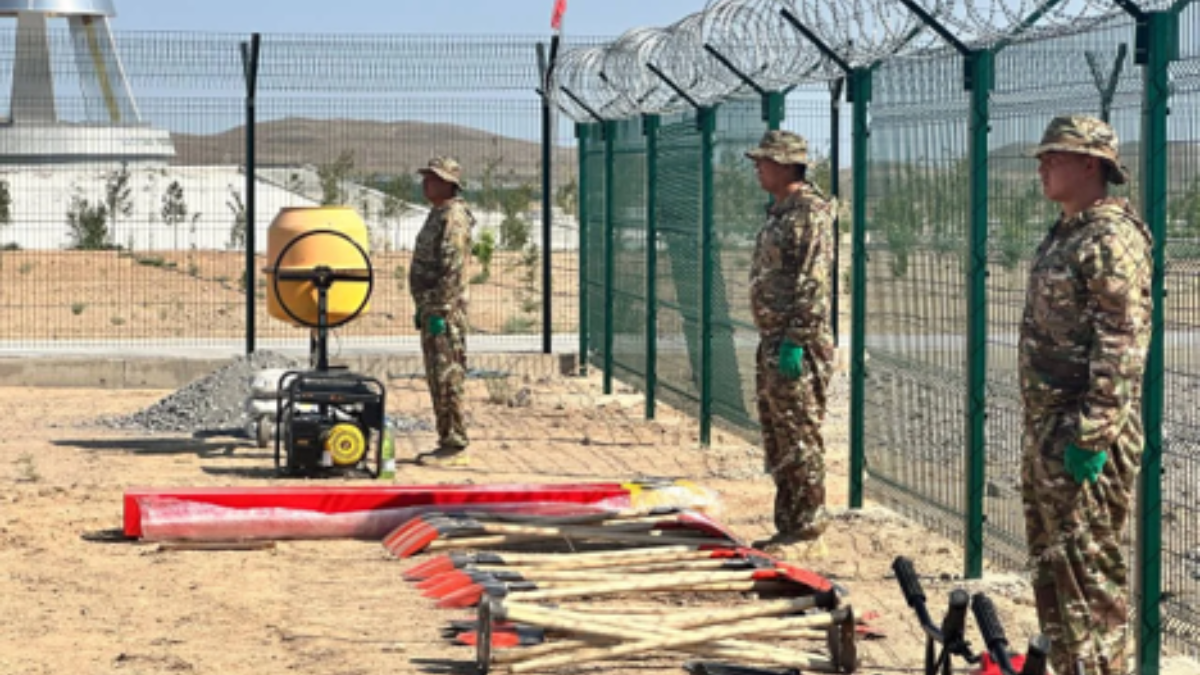
Joint teams from the two countries began work at the point where the borders of Kyrgyzstan, Tajikistan and Uzbekistan meet.
The installation of the first markers is the latest step in implementing a treaty signed by the two presidents in Bishkek on 13 March 2025. The agreement established the legal framework for demarcating the 1,008.14-kilometre state border. The total length of land granted neutral status is 14.07 kilometres.
The agreement followed years of negotiations over one of Central Asia's most sensitive territorial disputes. Since gaining independence following the collapse of the Soviet Union, Kyrgyzstan and Tajikistan had disagreed over sections of their shared border, which repeatedly became a source of tension.
By 2011, the two sides had agreed on 519 kilometres of the boundary. A further 486 kilometres were settled over the following years before the remaining disputed sections were resolved under the March treaty.
Decades of border tensions
The unresolved border lay at the heart of repeated confrontations in the Fergana Valley, a region shared by Kyrgyzstan, Tajikistan and Uzbekistan that is home to around 15 million people. One of the most serious outbreaks of violence occurred in April 2021, when border clashes killed 55 people and injured around 300.
Fighting erupted again in September 2022, leaving about 100 people dead, forcing residents to flee their homes and disrupting transport links, border crossings and cross-border trade.
Regional cooperation strengthened
The March agreement also paved the way for a broader regional settlement. On 31 March, the presidents of Kyrgyzstan, Tajikistan and Uzbekistan signed a separate treaty defining the junction point of their three state borders, resolving another longstanding issue in the Fergana Valley.
The agreement was widely seen as an important step towards improving regional cooperation in an area where undefined borders had long complicated relations between neighbouring states.
The installation of the first border markers marks the transition from political agreement to implementation on the ground.
Once completed, the demarcation is expected to provide greater certainty for border communities, reduce the risk of renewed tensions, and facilitate cross-border movement, trade and wider regional cooperation.


















What is your opinion on this topic?
Leave the first comment