Afghanistan's disaster authority says it and the International Committee of the Red Cross (ICRC) are seeking to expand cooperation on emergency response as the country continues to face floods, earthquakes, drought and the long-term threat from mines and unexploded ordnance.
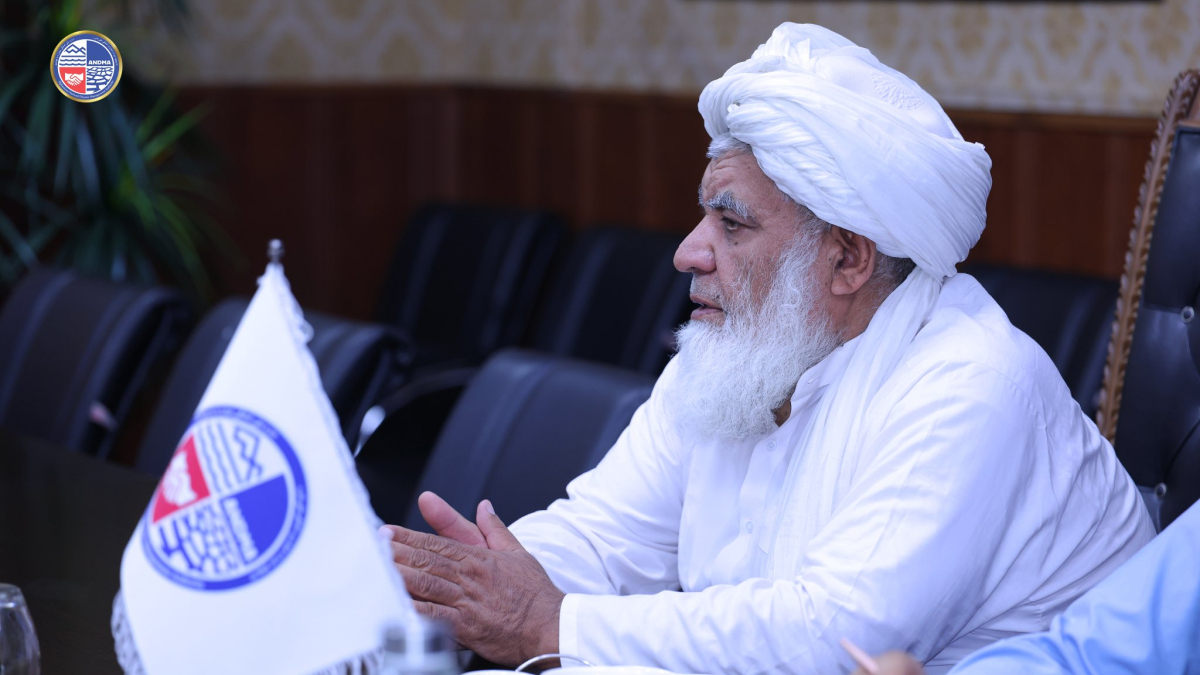
The Afghanistan National Disaster Management Authority (ANDMA) said its Director General, Nooruddin Turabi, met Johannes Brouwer, the new head of the ICRC in Afghanistan, in Kabul on Monday.
The authority said the two sides discussed sharing emergency information, supporting victims of mines and unexploded ordnance, assisting ANDMA clinics, treating people injured in recent conflicts, staff training, and strengthening search and rescue teams.
Wider disaster response
The authority said Turabi welcomed Brouwer's appointment and called for broader cooperation with the ICRC, the International Federation of Red Cross and Red Crescent Societies, and the Afghan Red Crescent Society.
The statement said Turabi hoped the partnership would continue to grow.
"At the beginning of the meeting, His Excellency Alhaj Mullah Nooruddin Turabi congratulated Mr. Johannes Brouwer on his appointment as the new ICRC head in Afghanistan and expressed the hope that cooperation between Afghanistan National Disaster Management Authority and this organization would become broader and stronger."
According to the statement, the ICRC also expressed its willingness to support training and technical cooperation.
"He also declared the ICRC's readiness to cooperate in supporting humanitarian programs, building capacity, and expanding technical cooperation."
Afghanistan's natural hazards
The meeting comes as disaster management remains a major national challenge in Afghanistan. The World Bank says the country is highly prone to floods, earthquakes, snow avalanches, landslides and drought, and that natural hazards have affected 9 million people and caused more than 20,000 deaths since 1980.
The United Nations Office for the Coordination of Humanitarian Affairs (OCHA) said 72,718 people were affected by natural disasters between 22 January and 1 May 2026 across 33 of Afghanistan's 34 provinces.
Risk from unexploded ordnance
Explosive ordnance remains another major threat. The ICRC, citing the Directorate of Mine Action Coordination (DMAC), said 217 weapon contamination incidents in 2025 resulted in 92 deaths and 375 injuries, with children accounting for 66% of casualties.
The Afghan authority said both sides reaffirmed their commitment to regular information sharing, joint humanitarian programmes and strengthening technical capacity.











What is your opinion on this topic?
Leave the first comment