U.S. and Iran exchange threats - Tuesday, 10 March
Tensions in the region remained high on Tuesday (10 March), as the United States and Iran exchanged increasingly sharp warnings, including thr...
Türkiye is prepared to contribute troops to a proposed international stabilisation force for Gaza, Turkish Foreign Minister Hakan Fidan said on Thursday.
Fidan made the remarks at the inaugural meeting of the Board of Peace, which convened in Washington under the chairmanship of U.S. President Donald Trump.
The Board of Peace is an international body designed to oversee stabilisation and reconstruction efforts in war-torn Gaza within the framework of a broader peace plan initiated by Trump last year.
Fidan also voiced Türkiye’s readiness to assist in the rehabilitation of Gaza’s health and education sectors and help train police forces in the embattled Palestinian territory.
Speaking to reporters, Fidan said Türkiye would continue to support U.S.-led efforts aimed at achieving “a just and lasting peace.”
He added, however, that Ankara “remains convinced that the foundation of such a peace is a two-state solution” to the decades-long dispute between Israel and the Palestinians.
“Let us work towards that objective for the benefit of all peoples of the region,” he said.
Fidan also warned that Gaza’s humanitarian situation remained dire and that ceasefire violations were continuing, calling for a “prompt, coordinated and effective response” to the crisis.
While he said Türkiye was ready to contribute troops to the proposed Gaza stabilization force, he did not provide specific figures.
Need for stability
Meanwhile, a handful of other countries - including Albania, Indonesia, Kazakhstan, and Morocco - have also pledged to contribute troops.
The proposed force is intended to promote stability and reconstruction in Gaza, where tens of thousands of Palestinians have been killed and much of the territory’s infrastructure reduced to rubble since the conflict began in late 2023.
While in Washington, Fidan also expressed Ankara’s hope that the United States would continue what he described as “genuine negotiations” with Iran.
According to Ankara’s top diplomat, negotiations could serve to avert “the need for a military operation or war” in the already volatile Middle East.

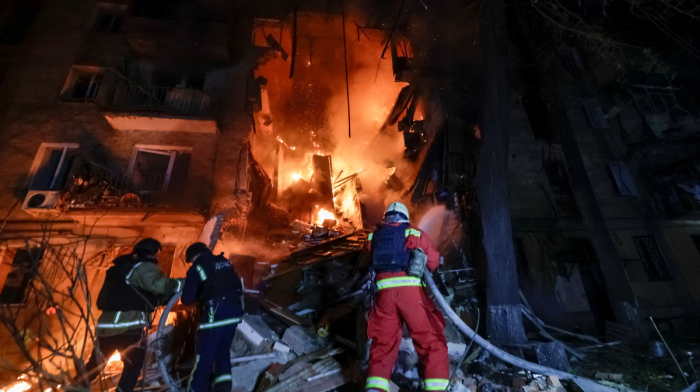
Tensions in the region remained high on Tuesday (10 March), as the United States and Iran exchanged increasingly sharp warnings, including threats over the strategic Strait of Hormuz, a critical artery for global oil supplies.
Global oil prices surpassed $119 a barrel on Monday (9 March, 2026), an almost four year high, as the Middle East conflict rumbled on.
China has urged Afghanistan and Pakistan to resolve their dispute through dialogue after Chinese envoy Yue Xiaoyong met Afghan Foreign Minister Amir Khan Muttaqi, as fighting between the two neighbours entered its eleventh day.
Entry and exit across the state border between Azerbaijan and Iran for all types of cargo vehicles, including those in transit, will resume on 9 March, according to a statement by the Cabinet of Ministers of Azerbaijan.
Iran named Mojtaba Khamenei to succeed his father Ali Khamenei as supreme leader on Monday (9 March), signaling that hardliners remain firmly in charge, as the week-old U.S.-Israeli war with Iran pushed oil above $100 a barrel.
Iran and the U.S. exchanged threats on Tuesday, as U.S. Defense Secretary Pete Hegseth warned Tehran to expect the “most intense day" of attacks so far. Meanwhile, Iranian President Masoud Pezeshkian said “anyone who entertains the illusion of destroying Iran knows nothing of history."
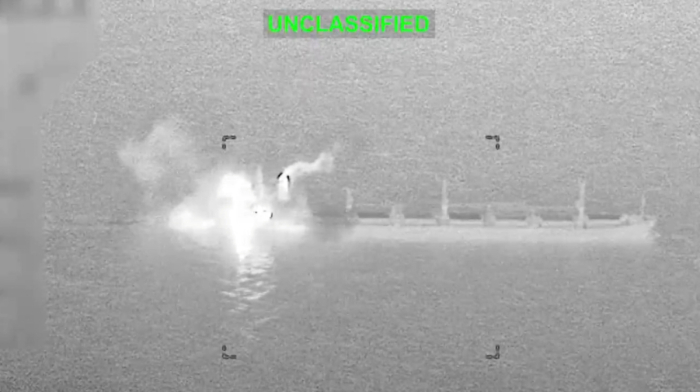
The Strait of Hormuz has become a focal point of global concern as tensions rise following the conflict involving Iran, the United States and Israel. Tehran has threatened to block the strategic waterway, raising fears of disruption to global oil shipments and energy markets.
Reports of so-called “acid clouds” moving from Iran towards Central Asia are not supported by scientific data, national hydrometeorological services in Kazakhstan, Uzbekistan and Kyrgyzstan say, adding there is no threat to the region.
A senior delegation from the OSCE Parliamentary Assembly has been holding meetings with Georgian government officials, opposition leaders and security authorities this week, as international observers attempt to gauge the country’s political climate following last year’s contentious elections.
Turkish President Recep Tayyip Erdoğan has told Masoud Pezeshkian, his Iranian counterpart, that violations of Turkish airspace by Iran could not be justified “for any reason whatsoever.”
You can download the AnewZ application from Play Store and the App Store.
What is your opinion on this topic?
Leave the first comment