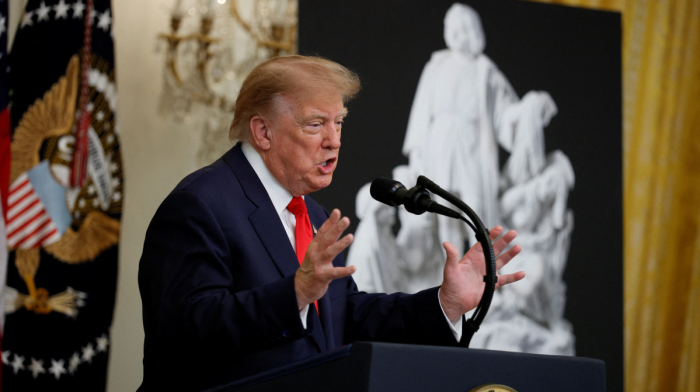
live U.S. President Trump asks NATO allies for urgent support in Hormuz, diplomats say - Thursday 9 April
Iran suggested it would be "unreasonable" to proceed with talks to forge a permanent peace d...
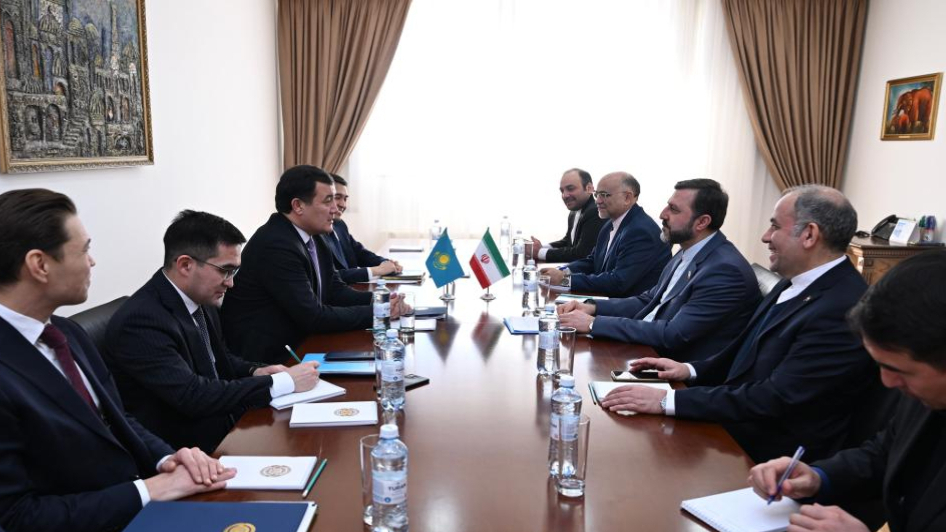
Kazakhstan and Iran have held fresh talks aimed at strengthening economic ties, with senior officials discussing ways to boost cooperation in trade, transport and logistics.
The foreign ministries of both countries met in Astana on Thursday (15 January) to review progress on previously agreed initiatives and explore new areas of collaboration, local media in Kazakhstan reported.
Kazakh Deputy Foreign Minister Alibek Bakayev and Iran’s Deputy Foreign Minister Kazem Gharibabadi also discussed multilateral frameworks, including the Organization of Islamic Cooperation (OIC).
The discussions are part of an ongoing drive by the two countries to expand bilateral trade, deepen transport links and enhance regional connectivity.
Last year, Kazakh President Kassym-Jomart Tokayev and Iranian President Masoud Pezeshkian set ambitious targets for economic engagement during a business forum in the Kazakh capital.
In December, both leaders highlighted the potential of transport corridors such as the North-South Transport Corridor and the Kazakhstan–Turkmenistan–Iran railway to boost the movement of goods between Central Asia and the Persian Gulf.
Iranian officials have stressed the importance of expanding commercial ties as Tehran seeks access to new markets amid the challenges posed by Western sanctions.
Trade between Kazakhstan and Iran has grown in recent years, in 2024, bilateral trade was reported at around $340 million, with forecasts pointing towards substantial increases if planned initiatives are fulfilled.
Agricultural products, transport services and infrastructure development are expected to be key drivers of future growth, with Kazakhstan looking to expand exports of grain and industrial goods to Iran.
Following the meeting, both countries reaffirmed their strong mutual support for each other.

China and Russia vetoed a United Nations Security Council resolution on Tuesday aimed at coordinating defensive efforts to protect commercial shipping in the Strait of Hormuz, leaving no agreed international framework for securing the vital route.
Lebanon’s Hezbollah said it had stopped firing on northern Israel and Israeli forces on Wednesday as part of a two-week ceasefire in the Middle East brokered between the United States and Iran. However, a Hezbollah lawmaker warned that the pause could collapse if Tel Aviv does not adhere to it.
Pakistan’s Prime Minister Shehbaz Sharif said Iran and the United States, along with their allies, have agreed to an immediate two-week ceasefire covering all areas, but Israel says the deal excludes Lebanon. Tel Aviv says the U.S. is committed to achieving shared goals in upcoming negotiations.
Construction has begun on a major new solar power project in Xizang, as China continues to expand its renewable energy capacity and push towards a greener future.
Iran suggested it would be "unreasonable" to proceed with talks to forge a permanent peace deal with the U.S. after Israel pounded Lebanon with its heaviest strikes yet on Wednesday, killing hundreds of people. The warning came from Iran's lead negotiator, parliament speaker Mohammed Bager Qalibaf.
Millions of Indians queued to vote in local elections across two states on Thursday, kicking off four key contests this month.
Afghanistan and Pakistan have agreed to continue dialogue and avoid steps that could worsen tensions after China-hosted talks in Urumqi, with Kabul and Beijing saying the meetings focused on easing differences and improving relations.
Lithuania’s Prime Minister’s visit to Azerbaijan on 9 April signals a deepening strategic dialogue between Baku and European partners. Analysts say economic interests and geopolitical shifts are driving closer engagement.
Italian Prime Minister Giorgia Meloni said on Thursday (9 April) that restoring freedom of navigation in the Strait of Hormuz is a vital interest for both Italy and the European Union, pledging coordination with international partners to ensure safe passage.
Kazakhstan says oil exports via the Caspian Pipeline Consortium (CPC) remain stable after drone strikes on facilities near Novorossiysk, despite damage to key infrastructure and rising risks to a major export route.
You can download the AnewZ application from Play Store and the App Store.
What is your opinion on this topic?
Leave the first comment