Kazakhstan has begun redirecting part of its crude exports, sending oil from the Kashagan field to China for the first time.
The move comes as the Caspian Pipeline Consortium (CPC) operates at reduced capacity, with only one loading terminal currently functioning thereby and limiting the country’s traditional export routes.
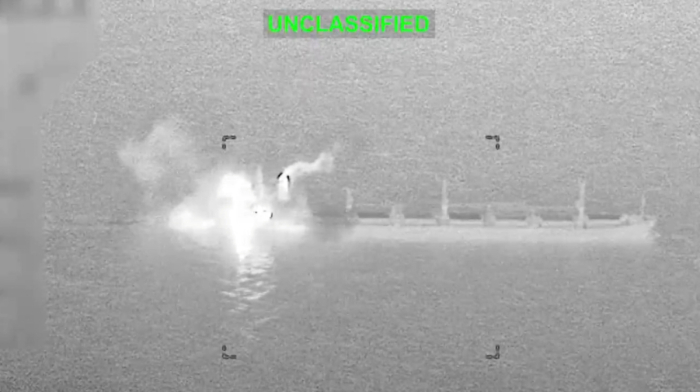
The rerouting follows a Ukrainian drone strike on 29 November that damaged one of the CPC’s three offshore loading units in Novorossiysk, while another unit was undergoing maintenance.
According to Reuters, 50,000 tonnes of crude are scheduled to reach China in December, with 30,000 tonnes supplied by CNPC and a further 20,000 tonnes by Japan’s Inpex, both members of the North Caspian Operating Company.
The shipment is travelling via the Atasu–Alashankou pipeline, which typically transports around 85,000 tonnes of crude each month but has not previously been used for Kashagan volumes.
The consortium, which accounts for roughly 1% of global oil supply, has since been forced to operate at reduced capacity.
On 30 November, Kazakhstan’s Ministry of Foreign Affairs condemned the attack, describing it as a “targeted strike on civilian infrastructure” and emphasising the CPC’s importance for global energy stability.
The ministry stated that the incident harms bilateral relations between Kazakhstan and Ukraine and called on Kyiv to take effective measures to prevent similar actions.
Ukraine responded that its operations were not directed against Kazakhstan or any third country, stressing that all actions are conducted under Article 51 of the UN Charter as part of its right to self-defence.
Kyiv reiterated that Russia remains the sole source of destabilisation in the Black Sea region.
The incident has renewed debate within Kazakhstan over the country’s heavy reliance on the CPC corridor. More than 80% of Kazakhstan’s crude exports pass through the consortium, in which the country holds a 19% stake.
Last year, the pipeline transported 63 million tonnes of oil, close to the record 63.474 million tonnes moved in 2023.
In 2025, the CPC delivered its 1 billionth tonne since operations began. Up to 80% of the crude shipped to European markets via the CPC originates from Tengiz, Kazakhstan’s largest oilfield.
Analysts note that exports through the CPC generate around 80% of Kazakhstan’s oil export revenue and nearly 50% of total export earnings, contributing no less than 20% of national budget income.
Even temporary disruptions to a single loading unit therefore have direct economic consequences.
Following the strike, public discussion intensified around why Kazakhstan remains so dependent on a single export route in which Russia plays a leading role.
Experts point out that although alternative routes exist, they are less profitable and have lower potential capacity. Until recently, demand for these alternatives was limited, as major buyers, including China and Turkiye, purchased discounted Russian crude. Technical constraints also prevent Kazakhstan from fully shifting export volumes away from the CPC.
Nevertheless, analysts argue that diversification is becoming a strategic necessity amid growing geopolitical risks. The first delivery of Kashagan crude to China signals both an immediate response to operational pressures and a broader move to reduce reliance on the CPC, even if current alternatives remain economically constrained.
As uncertainty increases around Black Sea logistics, the resilience of Kazakhstan’s export infrastructure is emerging as a central issue in the country’s energy strategy.















What is your opinion on this topic?
Leave the first comment