Kazakhstan is stepping up its investment activity and gradually reclaiming its position as one of the region’s leading economic centres.
According to the Ministry of National Economy, fixed capital investment reached $28.8 billion in the first nine months of 2025, 13.5% higher than in the same period last year.
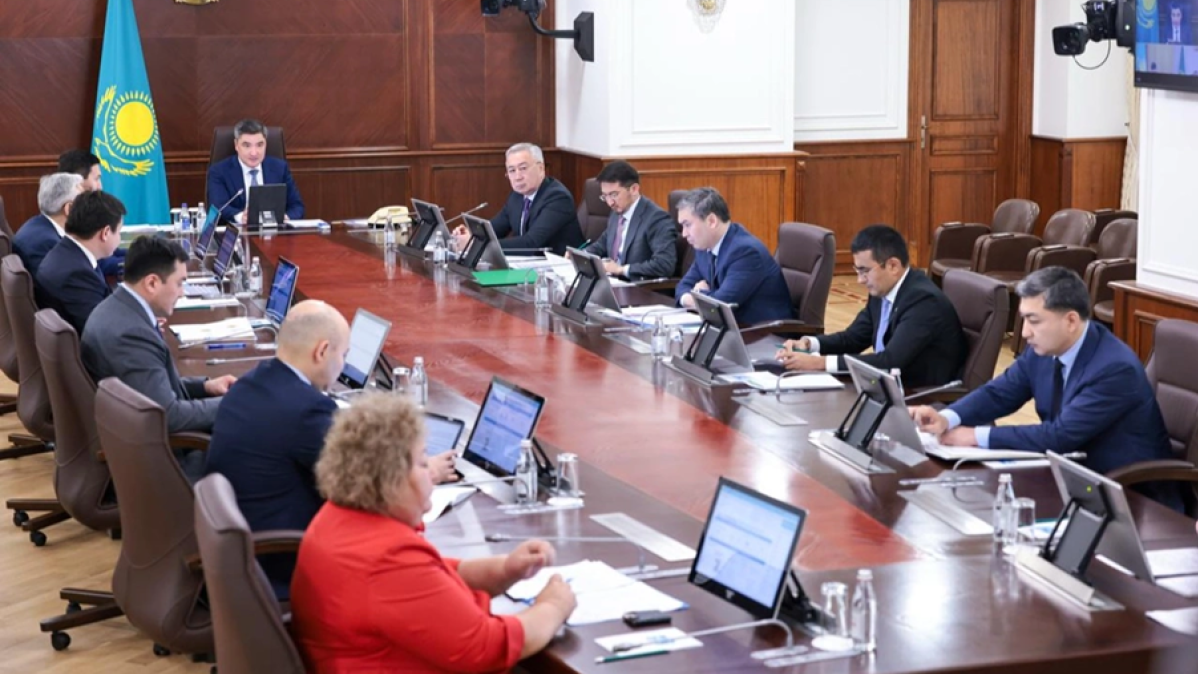
The figures were presented at a meeting chaired by Prime Minister Olzhas Bektenov, which focused on attracting new investment and supporting business activity. Earlier, President Tokayev set a long-term target of bringing in $150 billion in foreign investment by 2029.
According to government data, 185 projects have been implemented under the Unified National Pool as of October 2025, with a further 268 projects expected to be launched by the end of the year.
Over the past three years, Kazakhstan has attracted more than $69 billion in foreign direct investment (FDI), about 20% of which went into manufacturing.
Analysts note that Kazakhstan offers investors a combination of relative political stability, tax incentives, and modern infrastructure, making it competitive among its regional peers.
International agencies have also recorded positive trends: in 2024, Moody’s upgraded Kazakhstan’s sovereign rating to Baa1 with a stable outlook, while the country entered the top 35 of the IMD World Competitiveness Ranking.
The country’s main investment partners remain the United States, the European Union, China, and the United Arab Emirates.
Kazakhstan accounts for over 60% of all U.S. investments in Central Asia and roughly 75% of U.S. trade with the region.
The structure of investment, however, is evolving: while the oil and gas sector previously dominated, growing volumes are now directed towards manufacturing, agriculture, healthcare, pharmaceuticals, logistics, and digital technologies.
During the reporting period, the volume of gross FDI totalled $10.1 billion. According to the government, the strongest inflows were seen in manufacturing, finance, transport, communications, and energy.
The leading regions for investment were North Kazakhstan, Akmola, Turkistan and the city of Astana, while Pavlodar, Karaganda, Atyrau, Aktobe, Almaty, East Kazakhstan and Abai regions lagged behind their targets.
The Prime Minister noted that the annual target for fixed capital investment has been achieved by 52.7%, while the FDI goal has reached less than half of the planned amount.
A significant share of new projects involves Chinese investment. According to The Diplomatic Insight, 224 projects backed by China are currently under way in Kazakhstan, worth a combined $66.4 billion and expected to create around 50 000 jobs. China remains among the top five investors in the country.
The gradual shift from resource-based investment to industrial and technology-focused sectors highlights Kazakhstan’s efforts to diversify its economy and strengthen its resilience to external shocks.
Amid growing global competition for capital, the country is focusing on quality projects and long-term partnerships, reinforcing its position as one of Central Asia’s key investment hubs.












What is your opinion on this topic?
Leave the first comment