The AnewZ Opinion section provides a platform for independent voices to share expert perspectives on global and regional issues. The views expressed are solely those of the authors and do not represent the official position of AnewZ
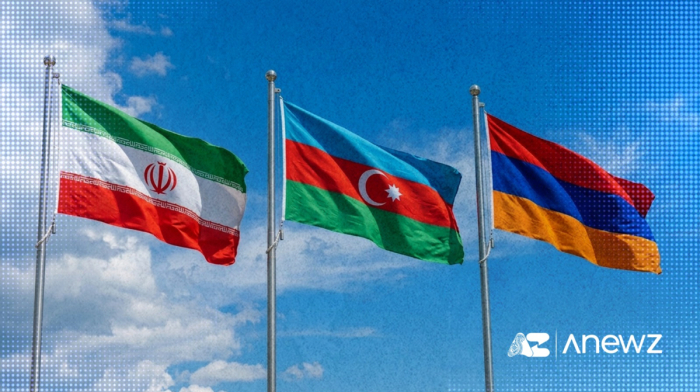
As the year comes to an end, a new initiative bringing civil society actors and regional analysts from Armenia and Azerbaijan together is steadily gaining ground.
The initiative, now formally called Bridge of Peace, held its first inaugural meeting in October in Yerevan when a five person delegation from Baku flew directly to the Armenian capital. On 21-22 November, their Armenian counterparts paid a reciprocal visit to Azerbaijan to continue the dialogue.
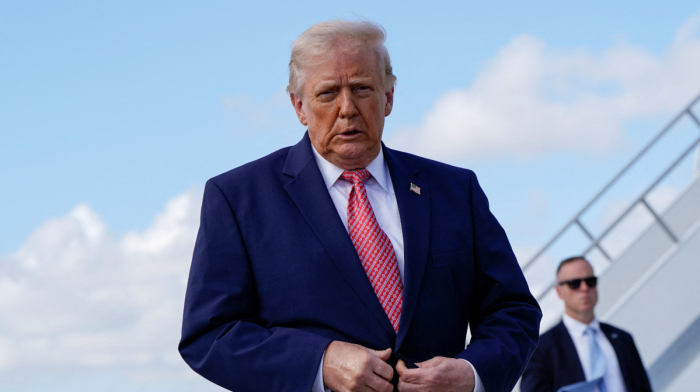
The initiative stems from the 8 August Washington Declaration when Armenian Prime Minister Nikol Pashinyan and Azerbaijani President Ilham Aliyev met alongside U.S. President Donald J. Trump. Their foreign ministers, Ararat Mirzoyan and Jeyhun Bayramov, also initialled a groundbreaking document, “On the Establishment of Peace and Interstate Relations between the Republic of Armenia and the Republic of Azerbaijan.”
This potentially paves the way for a formal end to the decades-long conflict between the sides. For now, only a disagreement on whether Armenia should sign the agreement before or after removing a controversial preamble to its constitution that is considered by Baku to make territorial claims on its territory. Pashinyan says amendments will be made only after parliamentary elections next June as part of constitutional reform that he has sought ever since taking office in 2018.
Nonetheless, progress in general continues. At the beginning of November, wheat from Kazakhstan and Russia was delivered to Armenia via Azerbaijan. In October, President Aliyev had announced the lifting of an embargo on the transit of goods through Azerbaijan, reducing travel times and potentially diversify routes for the landlocked country. On 18 November, parliamentary delegations from Armenia and Azerbaijan met on the sidelines of the OSCE Parliamentary Assembly in Istanbul.
This new Track II initiative is another development.
Though Track II diplomacy, mostly held in third countries and facilitated or even mediated by third countries, is not new, results have been mixed at best. Bridge of Peace is different in so much that it takes place in the two capitals of the countries themselves and is bilaterally determined. This has resulted in higher visibility and greater resonance than before. Since the 44-day-war in 2020, most initiatives held through international NGOs have often been held secretly.
In a public post on Facebook, one of the Azerbaijani participants, Kamala Mammadova, highlighted the futility of less than transparent approaches. When the delegations walked in Baku, Mammadova recounts how two residents recognised the participants from media coverage and greeted them in basic Armenian. “Just a greeting of humanity – natural, simple, and sincere. The delegation smiled in response […] and […] I realised that even a small gesture can break down walls.”
The participants also visited the Armenian church in central Baku just as the Armenian Catholicos, Karekin II, did when he visited in 2010. They also browsed some of the roughly 5,000 books in Armenian that are kept in the Presidential Library housed in the church. Jale Gurbanli, an Azerbaijani born in Yerevan and fluent in Armenian led the excursion.
This more personal approach was also appreciated by two of the Armenian participants, Boris Navarsadyan and Samvel Meliksetyan, even if some journalists back home have not been so welcoming. Humanitarian issues remain high on the list of priorities for both societies. In Azerbaijan, there are the thousands missing from the war of the early 1990s while in Armenia the opposition continues to focus on those sentenced to imprisonment in Baku and others standing trial.
Both Navarsadyan and Meliksetyan have been quite open in attempting to explain how Baku differentiates between these groups and the legal complexities surrounding them while also acknowledging the sensitivities on both sides. Because of the near total focus on this issue by Armenian media before their departure, it was impossible for the delegation to avoid it.
It nonetheless remains unclear how much of an issue this is for the Armenian public. Opinion surveys rarely highlight the issue while a survey conducted by local pollster MPG-Gallup International in September instead focused on those opposition activists and clergy arrested in Armenia since June.
Nonetheless, they do harbour hopes for some progress regarding those Armenian citizens who served in the military and are already sentenced. They are more vague on the matter of the de facto former authorities who remain effectively still on trial. It is also unclear whether the Pashinyan government would welcome the release of de facto former officials from Karabakh given that they could be instrumentalised by the opposition in the run-up to next year's parliamentary elections.
Regardless, the meetings in Yerevan and Baku have not been without other, more minor controversies. However, the pushback has so far not taken the form of anything more than a few media reports and comments made on social media by those already known to be against a peace deal. Unfortunately, this appears to be the role most non-government linked media has taken upon itself. Even before the Baku trip, those outlets also fixated on the cost of the charter flight.
Yet such expenses are negligible compared to millions spent by international donors on past dialogue projects and elaborate meetings held in western capitals that delivered little over 30 years. Opposition media also targeted the Orbeli Centre for a seminar held earlier this month after learning that two Azerbaijani journalists were also present. Their accommodation was covered by the Armenian government. The Azerbaijani authorities did similarly for the Armenian delegation in Baku.
Perhaps any financial controversy appears driven less by genuine fiscal concerns and more by resistance to normalising relations.
Still, the issue of charter flights could prove unsustainable except under some circumstances. They are undeniably costly, with the government revealing the Baku trip cost 17.5 million AMD (approximately $45,892). Meliksetyan noted in an interview that future meetings could take place by crossing the shared land border instead. For the time being, however, direct flights also carry with them important symbolic weight in a region where connectivity should become the norm.
This is anyway only the beginning, and the early signs are encouraging. Attempts in Armenia to generate scandal around the initiative appear to have fallen flat while such initiatives are instead normalised. “We know that peace doesn’t just come by itself,” Mammadova wrote. “It needs to be established step by step, meeting by meeting, word by word. The bridge of peace is not just a symbol – it is a duty. […] every step towards dialogue counts.”
The Bridge of Peace participants are Areg Kochinyan, Boris Navasardyan, Naira Sultanyan, Narek Minasyan, and Samvel Meliksetyan from Armenia, and Farhad Mammadov, Kamala Mammadova, Rusif Huseynov, Ramil Iskanderli, and Fuad Abdullayev from Azerbaijan. It is likely to be expanded to border communities and the media in the near future. In another development, National Assembly Speaker Alen Simonyan has since said that he too is ready to visit Azerbaijan.
“The conflict is over for Baku,” Azerbaijani Presidential Advisor Hikmet Hajiyev relayed to local media through the Armenian delegation on their return to Yerevan. “Azerbaijanis want to […] establish comprehensive and lasting peace with Armenia,” he was quoted as saying.














What is your opinion on this topic?
Leave the first comment