The AnewZ Opinion section provides a platform for independent voices to share expert perspectives on global and regional issues. The views expressed are solely those of the authors and do not represent the official position of AnewZ
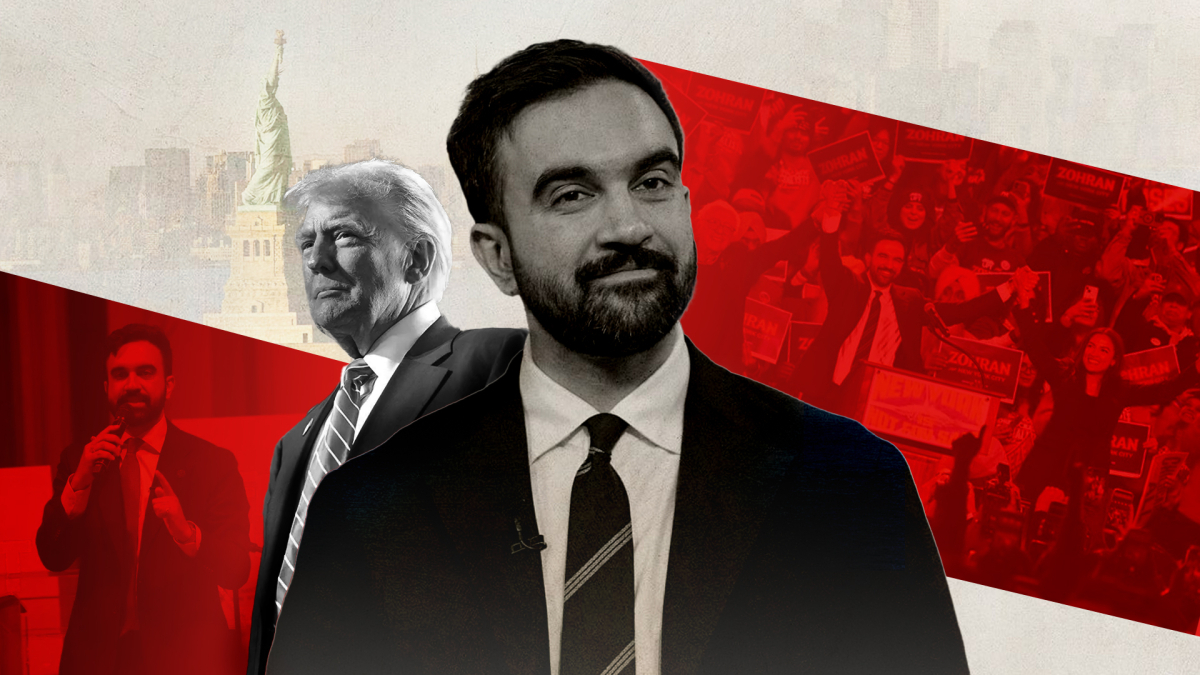
With slightly more than a week since the election of Zohran Mamdani, 34, as New York City’s mayor, renewed seismic fissures between the liberals represented by Democrats and the conservatives characterized by Republicans attest to the crucial role of dissenting views in pushing the American socio-political landscape as we advance.
Both the socialist Mamdani, who was elected New York’s first Muslim mayor on November 4, and the capitalist Donald Trump, who entered the White House for a second time on a republican ticket, invested in the inherited central value of dissent to bring about a change in the status quo.
From the Puritans who fled a tyrannical church for British America in search of a new Canaan, to the founding fathers who challenged British colonial rule, the Civil War, Black Americans’ Civil Rights Movement, Trump’s “Make America Great Again” (MAGA) campaign slogan, and Mamdani’s unconventional views—all speak of dissent as an obligation to promote moral and political action.
One of the controversial topics that Mamdani’s election is expected to bring before the eyes of both fascinated and watchful Americans is the long-debated and often disputed concept of identity in the United States. Born in Kampala, Uganda, to a family of Indian descent who later moved to the United States, he was in primary school boy when they settled in New York.
In Letter III of Letters from an American Farmer—written between 1770 and 1778—the French-American writer J. Hector St. John de Crèvecœur poses the question, “What is an American?” He answers: “He is an American who, leaving behind him all his ancient prejudices and manners, receives new ones from the new mode of life he has embraced, the new government he obeys, and the new rank he holds.”
In contemporary times, political philosopher Edward Hudgins, in a commentary published by the libertarian Cato Institute, revisited the question, “What is an American?” Writing on July Fourth, 1998—the anniversary of the Declaration of Independence in 1776—he sought to offer an answer.
"Americans aren’t idle daydreamers; they take the initiative. An American is anyone who understands the need to use one’s mind and wits to meet life’s challenges... an American is anyone who understands that achieving the best in life requires taking risks."
Twelve years after his commentary, a group of congressmen wrote an official letter addressed to the president emphasizing that identity remains a persistent issue in the United States. The letter was a response to the speech in Jakarta on November 10, 2010, in which President Barack Obama said, "In the United States, our national motto is E pluribus unum – out of many, one. Our nations show that hundreds of millions who hold different beliefs can be united in freedom under one flag".
The debate is ongoing. Political scientist Samuel P. Huntington, in “Who Are We? The Challenges to America's National Identity" (2004), warned that Asian and Latin American immigrants have seriously challenged the American "salience, substance, and creed". Among other concerns, he singled out Hispanization and the spread of the Spanish language as the major threats to American identity.
In 2013, the first Black president of the United States addressed a march marking the golden anniversary of the 1963 March on Washington, held at the symbolic Lincoln Memorial. The title of Obama’s speech, Let Freedom Ring, was borrowed from the closing lines of the civil rights leader Rev. Martin Luther King Jr.’s historic address.
In his speech, Obama recalled the unmet promises made to Black Americans half a century earlier and cited examples of how the United States had changed since then. He also admitted that there had been “occasional setbacks.”
Mamadani’s victory has energized the Democrats, who have been pushed to the corner by Trump 2.0 in the Oval Office. Meanwhile, Obama has offered to serve as Mamdani’s legal aide. The mayor-elect campaigned on a platform rarely heard in a city that embodies American capitalism and stands as a hub of the nation’s economic power.
His rapid rise to victory was fueled by a host of leftist slogans, including free city buses, public grocery stores, universal public child care, a freeze on rent, and affordable housing. President Trump has openly expressed criticism of everything New York City’s mayor-elect Mamdani represents, signaling the emergence of a new political drama.
“He has to be a little bit respectful of Washington, because if he’s not, he doesn’t have a chance of succeeding,” Trump said in an interview with Fox News, responding to Mamdani’s victory-night remarks in which the mayor-elect vowed to stand up to him. Earlier, Trump said his administration would help the “communist” mayor succeed, but he quickly clarified in the same interview that he wanted New York City itself to succeed.
Once again, two opposing camps are performing on the same stage, while the theater has opened to an audience drawn not only from New York and across America but from around the world. It remains to be seen whether emboldened Democrats can use Mamdani’s victory in New York City to reclaim political momentum by building on the central virtue of dissent against a Republican president at the helm of power.
















What is your opinion on this topic?
Leave the first comment