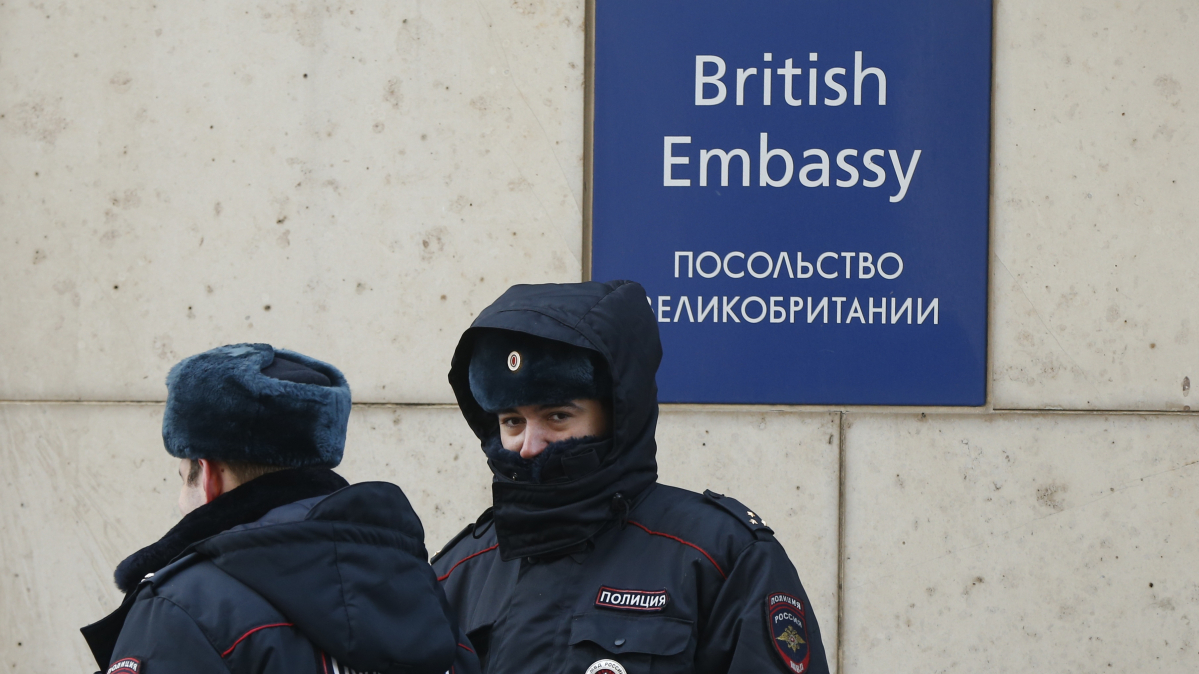
Russia has expelled a British diplomat, accusing him of economic espionage in a move that further strains already tense relations between Moscow and London. The United Kingdom described the action as intimidation and rejected the allegations outright, Reuters reports.
The Federal Security Service (FSB), the main successor to the Soviet-era KGB, said it had identified Second Secretary Albertus Gerhardus Janse van Rensburg as “carrying out intelligence and subversive activities that threaten the security of the Russian Federation”.
A spokesperson for Britain’s Foreign Office dismissed the claims as “completely unacceptable”, accusing Moscow of harassing its diplomats by “pumping out malicious and completely baseless accusations”.
The expulsion comes as Russia continues its war in Ukraine, during which Moscow has repeatedly accused Britain of engaging in espionage aimed at destabilising the country — claims it says are at levels not seen since the Cold War.
The UK, a key supporter of Ukraine through financial and military aid, has in turn accused Russian intelligence services of orchestrating cyber-attacks, assassinations and sabotage operations across Western countries.
Russian state television broadcast footage it said showed Janse van Rensburg meeting economic contacts in Moscow restaurants, as well as cross-country skiing near what it described as a sensitive defence ministry facility.
Britain tagged as Russia’s ‘public enemy number one.’
State media reported that Janse van Rensburg is the 16th British diplomat to be expelled from Moscow in the past two years. Reuters said it was unable to reach him for comment.
The FSB said Janse van Rensburg had attempted to “obtain sensitive information during informal meetings with Russian experts in the field of economics”.
"To avoid negative consequences, including criminal liability, the FSB of Russia recommends that compatriots refrain from holding meetings with British diplomats," it added.
As the U.S., under Donald Trump, seeks to reset relations with Moscow and broker a peace deal in Ukraine, Britain has increasingly been portrayed by Russian officials and media as the country’s primary adversary.
On state television, the phrase “Perfidious Albion” - a historic term used to describe Britain as deceitful or untrustworthy - has resurfaced, depicting the UK as working covertly to undermine Russian interests globally.
Western diplomats in Moscow say they are routinely subjected to surveillance and harassment. They also note that the so-called “Moscow Rules”, a set of Cold War-era guidelines designed to help diplomats operate under scrutiny, have been updated for the current climate.
Russia has also introduced strict travel rules for British diplomats, requiring advance notice for any journeys beyond a 120 km (75-mile) radius from the capital.
As a result, diplomatic postings to Moscow are now regarded by many Western governments as among the most challenging in the world. The U.S. State Department ranks the Russian capital alongside cities such as Freetown, Mogadishu, Damascus and Kabul in terms of hardship.
For its part, Moscow has long argued that its diplomats face similar treatment abroad, particularly in the U.S., where it says officials are frequently subjected to harassment.











What is your opinion on this topic?
Leave the first comment