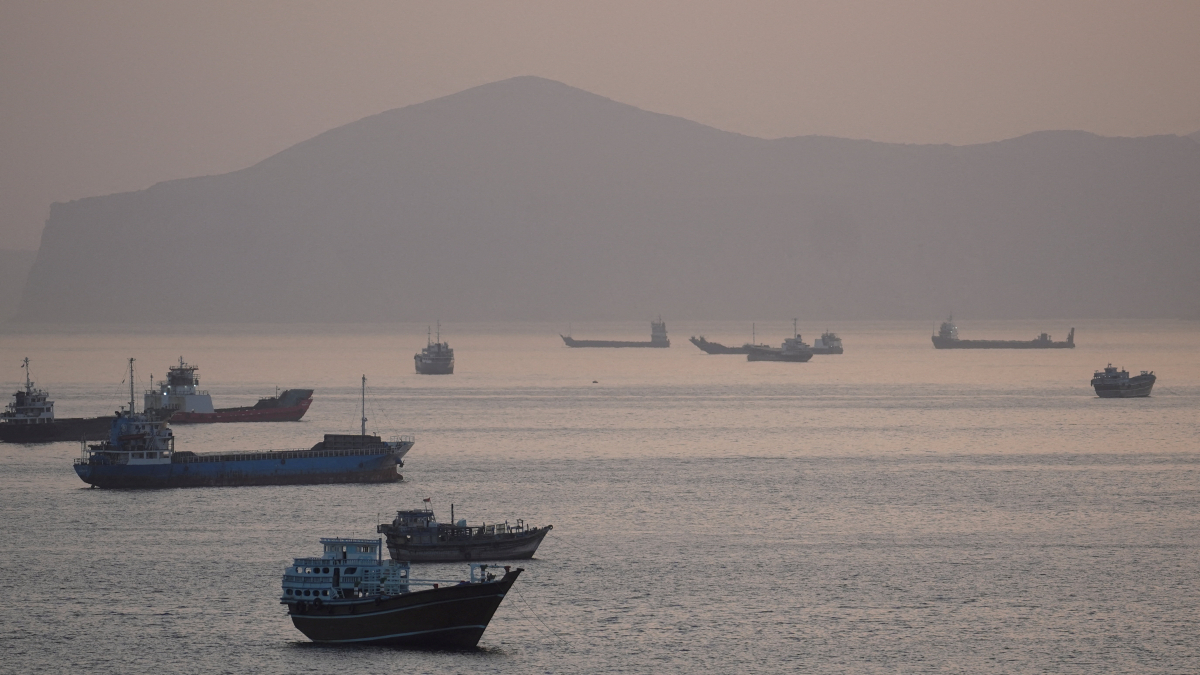
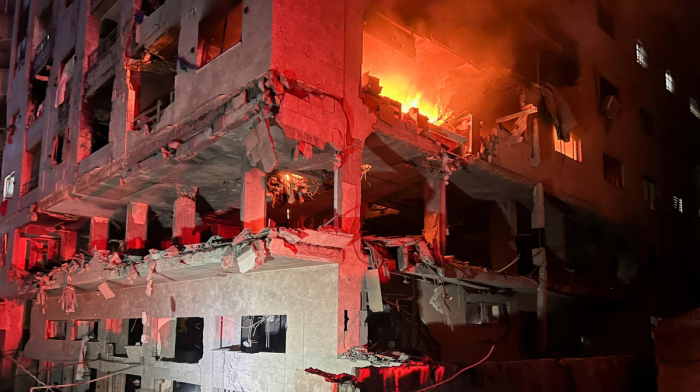
Iran confirmed on Friday its Armed Forces responded to, what Tehran is calling, the U.S. Navy’s violation of the ceasefire. It said Iranian ships and civilian areas were attacked near the Strait of Hormuz on Thursday evening.
The Spokesman of Khatam al-Anbia Central Headquarters Colonel Ebrahim Zolfaghari warned in a Friday statement that Iran will give “a crushing response to any aggression without slightest hesitation” after the two countries traded fire.
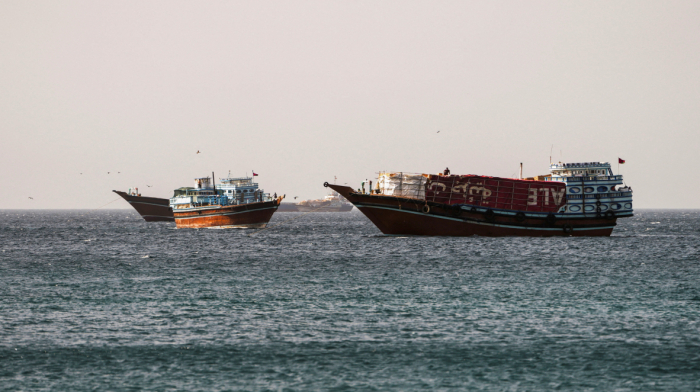
Zolfaghari said that the U.S. military violated the pause and had targeted an Iranian oil tanker sailing from Iranian coastal waters in the Jask region towards the Strait of Hormuz, as well as another ship entering Hormuz opposite the UAE port of Fujairah.
“At the same time, they carried out airstrikes on civilian areas in cooperation with some countries in the region on the coasts of the ports of Khamir, Sirik and Qeshm Island,” DefaPress website covering military news quoted him saying.
Zolfaghari added, “The Armed Forces of Iran immediately retaliated by attacking U.S. military vessels east of the Strait of Hormuz and south of Chabahar Port, causing significant damage to them.”
Revolutionary Guards claim attack on enemy vessels
Iran's Revolutionary Guard’s Navy also confirmed in a statement that it opened fire in response to the ceasefire violation and, in its words, aggression of the U.S. Army near the Strait of Hormuz forcing enemy’s destroyers to flee.
“A very large and precise combined operation was carried out using anti-ship ballistic and cruise missiles and attack drones with high-explosive warheads,” according to Sepah News website dedicated to the Revolutionary Guards statements.
“Three invading enemy ships fled the area,” read the statement.
Araghchi urges diplomacy and criticises sanctions
The clashes are the latest developments in the conflict that also saw Foreign Minister Abbas Araghchi condemn a joint Bahrain-U.S. draft resolution tabled at the United Nations Security Council, on Iran’s control over the strategic waterway connecting the Persian Gulf to the Sea of Oman.
Araghchi sent a letter to the UN Secretary General António Guterres and Security Council President criticising their move. He stressed the responsibility of the international community to prevent "aggressors" from abusing the Security Council as a tool to justify their illegal actions, state-owned IRNA news agency reported.
“I deem it necessary to emphasise that normal maritime traffic will return to the Strait of Hormuz, provided that the war is permanently stopped and the illegal blockade and sanctions against Iran are lifted. Therefore, the path to stability lies in U.S.'s adherence to international law, not in abusing the Security Council in a way that further complicates the situation,” Araghchi wrote.
Iran reviewing U.S. counter-proposal
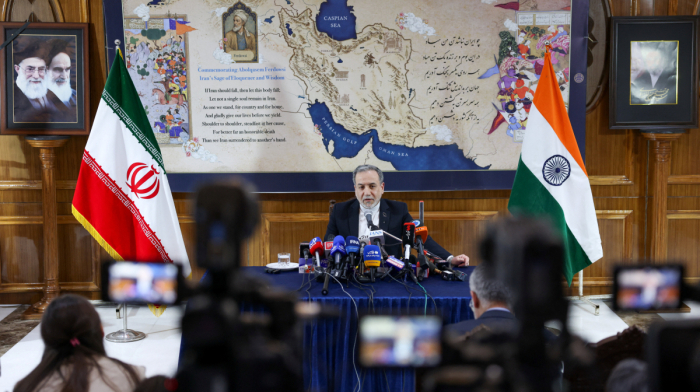
Meantime, Foreign Ministry Spokesman Esmaeil Baghaei said on Thursday that Iran is considering the U.S. counter-proposal to end the war in response to Iran’s plan.
He made the statement in an interview with IRNA during a visit to the religious city of Qom to meet high-ranking clerics and added, “We have not responded to the U.S. side so far because its review is not completed.”
“The contacts with Pakistan as the mediator are focusing on Iran’s 14-point plan forwarded via Pakistan. The U.S. response to our proposal was received which is being considered.”
“As soon as our review is completed, it will be communicated via Pakistan. The next steps will be adopted based on the outcome of exchange of messages,” the Iranian diplomat said.
Iran and Pakistan discuss diplomacy efforts
Amid reports of an eminent announcement of a peace process arrangement between Iran and U.S., Foreign Minister Araghchi spoke on the phone with Pakistani Deputy Prime Minister and Foreign Minister Mohammed Ishaq Dar.
According to local media quoting a Foreign Ministry news release, he said “While reviewing the latest developments and current trends in the region, they emphasised the importance of continuing the path of dialogue and diplomacy.”
The Iranian and Pakistani top diplomats also discussed “expanding constructive cooperation between the countries of the region, in order to preserve stability and prevent the formation and escalation of tensions.”













What is your opinion on this topic?
Leave the first comment